

What Is SAN Resin? Composition and Basic Characteristics
Styrene Acrylonitrile (SAN) is a high-performance copolymer that serves as a critical bridge between standard General Purpose Polystyrene (GPPS) and tougher engineering thermoplastics like ABS. We classify raw material SAN as a "specialty styrenic" because it retains the ease of processing found in styrene while delivering superior chemical resistance and thermal stability.
Chemical Composition and Structure
The material derives its properties from a polymerization of two monomers:
- Styrene (70-80%): Provides exceptional optical clarity, high surface gloss, and rigidity.
- Acrylonitrile (20-30%): enhances chemical resistance, heat stability, and surface hardness.
SAN possesses an amorphous structure, which is a significant advantage in injection molding. Unlike semi-crystalline plastics, amorphous resins exhibit low and uniform shrinkage rates. This characteristic ensures that parts maintain excellent dimensional stability and tight tolerances after cooling, reducing the risk of warpage in flat, transparent components.
Key Physical Properties of SAN
To help you evaluate if SAN fits your project requirements, we have compiled the typical property ranges for standard injection molding grades.
| Property | Typical Value | Benefit |
|---|---|---|
| Specific Gravity | 1.06 – 1.08 | Lightweight parts compared to glass or metal. |
| Tensile Strength | 60 – 80 MPa | High rigidity and resistance to deformation under load. |
| Flexural Modulus | 3.0 – 3.9 GPa | Excellent stiffness, suitable for structural housings. |
| Heat Deflection Temp (HDT) | 95°C – 105°C (at 0.45 MPa) | Withstands higher service temperatures than standard PS. |
| Light Transmission | ~87 – 90% | High clarity for optical applications and displays. |
Why It Is a "Specialty Styrenic"
We often recommend SAN over standard polystyrene when environmental stress cracking is a concern. While GPPS is brittle and vulnerable to fats, oils, and detergents, the acrylonitrile content in SAN plastic properties drastically improves resistance to these agents. This makes it the material of choice for transparent applications that require durability without the higher cost associated with Polycarbonate (PC).
Key Advantages of SAN for Injection Molding
When selecting resins for production, raw material SAN injection molding stands out as a premier choice for parts requiring a balance of optical clarity and physical durability. Styrene Acrylonitrile (SAN) bridges the gap between standard commodity plastics and high-performance engineering resins, offering distinct benefits for both rapid prototyping and low-volume production.
We consistently recommend SAN for its versatile property profile:
- Exceptional Transparency and Gloss: SAN is naturally clear and accepts high-polish surface finishes (up to SPI-A2). This makes it ideal for transparent plastic injection molding applications where visual appeal is critical, such as display cases or cosmetic packaging.
- Superior Chemical Resistance: A major advantage over General Purpose Polystyrene (GPPS) is the chemical resistance SAN offers. It withstands exposure to oils, fats, and household cleaning agents, preventing the stress cracking often seen in lesser styrenes.
- Dimensional Stability: The material exhibits low and consistent shrinkage rates. This stability allows us to hold tight tolerances (typically ±0.003 in.) and maintain part geometry, which is essential for assembly components.
- Rigidity and Flow: SAN is rigid with high tensile strength. Its excellent flow characteristics during the molding process allow for the creation of thin-walled parts and complex features without compromising structural integrity.
By utilizing our custom plastic injection moulding services, you can leverage these material advantages to create cost-effective alternatives to expensive clear plastics like Polycarbonate (PC), without sacrificing the high-quality finish your product requires.
Limitations and Trade-Offs of SAN Material
While raw material SAN offers exceptional rigidity and cost-effective clarity, it is not a universal solution for every application. We always advise engineers to weigh the specific mechanical requirements against the inherent constraints of Styrene Acrylonitrile resin before finalizing a design.
- Brittleness vs. Impact: In a direct SAN vs ABS comparison, SAN falls short on toughness. It is significantly more brittle than ABS or Polycarbonate. If your component needs to withstand drops, heavy impact, or high torque, SAN is prone to cracking or shattering.
- Environmental Stress & UV: Standard SAN grades are susceptible to UV yellowing when exposed to direct sunlight over time. The material is also prone to environmental stress cracking, particularly if the mold design features sharp corners rather than radiused edges.
- Thermal Limitations: SAN is flammable and generates smoke upon combustion. It typically has a lower heat deflection temperature compared to engineering thermoplastics, making it unsuitable for high-heat environments.
When to Avoid SAN
You should avoid Styrene Acrylonitrile copolymer if your product requires long-term outdoor weatherability or high impact resistance. For these demanding applications, understanding what plastics are used for injection moulding is critical for selecting a more durable alternative, such as Polycarbonate (PC) for strength or ASA for UV stability.
SAN vs Other Clear Plastics: Side-by-Side Comparison
Selecting the right transparent resin often comes down to balancing optical clarity against durability and budget. While raw material SAN injection molding offers a specific set of advantages, it is crucial to understand how it stacks up against common alternatives like ABS, PMMA (Acrylic), and Polystyrene (PS).
Material Performance Matrix
We use the following comparison to help engineers determine if SAN is the correct fit for their specific application requirements versus other commodity and engineering resins.
| Feature | SAN (Styrene Acrylonitrile) | ABS (Acrylonitrile Butadiene Styrene) | PMMA (Acrylic) | Polystyrene (GPPS) |
|---|---|---|---|---|
| Transparency | High (Slight yellow tint possible) | Opaque (Standard) / Translucent (Special grades) | Excellent (Optical grade) | High (Glass-like) |
| Impact Strength | Low to Moderate (Brittle) | High (Excellent toughness) | Low (Brittle) | Very Low |
| Chemical Resistance | Good (Resists oils/fats) | Moderate | Poor (Sensitive to solvents) | Poor |
| Heat Resistance | Moderate (~100°C) | Moderate (~80-100°C) | Low to Moderate | Low |
| Cost Efficiency | Low - Medium | Medium | Medium - High | Low |
| Processability | Excellent Flow | Good Flow | Moderate | Excellent Flow |
Detailed Trade-Offs
- SAN vs. ABS: Standard ABS is the go-to for toughness and impact resistance, but it lacks transparency. If your part requires clarity, SAN is the better choice, though it sacrifices the impact strength found in ABS injection molding.
- SAN vs. PMMA: PMMA offers superior optical clarity and UV stability for outdoor use. However, SAN is generally more cost-effective and easier to process for high-volume household goods where "glass-like" perfection isn't strictly necessary.
- SAN vs. Polystyrene (PS): While General Purpose Polystyrene (GPPS) is cheaper, it cracks easily and handles heat poorly. SAN provides a significant upgrade in thermal stability and chemical resistance, making it suitable for kitchenware that contacts food oils.
Decision Guide: When to Choose SAN
Opt for Styrene Acrylonitrile when your project demands:
- High Clarity: You need see-through components like water pitchers or cosmetic cases.
- Chemical Durability: The part must withstand contact with lipids, detergents, or perspiration without crazing.
- Cost Control: You need better performance than Polystyrene but cannot justify the higher price tag of Polycarbonate (PC) or PMMA.
For projects requiring extreme durability or impact absorption, we typically recommend exploring other materials, but for rigid, clear, and cost-effective housings, SAN remains a top contender in transparent plastic injection molding.
Essential Processing Guidelines for SAN Injection Molding
To achieve high-clarity parts with raw material SAN injection molding, precision in the manufacturing process is non-negotiable. Since SAN (Styrene Acrylonitrile) is often chosen for its optical properties, any lapse in processing parameters can lead to visible defects like haze or yellowing. We focus on strict process controls to maintain the material's rigidity and transparency.
Material Preparation and Drying
SAN is hygroscopic, meaning it absorbs moisture from the air. If not treated correctly, this moisture turns into steam during molding, causing "splay" or silver streaks on the finished part.
- Drying: Adhering to strict injection molding drying conditions for SAN is critical. We typically ensure the resin is dried thoroughly to reach a moisture content below 0.1% before processing.
- Handling: Proper storage and handling of the resin prevent contamination, which is vital for clear parts where even a speck of dust is visible.
Optimizing Temperature and Pressure
Balancing heat and pressure determines the structural integrity and look of the part.
- Melt & Mold Temperatures: We maintain precise temperature control. If the melt temperature is too high, SAN can degrade and yellow; if too low, it results in poor flow and visible weld lines.
- Injection Parameters: SAN injection molding parameters must be tuned to the specific geometry of the part. We use optimized injection speeds to fill the mold quickly without causing jetting or burn marks.
- Pressure: Adequate holding pressure is applied to pack the mold and compensate for the material's natural volume reduction during cooling.
Managing Shrinkage and Tooling
Understanding the behavior of plastics for injection moulding is key to dimensional accuracy.
- Shrinkage: The SAN shrinkage rate is generally low and predictable (typically around 0.2% to 0.6%), which allows for tight tolerances. However, uniform wall thickness is required to prevent differential shrinkage that leads to warpage.
- Tooling Considerations: For optical clarity, we recommend high-gloss mold finishes (such as SPI-A2). Additionally, incorporating sufficient draft angles is essential to prevent drag marks during ejection, as SAN is rigid and brittle.
Troubleshooting Common Defects
- Silver Streaks: Usually caused by insufficient drying.
- Vacuum Voids/Bubbles: Often a result of inadequate packing pressure or thick wall sections.
- Stress Cracking: Can be mitigated by optimizing ejection speed and ensuring proper draft angles in the design phase.
Typical Applications of SAN Injection Molded Parts
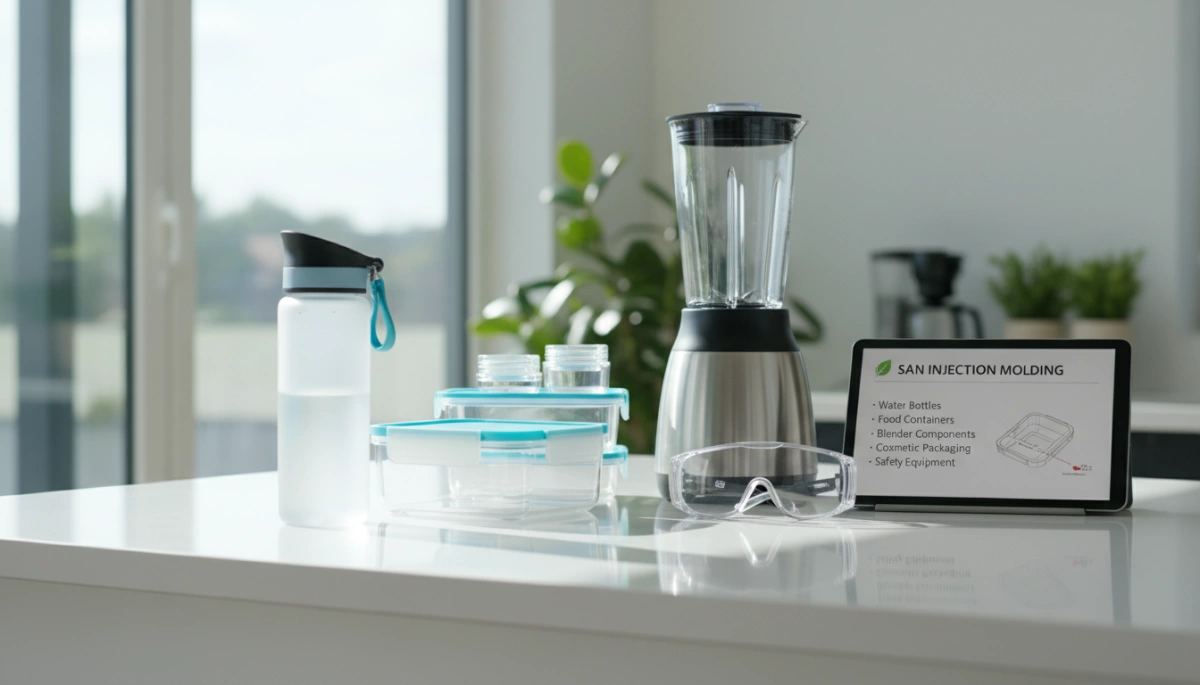
We frequently utilize raw material SAN injection molding across industries that demand a balance of optical clarity, rigidity, and chemical toughness. Because SAN resists fats, oils, and cleaning agents significantly better than general-purpose polystyrene, it has become a staple material for durable consumer and industrial goods. Our digital manufacturing process ensures these transparent components meet strict dimensional tolerances while maintaining their aesthetic appeal.
Common Industry Use Cases
- Household & Kitchenware:
SAN applications household items are among the most common uses due to the material's safety and durability. We mold parts like blender jars, mixer bowls, and refrigerator drawers because they must withstand repeated washing and exposure to food acids without crazing or clouding. - Medical Components:
For non-implantable devices, clarity is critical for monitoring fluid levels. We produce components such as dialysis shells, fluid connectors, and syringes where transparency and resistance to lipids or sterilization chemicals are required. Our specialized medical injection moulding capabilities ensure these parts meet rigorous quality standards using automated inspection. - Electronics & Battery Housings:
SAN provides excellent electrical insulating properties and dimensional stability. It is widely used for battery cases and meter covers because it resists attack from battery acids and environmental contaminants better than standard acrylics. - Cosmetic Packaging:
Brands choose SAN for perfume caps, compact cases, and lipstick tubes to achieve a premium, glass-like appearance. By utilizing high-gloss mold finishes (such as SPI-A2), we deliver transparent plastic injection molding results that offer luxury aesthetics at a fraction of the weight and cost of glass. - Automotive Interiors:
The material’s hardness and flow properties make it suitable for interior trim, knobs, and instrument lenses that require scratch resistance and long-term optical stability.
Sourcing Raw Material SAN: Grades and Suppliers
When planning for raw material SAN injection molding, selecting the correct resin grade is just as critical as the mold design itself. Not all Styrene Acrylonitrile is created equal; the specific formulation dictates how the material flows, resists heat, and performs in the final environment. We work with a variety of commercial grades tailored to specific industry requirements.
Popular Commercial Grades
We typically categorize SAN resins into three main performance groups to match project needs:
- High-Flow Grades: These possess a high Melt Flow Index (MFI), making them ideal for thin-walled parts or complex geometries where filling the mold quickly is essential.
- High-Heat Grades: Engineered with higher molecular weights to withstand elevated temperatures, often used in automotive interiors or lighting.
- Food-Contact Approved: Formulations compliant with FDA or EU regulations for kitchenware, such as mixer jugs and refrigerator trays.
Key Global Manufacturers
Reliable production depends on a steady supply chain. We source SAN resin from established global leaders to ensure batch-to-batch consistency. Major players in the styrenic market include Ineos Styrolution, Trinseo, and LG Chem. These manufacturers offer robust technical datasheets and consistent quality, which is vital for maintaining tight tolerances in high-volume production.
Factors for Material Selection
Choosing the right SAN resin suppliers involves more than just price. You must evaluate technical parameters to prevent defects during processing.
- Melt Flow Index (MFI): A higher MFI helps with complex molds but may slightly reduce impact strength.
- UV Stability: Standard SAN tends to yellow under UV exposure. For outdoor applications, we recommend grades with added UV stabilizers.
- Additives: Anti-static agents or mold release additives can be pre-compounded to improve processing efficiency.
If you have experience with raw material PS injection molding, you will find the sourcing process for SAN very similar, though SAN requires stricter attention to moisture control and chemical resistance specifications. Securing a consistent supply line early in the development phase ensures that your transition from prototype to mass production remains seamless.
How Jino Injection Molding Handles SAN Projects
At Jino Injection Molding, we streamline the raw material SAN injection molding process to deliver high-clarity parts with speed and precision. We understand that Styrene Acrylonitrile requires specific handling to maintain its transparency and chemical resistance. We offer flexibility in material sourcing, allowing you to choose from our stock resins or utilize our Customer-Supplied Resin program if your project demands a specific proprietary grade.
Design for Manufacturability (DFM) for Clear Parts
Transparent materials like SAN are unforgiving when it comes to cosmetic defects. Our engineering team provides detailed DFM feedback to optimize your design before the first shot is molded. We focus heavily on:
- Uniform Wall Thickness: Essential to prevent sink marks and internal stresses that cloud the part.
- Gate Placement: Strategically locating gates to hide vestige marks and ensure smooth flow.
- Draft Angles: Ensuring sufficient draft (typically 1° per inch of depth) to prevent drag marks during ejection.
Understanding the fundamentals of what is injection molding is critical here, as the process parameters directly influence the optical quality of the final SAN component.
Surface Finish Options
To achieve glass-like transparency, the mold tool itself must be impeccable. Any imperfection on the part of an injection mold cavity will be transferred to the SAN part. We recommend and provide:
- SPI-A2 High Gloss Finish: Ideal for cosmetic parts requiring maximum clarity.
- SPI-A3: A standard smooth finish suitable for functional clear parts.
- Texturing: Available if you need to diffuse light or hide fingerprints on specific areas.
From Prototype to Low-Volume Production
We support your product lifecycle from the very first prototype up to production runs of 10,000+ parts. Our tooling options allow for rapid turnaround, often delivering molded SAN parts in as fast as 1 to 15 days. Whether you need a single bridge tool or a multi-cavity solution, we scale with your demand without imposing high Minimum Order Quantities (MOQs).
Ready to start? Upload your CAD file today for a comprehensive quote and DFM analysis on your next SAN molding project.
Frequently Asked Questions About SAN Injection Molding
Is SAN plastic food-safe?
Yes, many commercial grades of Styrene Acrylonitrile (SAN) are FDA-compliant and approved for food contact. This makes the material a standard choice for household items like refrigerator drawers, tumbler cups, and blender jars. However, not every grade carries this certification, so it is essential to verify the specific SAN material datasheet to ensure it meets regulatory standards for your intended application.
What is the typical drying time for SAN resin?
Because SAN is hygroscopic, it absorbs moisture from the air which can ruin the visual quality of the part. To prevent defects like silver streaks or bubbles, we recommend drying the resin for 2 to 4 hours at 160°F – 180°F (71°C – 82°C). Achieving a moisture content below 0.1% is critical for maintaining the high clarity plastic molding results that SAN is known for.
How does SAN compare to Acrylic (PMMA) regarding cost?
SAN is typically more affordable than Acrylic (PMMA) and significantly cheaper than Polycarbonate (PC). It provides a practical balance of clarity and rigidity for budget-conscious projects. While PMMA offers superior optical transmission and UV stability, SAN is the go-to for cost-sensitive internal components or consumer goods. Material selection is a major factor in how plastic injection molding costs are determined, especially for high-volume runs.
Can SAN be recycled?
Yes, SAN is a thermoplastic and can be melted down and reprocessed. In a manufacturing setting, we can often regrind runners and sprues to mix with virgin material, reducing waste and material costs. For post-consumer recycling, SAN usually falls under the "Other" (Code 7) category, so recyclability depends on the capabilities of local facilities.
 English
  French
  German
  Spanish
  Italian
  Polish
  Russian
  Japanese
  Korean
  Arabic
  Dutch
Dutch  Portuguese
  Swedish
  Norwegian
  Belarusian
  Armenian