
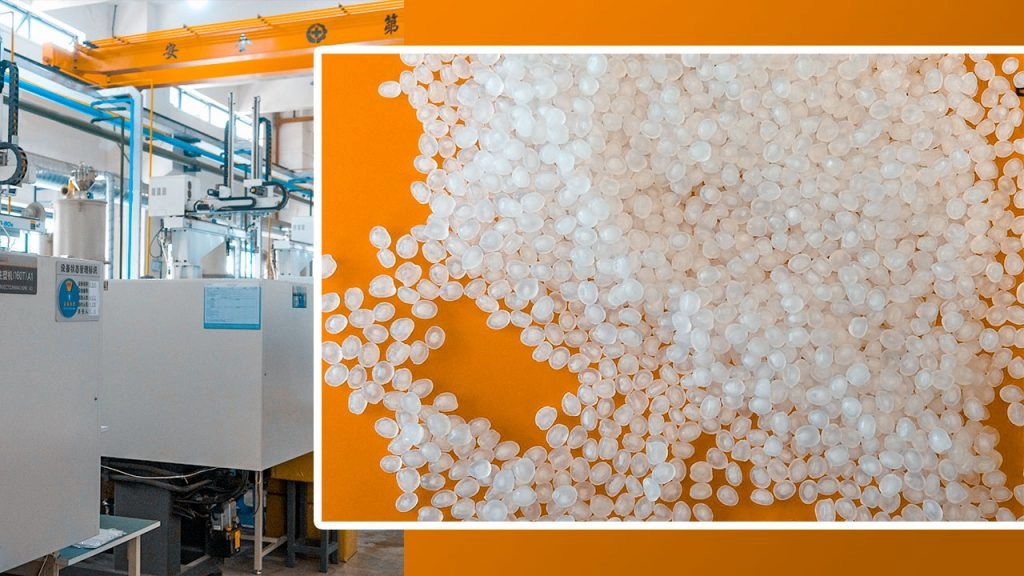
What Is Polypropylene (PP) and Why It Dominates Injection Moulding
Polypropylene (PP) is a semi-crystalline thermoplastic widely used in injection molding because it delivers low cost per volume, low density, and very good chemical and fatigue resistance. For a given part volume, PP is usually the lightest and most economical option, which is why it dominates food packaging, caps & closures, consumer goods, and many automotive interiors in the U.S. market.
PP is built from propylene monomers and can be tailored into homo-polymers and co-polymers (random or block) to hit different stiffness–impact–clarity balances.
PP Homo-Polymer vs Co-Polymer (Random vs Block)
Key Differences
| Property / Type | PP Homo-Polymer (PP-H) | PP Random Co-Polymer (PP-R) | PP Block Co-Polymer (PP-B / Impact PP) |
|---|---|---|---|
| Typical Use | Rigid parts, hinges, caps | Clearer food containers, medical | Automotive, appliances, impact parts |
| Impact at Room Temp | Medium | Medium–High | High |
| Impact at Low Temp (−20 °C) | Poor–Medium | Medium | High (best) |
| Stiffness (Modulus) | Highest | Medium–High | Medium |
| Clarity | Opaque | Good–Very good | Opaque |
| Heat Resistance (HDT) | Highest of the three | Slightly lower | Lower |
| Cost | Lowest | Slightly higher | Higher than homo, still economical |
In practice:
- We use PP-H when we want stiff, economical parts and living hinges.
- We specify PP-R for transparent or translucent food-grade and medical parts.
- We choose PP-B/impact PP for automotive and outdoor parts needing cold-weather toughness.
Main PP Grades for Injection Molding (with MFI Ranges)
MFI (Melt Flow Index, g/10 min, 230 °C/2.16 kg) is the key processing parameter we look at. Higher MFI = easier flow = thinner walls, but lower impact strength.
| Grade Type | Typical MFI Range (g/10 min) | Common Uses |
|---|---|---|
| General-purpose PP-H | 4–12 | Housings, caps, technical parts |
| High-flow PP (PP-H or PP-R) | 20–60 | Thin-wall food containers, IML packaging |
| Impact PP (PP-B / heterophasic) | 5–25 | Auto interior/exterior, appliances |
| Mineral/talc-filled PP | 5–20 | Automotive trim, structural interior |
| Glass-fiber reinforced PP | 5–15 | Structural brackets, under-hood parts |
| Medical / food-contact PP | 8–25 | Syringes, labware, caps & closures |
For thin-wall U.S. food packaging, we typically run MFI 25–40. For general caps and closures, MFI 8–20 is a sweet spot.
PP vs Other Common Injection Molding Plastics
Quick Comparison: PP vs ABS, PC, HDPE, POM, PA6
Values are indicative ranges for typical, unfilled commercial grades.
| Property | PP | ABS | PC | HDPE | POM (Acetal) | PA6 (Nylon 6) |
|---|---|---|---|---|---|---|
| Density (g/cm³) | 0.90–0.91 | 1.03–1.06 | 1.19–1.22 | 0.95 | 1.40–1.42 | 1.12–1.15 |
| Tensile Strength (MPa) | 25–35 | 40–50 | 55–70 | 20–30 | 60–70 | 60–80 |
| Flexural Modulus (GPa) | 1.1–1.6 | 1.8–2.2 | 2.2–2.6 | 0.8–1.1 | 2.5–3.0 | 2.5–3.0 |
| Notched Izod @ 23 °C | 3–8 kJ/m² | 15–40 kJ/m² | 60–80 kJ/m² | 3–10 kJ/m² | 6–10 kJ/m² | 5–10 kJ/m² |
| Heat Deflection Temp (°C) | 90–110 | 85–100 | 120–135 | 70–80 | 100–120 | 180–200 (dry) |
| Continuous Use Temp (°C) | ~80 | ~80 | 110–120 | 60–70 | 90–100 | 100–120 |
| Chemical Resistance | Excellent | Fair–Good | Fair | Excellent | Good | Fair–Good |
| Moisture Sensitivity | Very low | Low | Low–Medium | Very low | Low | High (absorbs) |
| Relative Material Cost | Lowest | Medium | High | Low–Medium | Medium–High | Medium–High |
| Typical U.S. Applications | Packaging, caps, auto trim | Housings, consumer goods | Safety, lenses, high impact | Bottles, tanks | Gears, precision | Under-hood, mechanical |
Where PP wins decisively:
- Lowest density → lightest parts for the same volume.
- Very competitive resin price and fast cycles.
- Excellent chemical resistance for detergents, acids, and many solvents.
- Food-contact and medical-approved grades readily available for the U.S. market.
That combination is why we default to PP for many high-volume injection molding programs before considering more expensive engineering resins.
Key Advantages of PP Injection Moulding
Living hinge capability
Polypropylene is the go-to material for living hinges—think flip-top caps, storage box lids, and medical device closures.
- PP can flex millions of times without cracking
- Hinges can be molded in one piece with the part, cutting assembly cost
- Ideal for caps, closures, and consumer packaging in high-volume U.S. production
Chemical resistance & food-contact safety
PP holds up extremely well against oils, fats, detergents, and most household chemicals, which is why it dominates food and consumer packaging.
- Commonly approved for FDA and EU food-contact applications
- Safe choice for reusable food containers, drinkware, and kitchen products
- Strong performance in detergents, cleaning products, and personal care packaging
Lowest density = lightest parts
Polypropylene has one of the lowest densities among common injection molding resins (about 0.90–0.91 g/cm³).
- Lighter parts at the same volume vs ABS, PC, or PA6
- Lower shipping cost and better ergonomics for handheld products
- More parts per pound of resin → direct cost-per-part savings
Excellent fatigue resistance
PP handles repeated flexing, bending, and snap-fit use better than most commodity plastics.
- Perfect for snap-fits, clips, tabs, and hinged lids
- Great for automotive interior parts, appliance components, and storage products
- Keeps parts from cracking under everyday use and vibration
Recyclability & cost-per-volume edge
Polypropylene is widely recycled in the U.S. and globally, and it delivers one of the best cost-to-performance ratios in injection molding.
- Accepted in many municipal recycling streams (typically #5 PP)
- Easy to blend virgin and recycled PP for cost and sustainability targets
- Lower tooling wear and efficient cycle times compared with many engineering plastics
If you’re targeting high-volume, low-cost, and durable parts, PP injection molding is often the most economical option. That’s why we use it heavily in our programs and pair it with optimized tooling and cycle times, similar to the efficiency gains described in these advantages of injection moulding.
Material Selection: Choosing the Right PP Grade for Your Project
Picking the right polypropylene injection molding grade is where most projects are won or lost. I always start with: what does the part do, where does it live, and what can go wrong? From there, the PP grade almost chooses itself.
Thin-Wall Food Containers (High MFI PP)
For takeaway tubs, deli cups, and snack packs, you want high-flow PP (high MFI, typically 25–60 g/10 min) so the resin fills fast and clean in thin sections.
Key points:
- PP homopolymer or random copolymer for clarity and stiffness
- Typical wall: 0.4–0.8 mm for high-speed packaging tools
- Needs FDA-compliant / EU 10/2011 food-grade certification
- Ideal for: yogurt cups, microwaveable containers, single-serve food packs
Automotive Interior & Exterior (Impact-Modified, Talc-Filled PP)
For U.S. automotive programs, the go-to is impact-modified and mineral-filled PP that balances toughness, stiffness, and dimensional stability.
Common choices:
- Talc-filled PP (10–30%) for door panels, pillar trims, dashboards
- Impact-modified PP copolymer for bumpers, exterior trims, wheel arch liners
- Benefits: better scratch resistance, lower warpage, stable gap/flush
- MFI range: typically 5–20 g/10 min depending on part size and texture
Medical Parts & Caps/Closures (Food & Medical Grade PP)
For medical disposables and caps/closures, we stick to certified, traceable PP grades with tight consistency.
What we use:
- PP homopolymer for rigid closures, syringe bodies, labware
- Random copolymer for clear devices, flexible snap fits
- Must be:
- FDA-compliant
- EU 10/2011 food-contact approved
- Often with ISO 10993 / USP Class VI data for medical contact parts
- Ideal for: IV components, diagnostic parts, water bottle caps, pharma closures
Flame-Retardant PP (UL94 V0/V2)
For electrical housings and building products in the
Critical Design Guidelines for PP Injection Moulding Parts
When we design polypropylene injection molding parts, we lock in 80% of the quality (and cost) before the tool is ever cut. Here’s how I approach PP part design so it runs clean and repeatable on the press.
Keep Wall Thickness Uniform (1.2–3.5 mm)
PP is forgiving, but it still hates big thickness swings.
- Typical wall range: 1.2–3.5 mm for most PP injection molding parts
- Stay within ±10–15% thickness across the part
- For thin-wall containers: 0.6–1.2 mm is doable with high-flow grades
- Use coring instead of solid masses to cut weight and reduce sink/warp
Uniform walls fill better, cool evenly, and keep cycle times down.
Draft Angles, Ribs, and Bosses
PP shrinks onto the steel, so draft is non‑negotiable.
- Draft angles
- Exterior walls: ≥ 1° (2°+ is safer for textured surfaces)
- Deep cores or heavy texture: 2–3°
- Ribs
- Rib thickness: 50–70% of nominal wall
- Height: up to 3× wall without stability issues
- Add fillets at rib bases to avoid stress risers
- Bosses
- Boss wall: 60–80% of nominal wall
- Support bosses with ribs instead of making them solid
- Avoid isolated thick bosses – they are sink and warp magnets
Good draft and balanced rib/boss design directly cut scrap and tool rework.
Designing PP Living Hinges
PP is the king of living hinges, but only if the details are right.
- Use PP homopolymer or a hinge-optimized grade
- Typical hinge thickness: 0.25–0.4 mm
- Flow should run across the hinge, not along it
- Blend hinge into the wall with smooth radii, no sharp corners
- Gate the part so the hinge area fills clean, without hesitation or weld lines
Dialed-in hinge geometry can survive tens of thousands of flex cycles without cracking.
PP Shrinkage Rates and How to Compensate
Polypropylene shrinkage is significant and grade-dependent:
- Typical shrinkage: 1.2–2.5% linearly
- Filled PP (talc, glass): lower, more controlled (around 0.8–1.5%)
- Unfilled homopolymer/co-polymer: higher (around 1.5–2.5%)
How we compensate:
- Scale up the 3D model per the resin supplier’s recommended shrinkage
- Consider flow vs transverse shrink for talc‑filled and glass‑filled PP
- Add ribs and proper gating to keep flat panels from warping
- Work closely with the molder to fine‑tune shrink in steel after T1
Avoiding Sink Marks, Warpage, and Weld Lines
These are the three most common headaches in polypropylene injection molding design.
To avoid sink marks:
- Keep local thickness under control (no massive bosses or pads)
- Follow the 50–70% rule for ribs and bosses vs wall thickness
- Move gates closer to thicker features so they pack properly
To reduce warpage:
- Design with balanced wall thickness and symmetric geometry
- Use talc-filled PP for flatter, stiffer panels (auto interior, appliance housings)
- Place ribs to support wide, flat surfaces
- Align flow paths to reduce internal stresses where possible
To minimize weld lines:
- Avoid design features that split flow unnecessarily (holes, tabs)
- If holes are necessary, move them closer to the gate or adjust gate locations
- Increase melt and mold temperature to improve knit strength
- Use impact-modified PP when weld line strength is critical
If you want to see how these rules translate on the press, check out our breakdown of how an injection molding machine works and how it fills and packs the cavity in real time on our site at [jinoplastics.com](https://jinoplast
PP Injection Moulding Process Step-by-Step
When we run polypropylene injection molding in our shop, the goal is simple: fast cycles, stable quality, zero drama. Here’s how we typically set up and control the PP process.
1. Drying Requirements for PP
Most PP grades don’t need pre-drying, which is a big advantage over materials like PC or PA:
- PP doesn’t absorb moisture like nylons do.
- We usually run it straight from the bag or silo.
- Exceptions:
- Recycled PP with contamination
- Highly filled or special additive grades
If we see splay or bubbles and suspect moisture, we’ll dry at 80–90 °C (176–194 °F) for 1–2 hours as a safeguard.
2. Typical PP Barrel Temperature Profile (190–240 °C)
For polypropylene injection molding, we run a gradual temperature profile across the barrel:
- Feed zone: 170–190 °C (338–374 °F)
- Middle zone: 190–220 °C (374–428 °F)
- Front/nozzle: 210–240 °C (410–464 °F)
Key points:
- Lower temps for high-flow (high MFI) PP and thin-wall packaging.
- Higher temps for talc-filled or impact-modified polypropylene grades.
- Nozzle should be hot enough to avoid freezing but not so hot that it strings.
If you’re new to process windows, it helps to understand basic types of injection molding processes so the temperature strategy matches your tooling and part design.
3. Injection Pressure, Speed & Packing
We tune pressure and speed around part geometry and gate design:
- Injection pressure:
- Typical: 600–1,200 bar (8,700–17,400 psi)
- Thin-wall PP containers: often toward the higher end
- Injection speed:
- Fast, especially for thin wall PP containers, to avoid short shots and weld line issues
- Slower around delicate features or where jetting is a risk
- Packing / holding:
- Start at 50–70% of peak injection pressure
- Adjust until weight and dimensions stabilize
- Maintain until gate freeze-off (often 1–4 seconds for standard parts)
Good rule of thumb: use fast fill, moderate pressure, and enough packing to control sink and warpage without over-packing the part.
4. Cooling Time Dominates the Cycle
With PP, cooling is the main cost driver in cycle time:
- Cooling typically eats up 50–70% of the total cycle time.
- Thicker walls and talc-filled polypropylene need longer cooling to avoid warp.
- Efficient mold cooling design (baffles, conformal cooling, chilled water) is where we win or lose on piece price.
We focus our DOE (design of experiments) on:
- Reducing wall thickness where possible
- Optimizing water channel layout
- Balancing cooling across cavities
That’s how we keep PP cycle times short, part dimensions tight, and costs low in real production.
8 Most Common Defects in PP Injection Moulding & How to Fix Them
When I run polypropylene injection molding, I focus hard on defect prevention. Here are the 8 issues that hit PP the most, and how we normally fix them on the shop floor.
1. Flash
What it is: Thin extra plastic along parting lines, vents, or ejector pins.
Main causes:
- Clamp force too low
- Worn or damaged mold parting line
- Excessive injection pressure or over-packing
How I fix it:
- Increase clamp force and reduce pack pressure
- Repair or rework parting line, vents, and inserts
- Optimize gate size and fill profile to avoid overpacking
2. Short Shots
What it is: Part doesn’t fill completely—missing sections, especially in thin walls or ribs.
Main causes:
- PP melt too cold or speed too low
- Gate too small or poor venting
- Insufficient shot size or injection pressure
How I fix it:
- Raise melt and mold temperature; increase injection speed
- Enlarge gate or add/clean vents
- Increase shot size, hold pressure, and fill time
3. Sink Marks
What it is: Local depressions, usually behind ribs, bosses, or thick sections.
Main causes:
- Thick wall sections or oversized ribs
- Low packing pressure or too short hold time
- Mold temperature too high in thick areas
How I fix it:
- Redesign to uniform wall thickness and slimmer ribs (40–60% of wall)
- Increase pack pressure and hold time
- Use proper cooling layout under thick zones or add core pins
4. Jetting
What it is: Snake-like flow lines from high-speed melt entering a cold cavity.
Main causes:
- Injection speed too high at gate
- Gate aimed directly into open space
- Melt temperature too low
How I fix it:
- Reduce initial injection speed, use multi-stage filling
- Redirect gate toward a wall or feature to help the flow spread
- Increase melt and mold temperature slightly for smoother flow
5. Warpage
What it is: Part twists, bows, or curls after ejection.
Main causes:
- Non-uniform wall thickness or uneven cooling
- High shrinkage differences (e.g., talc-filled vs unfilled areas)
- Over-packing on one side of the part
How I fix it:
- Design for consistent wall thickness and balanced ribs
- Re-balance cooling channels and packing profile
- For high-precision parts, use filled PP grades with lower shrinkage
6. Burn Marks / Silver Streaks
What it is: Dark burns at end-of-fill, or fine silver streaks on the surface.
Main causes:
- Trapped air and poor venting
- Excessive injection speed or pressure
- Degraded PP from too-high melt temperature or long residence time
How I fix it:
- Add or deepen vents; clean vent areas regularly
- Reduce injection speed and pressure near end-of-fill
- Lower melt temperature, purge frequently, and avoid long barrel residence
For more detail on how we troubleshoot these issues in production, I’ve broken down root causes and fixes in our guide on common injection molding defects and solutions.
7. Weld Lines
What it is: Weak, visible lines where two melt fronts meet around holes or ribs.
Main causes:
- Low melt or mold temperature
- Flow fronts meeting at low pressure or low speed
- Poor gate position causing cold flow fronts to collide
How I fix it:
- Increase melt and mold temperature
- Adjust gate location to move weld lines away from stressed areas
- Increase injection speed/pressure around weld zones
8. Splay (Moisture Marks)
What it is: Milky, cloudy streaks that look like steam marks on the surface.
Main causes:
- Moisture or contamination in the PP resin
- Degraded regrind or mixed materials
- Too much back pressure or shear overheating
How I fix it:
- Use dry, clean PP; control regrind percentage and source
- Purge barrel; avoid mixing incompatible polymers
- Reduce back pressure and screw speed to cut shear
When we set up polypropylene injection molding correctly—material, mold, and machine working as one—we can run stable, repeatable parts with minimal defects and very competitive pricing for U.S. customers.
Cost Drivers of PP Injection Moulded Parts in 2026
When I quote polypropylene injection molding in 2026, I’m really looking at four big levers: resin price, tooling life, cycle time, and your industry’s quality/volume requirements.
1. Virgin vs Recycled PP Resin Prices (2026 Snapshot)
In the U.S. and Asia 2026 market, typical ranges are:
| PP Type | Approx. Price Range* (USD / lb) | Notes |
|---|---|---|
| Virgin PP homo-polymer | $0.55 – $0.85 | Standard injection grades |
| Virgin PP impact / talc-filled | $0.75 – $1.10 | Auto/interior, tougher parts |
| Food-grade / medical PP | $0.90 – $1.40 | Certified, traceable lots |
| Recycled PP (PIR/PCR, injection) | $0.40 – $0.70 | Depends heavily on color and stability |
*These are typical 2026 spot/contract ranges pulled from major resin index data (e.g., PolymerUpdate, Plastics News resin pricing, regional distributors).
Key cost points:
- Color & consistency cost extra – natural or light colors and stable flow grades are pricier than dark mixed PCR.
- Certification adds cost – FDA, EU 10/2011, or automotive approvals carry a premium but are non‑negotiable for those markets.
2. Tooling Cost: PP vs ABS / PC
For the mold itself, polypropylene is usually cheaper to run over its lifetime than ABS or PC:
- Lower injection pressure & temperature
- PP: ~190–240 °C barrel temps
- PC: often 260–300 °C
- Lower temps and pressure = less mold wear → longer tool life.
- Steel choice
- For PP, we can often use hardened P20 or H13 with fewer exotic coatings.
- For abrasive glass-filled PC, we’d need tougher steels and coatings, which increase cost.
End result:
- Tool build cost: similar starting point vs ABS, lower than PC for comparable complexity.
- Cost per part over years: PP wins because the tool typically needs fewer repairs and has longer life.
If you want a deeper breakdown of mold vs part cost, I walk through this in my guide on what an injection mold actually costs and why.
3. Cycle Time Advantage → Lower Piece Price
Polypropylene cools fast and flows easily, which directly drives cost down:
- Shorter cycle times
- Thin-wall PP containers: 5–12 sec cycles.
- Similar geometry in PC: often 20–30% slower.
- Lower part weight
- PP has one of the lowest densities (~0.90 g/cm³).
- Same volume, less weight = less resin cost per part.
On a high-cavitation tool, cutting just 2–3 seconds per cycle can save thousands of dollars per month in production. That’s why PP dominates caps, closures, thin-wall packaging, and high-volume consumer goods.
For estimating total piece price including cycle time, I usually reference the same methodology I outline in my article on overall injection molding cost per part.
4. Typical PP Part Price Ranges by Industry (2026)
These are realistic FOB factory ranges for mid–high volume programs (U.S. customers buying from Asia/U.S. plants) using PP injection molding:
| Industry / Part Type | Typical Volume | PP Part Price Range* (USD / piece) |
|---|---|---|
| Thin-wall food containers, lids | 200k – 10M+ / year | $0.02 – $0.18 |
| Caps & closures (beverage, personal care) | 1M – 50M+ / year | $0.005 – $0.06 |
| Consumer products (bins, organizers, housings) | 50k – 500k / year | $0.20 – $1.20 |
| Automotive interior/exterior trim (talc/impact) | 50k – 300k / year | $0.40 – $4.00 |
| Medical disposables / device housings | 100k – 5M / year | $0.05 – $2.50 |
*Pricing assumes standard colors, normal QC, and no extreme cosmetic or secondary operations. Tight cosmetic, cleanroom, or complex assembly can push the upper range.
How I Usually Help U.S. Customers Control Cost
When I quote PP injection moulding projects for U.S. brands, I normally:
- Pick the lightest possible design without hurting performance.
- Match MFI & grade to your part and volume so we hit the shortest safe cycle time.
- Plan cavity count and automation around your 1–3 year demand, not just the first PO.
- Use recycled PP where it doesn’t compromise your brand (e.g., internal components, dark colors).
If you’re trying to hit a target price for a PP part in 2026, the fastest way is to share:
- Annual volume
- Target piece price
- Part weight (or a rough 3D file)
- Any certification/industry requirements
From there, I can usually tell you in minutes whether we can hit your budget or what needs to change (material, cavitation, or design) to make the math work.
Sustainability & Recycled PP in Injection Molding
Polypropylene injection molding is one of the easiest ways to lower part cost and carbon footprint at the same time, especially when you use recycled PP the right way.
PCR vs PIR Polypropylene
When we talk recycled PP, we mainly use two streams:
- Post-consumer recycled (PCR) PP
- Comes from used products: food containers, caps, packaging.
- Best for brands targeting ESG goals, retail sustainability claims, and “recycled content” labeling.
- Color variation and odor must be managed with sorting, filtration, and additives.
- Post-industrial recycled (PIR) PP
- Comes from clean factory scrap and runners.
- Much more consistent and predictable than PCR.
- Ideal for automotive, industrial parts, and non-visual components.
Mechanical vs Chemical Recycling for PP
Most PP injection molded parts today rely on mechanical recycling:
- Mechanical recycling
- Steps: grind → wash → re-pelletize.
- Lowest cost and widely available in the U.S.
- Great for caps, crates, pallets, auto parts, and non-food packaging.
- Chemical recycling
- Breaks PP down to monomers or oils, then re-polymerized.
- Can reach near-virgin quality and food-contact potential.
- Still higher cost and less available but growing fast, especially for brand-owner sustainability programs.
How to Reach 30–100% Recycled Content Without Killing Properties
You can push recycled PP content very high if you design for it from day one:
- Start with the right base resin
- Use impact-modified or talc-filled polypropylene to offset stiffness/impact loss from PCR.
- For visible parts, pick narrow color specs and add masterbatch to mask variation.
- Blend strategy
- 30–50% recycled PP: Safe range for most consumer and industrial parts with minimal property trade-off.
- 70–100% recycled PP: Use for thicker, less critical parts (pallets, bins, non-structural automotive) and add:
- Impact modifiers
- UV stabilizers
- Antioxidants and processing aids
- Design for recycled PP behavior
- Add slightly more draft and generous radii to handle lower flow.
- Avoid ultra-thin ribs and sharp corners that amplify weakness.
- For tight-tolerance parts, run mold flow simulation and tighten process windows.
- Qualify and lock in suppliers
- Ask for consistent MFI, color, and ash content lot by lot.
- Run mechanical tests (Izod, tensile) on recycled blends during qualification.
- For U.S. consumer brands, verify documentation for recycled content claims and chain-of-custody.
With a solid blend of PCR/PIR, tuned additives, and smart part design, we routinely run PP injection molding programs in the 50–100% recycled range while keeping performance and aesthetics within spec.
How to Choose a Reliable PP Injection Moulding Partner in 2026
Picking the right polypropylene injection molding partner in 2026 comes down to risk control, certifications, and proof they can actually deliver at scale.
Red Flags vs Green Flags
Red flags (walk away fast):
- No material traceability or batch records
- Vague quotes with missing tooling details, no DFM, no tolerance callouts
- Zero in-house quality lab (no tensile, MFI, or color measurement)
- Only email support, slow replies, no process data shared
- “We can mold anything” but no real PP case studies or photos
Green flags (shortlist these):
- Detailed DFM report (gating, draft, ribs, shrinkage, PP flow) before tool cut
- Clear process window (melt temp, packing pressure, cooling time) in the quote
- In-house mold shop and maintenance plan for long PP tool life
- Transparent PP sourcing (grade names, MFI, food-contact or automotive approvals)
- Willing to run PP mold trials and send full inspection reports
Must-Have Certifications (By Application)
| Application Type | Must-Have Certifications |
|---|---|
| General industrial / consumer | ISO 9001 (quality management) |
| Automotive PP parts | IATF 16949, PPAP capability |
| Medical / pharma packaging | ISO 13485, clean handling procedures |
| Food-contact packaging | FDA & EU 10/2011 compliant PP, migration tests |
| Electrical / FR PP | UL file for UL94 V0/V2 grades |
If a supplier can’t show current certificates and test reports on the PP grade they want to use, you’ll carry the liability.
Why Chinese PP Molding Manufacturers Still Dominate in 2026
In 2026, Chinese PP injection molding factories still hold a huge share of global volume because:
- Scale and cost structure – high-tonnage presses, multi-cavity tools, faster amortization
- Tooling cost advantage – multi-cavity PP molds at 30–50% less vs U.S./EU prices
- Process maturity – decades of experience with talc-filled PP, impact-modified PP, thin-wall PP packaging
- Full-chain service – from mold design to assembly, printing, and packaging
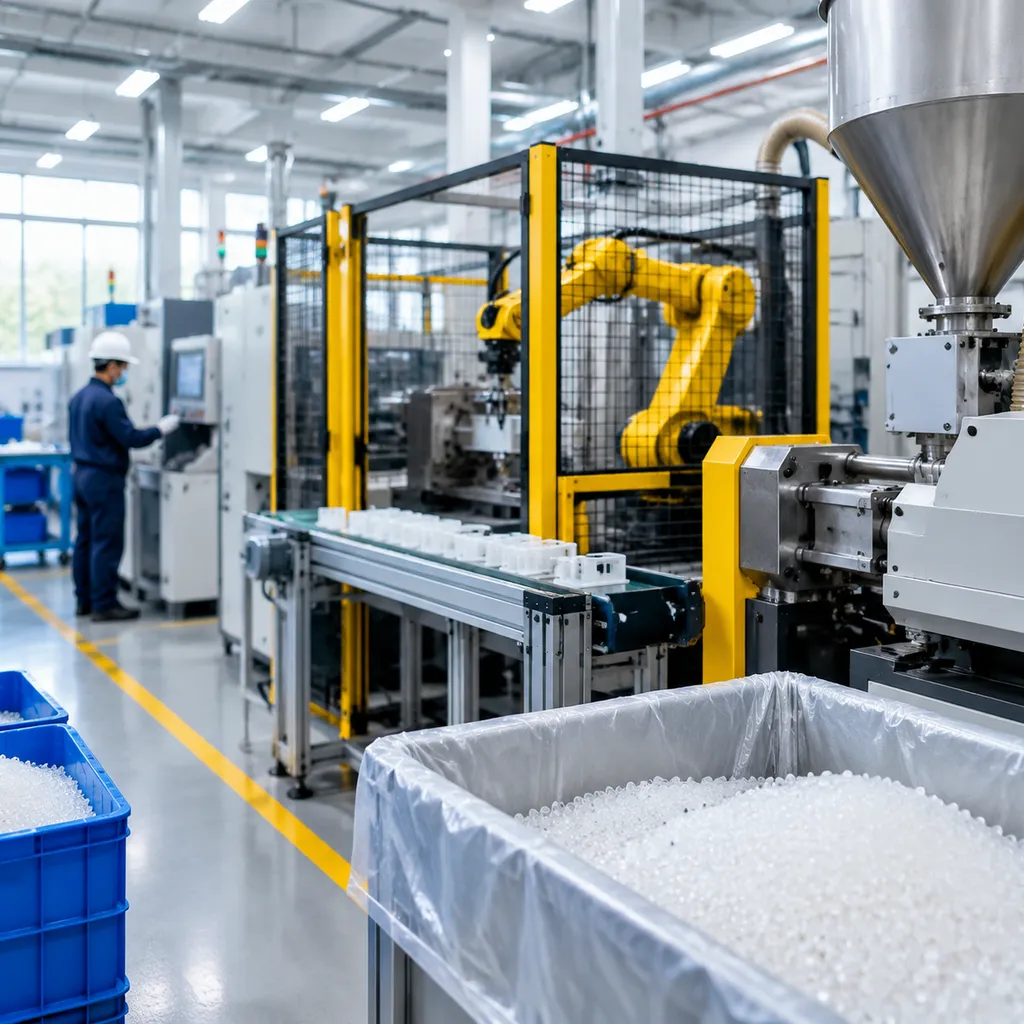
For U.S. buyers, the key is picking a Chinese partner that’s genuinely system-driven, not just cheap. A good starting point is reviewing how their plastic injection moulding factory is set up and how they control quality on the floor.
Why Jino Injection Moulding Is My Go-To Factory for PP Projects
As an injection molding entrepreneur, I lean on jino injection moulding for PP-heavy programs because they tick the boxes that matter in the U.S. market:
- 20+ years focused on plastic injection molding
- 300+ successful PP programs across thin-wall packaging, automotive trims, and caps/closures
- In-house material lab – MFI checks, color matching, mechanical testing, PP shrinkage verification
- Free DFM – including PP flow, gate location, warpage risk, and cost-optimized mold layout
- Strong experience with:
- Food-grade PP containers for U.S. brands
- Impact-modified and talc-filled polypropylene for automotive
- PP living hinges and snap-fits that survive millions of cycles
 English
 French
 German
 Spanish
 Italian
 Polish
 Russian
 Japanese
 Korean
 Arabic
 Dutch
 Portuguese
 Swedish
 Norwegian
 Belarusian
 Armenian