
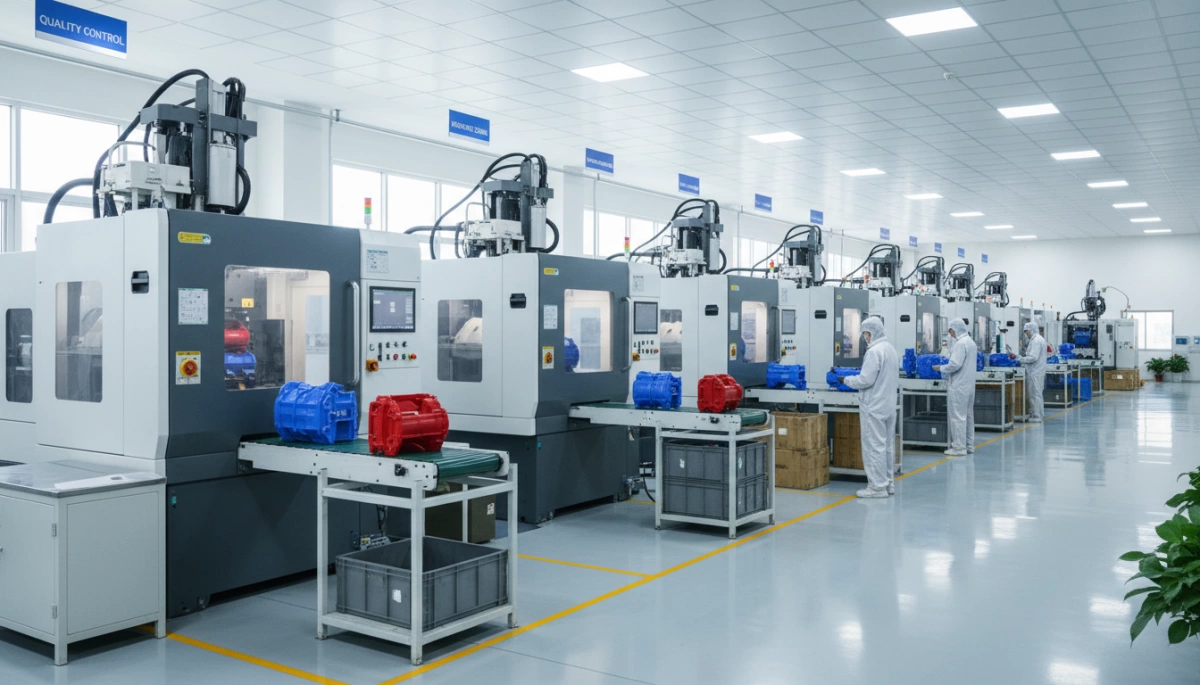
Why Injection Moulding in China Matters
If you buy plastic parts or manage hardware projects, injection moulding in China is hard to ignore. China combines lower tooling cost, huge capacity, and full-service support (design, tooling, molding, assembly) in a way most regions can’t match. That’s why so many brands now source custom plastic parts from China instead of building everything locally.
Done right, you can get:
- Molds at 30–60% lower cost than typical US/EU prices
- Fast lead times from CAD to T1 samples
- High-volume injection molding with stable quality and consistent supply
- Access to overmolding, insert molding, 2K molding, and precision injection moulding in one supply base
But those benefits only show up if you pick the right China mold manufacturers and manage quality and communication properly.
Real Questions Buyers Actually Ask
When buyers talk to me about China injection molding services, the questions are usually very direct:
- “Can I really trust the China plastic mold makers with my design and IP?”
- “How much cheaper is injection mold cost in China in reality, after shipping and duties?”
- “Can Chinese factories hold tight tolerances for automotive or medical projects?”
- “What happens if the mold has issues or parts are out of spec?”
- “Are there hidden costs in tooling and molding in China that don’t show up on the quote?”
These questions are valid. The gap between a perfect PowerPoint quote and real production is big. My job is to close that gap with clear expectations, hard numbers, and a tight process.
What You Can Actually Get Done in China (And What You Can’t)
China is very strong at end‑to‑end plastic injection molding for export:
You can realistically get:
- Production molds: single-cavity, multi-cavity, family molds, hot runner tools
- Custom plastic parts: ABS injection molding, PC, PP, PA, filled materials, etc.
- Advanced processes: overmolding in China, insert molding, 2K/bi‑color molding
- Precision injection moulding in China for automotive, consumer electronics, and many OEM injection molding projects
- Rapid prototyping injection molding in China and bridge tooling for pilot runs
- Assembly and packaging under one roof for ready-to-ship products
You should not expect:
- Ultra‑low volumes with heavy engineering support at rock-bottom prices
- Aerospace-level documentation from every shop by default
- Perfect English and Western-style project management without setting clear structures
- Zero‑risk IP protection if you skip contracts, NDAs, and supplier vetting
China can do extremely complex work, but only if the supplier, documentation, and communication match the technical level of your part.
Who Should (and Shouldn’t) Use Chinese Injection Molding
Chinese injection molding companies are a strong fit if you:
- Need mid to high volumes and want to amortize a mold fast
- Want lower-cost plastic molding without sacrificing industrial-level quality
- Are open to working with export injection moulding specialists (Shenzhen, Dongguan, etc.)
- Can define clear specs: 3D files, 2D drawings, tolerances, materials, surface finishes
- Are willing to invest in quality control, inspections, and process setup
You may be better off staying local if you:
- Only need very small batches or frequent design changes
- Have highly sensitive IP but no appetite for legal and structural protection in China
- Need daily onsite visits or ultra-fast physical iterations that only a local shop can provide
- Work in regulated sectors (certain medical-grade molding, defense) where your compliance system is fully built around domestic suppliers
If you’re serious about scaling and want a reliable, long-term injection molding partner in China, the model works. The key is to treat it as a structured sourcing project, not just a cheap quote hunting exercise.
China Injection Moulding Market Overview
China’s role in global plastic injection moulding
China is the backbone of global plastic injection molding. A huge share of the world’s custom plastic parts, tools, and assemblies are produced by Chinese injection molding companies and shipped to North America, Europe, and Asia every day. From low-cost plastic molding to high-volume, fully automated lines, you’ll find almost every capability in one ecosystem.
For global buyers, China is no longer just a “cheap source.” Many established China mold manufacturers run modern plants with multi-axis CNC, EDM, and advanced process control, similar to what you’d see in Western facilities. If you’re looking for a stable China plastic manufacturing base that can support both tooling and molding, China is usually on the shortlist.
How China became a top destination for plastic parts
China became a top destination for plastic injection molding by combining:
- Dense manufacturing clusters (Shenzhen, Dongguan, Ningbo, Shanghai, Suzhou, etc.)
- Mature China plastic mold makers and tool shops that can turn around molds fast
- A deep supply chain for resins, steel, hot runners, and automation
- Experience with export projects for OEM injection molding to EU, US, and Japan
- Competitive injection mold cost in China vs. US/Europe, especially for complex tools
This combination means you can go from design to mass production with one integrated partner that handles custom mold design, tooling, molding, and assembly. If you need a broader intro to the injection process itself, I break it down clearly here in our guide on what plastic injection moulding is and how it works.
Typical use cases: automotive, consumer goods, electronics, medical, industrial
China’s injection moulding capacity is spread across almost every major industry. Typical use cases for plastic injection molding in China include:
- Automotive injection parts China
- Interior trims, clips, brackets, connectors
- Under-the-hood components using high-temp engineering resins
- Parts made under IATF 16949 systems for global Tier 1s
- Consumer goods and appliances
- Housings for home appliances and small kitchen devices
- Enclosures, handles, knobs, transparent covers
- Multi-cavity family molds for high-volume consumer products
- Consumer electronics and telecom
- Precision housings for phones, routers, and wearables
- ABS injection molding China for glossy, tight-tolerance cases
- Overmolding China for soft-touch grips and seals
- Medical and healthcare
- Disposables, diagnostic components, and device housings
- Medical grade molding China with ISO 13485 and cleanroom setups
- Focus on traceability, biocompatible resins, and strict quality control
- Industrial and packaging
- Connectors, gears, machine covers, technical parts
- Industrial packaging, caps, and closures
- China contract manufacturing plastic parts for OEM machinery and equipment
If you’re looking for a plastic injection moulding factory that can handle both tooling and molding for these applications, I run a full-service setup that covers design, tooling, and serial production under one roof: you can check how we work here on our plastic injection moulding factory and capabilities page.
Why China Leads in Injection Moulding
China didn’t become the go‑to for injection moulding by accident. It’s a mix of history, scale, cost structure, and very deliberate policy.
Historical growth of China’s molding industry
Since the late 1990s, China has poured investment into plastic injection molding capacity:
- Rapid build‑out of tool shops and molding factories in key regions like Guangdong, Zhejiang, and Jiangsu.
- Technology upgrades from basic single‑cavity tools to high‑cavitation, hot‑runner molds and tight‑tolerance production.
- Steady move up from cheap commodity parts to precision injection moulding for automotive, medical, and electronics.
As global brands shifted sourcing, Chinese mold makers learned fast, standardized processes, and built serious export experience.
Manufacturing clusters and supply chain hubs
China’s advantage is the cluster effect:
- Major hubs like Shenzhen, Dongguan, Ningbo, Suzhou combine mold design, steel suppliers, heat treatment, surface finishing, molding, printing, and assembly in one ecosystem.
- You can go from custom mold design to tooling and molding to final assembly without leaving the city.
- Local suppliers for steel, hot runners, resins, and automation cut both cost and lead time.
This density is why China mold manufacturers can quote aggressively and still deliver quickly.
Labor cost structure and productivity
Labor is no longer “ultra‑cheap,” but the cost-to-productivity ratio is still hard to beat:
- Skilled toolmakers and process engineers at lower rates than US/EU or Japan.
- High machine utilization (24/7 shifts, “lights‑out” cells in some shops).
- Mature workflows for high‑volume injection molding and low‑cost plastic molding without sacrificing basic quality.
The result: competitive injection mold cost in China and strong pricing on both tooling and parts.
Government support and manufacturing policies
Policy is a big part of why China plastic manufacturing dominates:
- Tax incentives and subsidies for advanced manufacturing, robotics, and digital factories.
- Support for export‑oriented Chinese injection molding companies and industrial parks.
- Push for higher value: medical grade molding, automotive, and electronics components with traceability and compliance.
This long‑term backing keeps the industry investing in better machines, better molds, and more automation.
If you also want to understand how injection moulding economics work in general, I break down core cost drivers and savings on this page about injection moulding cost and pricing factors.
Cost Advantages of Injection Moulding in China
How China Cuts Tooling Costs vs US and Europe
When you source injection moulds in China, the first big win is tooling cost. Chinese mold manufacturers benefit from:
- Dense mold-making clusters (Shenzhen, Dongguan, Ningbo) that share suppliers and know‑how
- Lower engineering and machining costs for the same level of complexity
- Very competitive rates for EDM, CNC, polishing, and mold fitting
- Ability to right-size tooling (prototype, bridge, or full production) based on your volumes
For many projects, you’ll see 30–60% lower mold cost compared with US or European shops at equivalent quality.
If you want a deeper breakdown of what drives price, I’ve covered that in detail in this guide on injection mould cost in China.
Typical Mold Price Ranges in China
These are ballpark numbers I see regularly with export-grade Chinese mold makers:
- Simple single-cavity mold (small housing, basic geometry):
~USD 2,000 – 4,000 - Medium mold (more features, sliders, textured surfaces):
~USD 4,000 – 10,000 - Complex multi-cavity / family mold:
~USD 8,000 – 25,000+ depending on size, cavity count, and steel
Prices vary with:
- Mold steel (P20 vs H13 vs S136)
- Cavities and hot runner brands
- Surface finish, tolerances, and expected mold life
Part Pricing: Low, Mid, and High Volumes
China’s edge gets stronger as your volume goes up:
- Low volume (hundreds – a few thousand pcs):
Part prices are often similar to Western suppliers; freight and tooling amortization can eat the advantage. - Mid volume (10,000 – 100,000 pcs):
Clear savings on part price thanks to optimized cycle times, material purchasing, and labor efficiency. - High volume (100,000+ pcs):
This is where high‑volume injection molding in China shines. Your per-part cost can drop dramatically once mold cost is spread over big runs.
Most Chinese injection molding companies will quote you:
- Mold cost (one-time)
- Per-part price at different volume breaks
- Optional secondary operations (painting, printing, assembly, packing)
For a quick feel of how part and tooling add up together, check my breakdown on injection moulding pricing.
Where the Real Savings Come From (and Where They Don’t)
Real savings usually come from:
- Lower tooling cost (your biggest early cash hit)
- Efficient cycle times and well‑tuned processes
- Competitive material sourcing for standard resins (ABS, PP, PC, PA, etc.)
- Integrated tooling + molding + assembly under one roof
They don’t come from:
- Cutting corners on steel or design (you’ll pay later in maintenance and rejects)
- Ignoring quality control (scrap and returns kill any price advantage)
- Underestimating shipping, duties, and inventory costs
When China Is Not the Cheapest Option
China is not automatically the lowest-cost choice for every project. You might be better off locally when:
- Your volumes are very low (prototypes or short runs better done via local or rapid tooling)
- Parts are large and bulky, making freight expensive
- You need ultra-fast turnaround for engineering changes and frequent design tweaks
- Your country has high import duties, complex customs, or expensive logistics from Asia
- You require high-mix, low-volume production with constant changeovers
In those cases, a nearby injection molder can be cheaper on a total landed cost basis, even with higher hourly rates.
Manufacturing capabilities for injection moulding in China
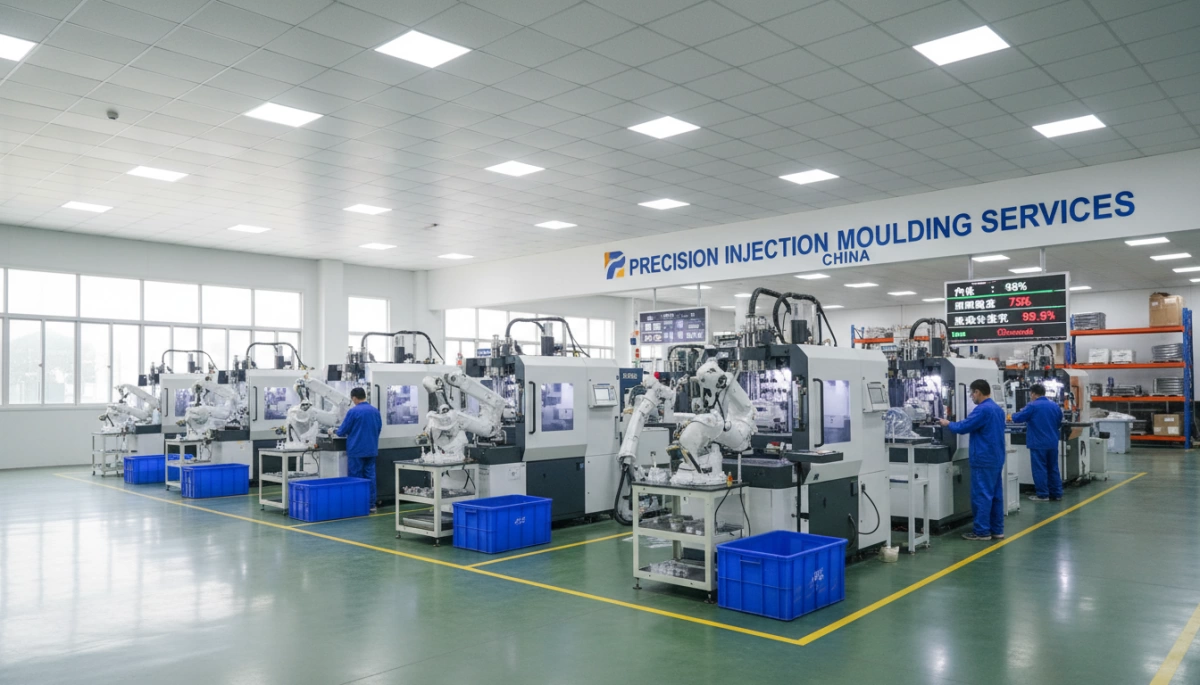
When you look at injection moulding in China, the real advantage is the depth and flexibility of manufacturing capabilities. You’re not just getting “cheap plastic parts” – you’re tapping into a very complete ecosystem that can handle simple housings, tight-tolerance components, and full assemblies under one roof.
Wide range of plastic materials in China
Chinese injection molding companies can source pretty much any mainstream resin you’re used to:
- Commodity plastics: PP, PE, PS, ABS, ASA, PVC, HIPS
- Engineering plastics: PC, PA (Nylon), POM, PBT, PET, PMMA, PC/ABS blends
- High-performance: PPS, PEEK, PSU, LCP (more niche but available through established suppliers)
- Specialty grades: glass-filled, flame-retardant (UL94 V-0), UV-resistant, food-contact, medical-grade
For custom plastic parts in China, we usually combine resin selection with part design and mold design upfront, so the chosen material, gate layout, and cooling all work together. If you need guidance on mold steel and resin pairing, our plastic injection mould tooling resources cover that in detail.
Advanced processes: overmoulding, insert moulding, 2K molding
Most serious China mold manufacturers now support advanced processes, not just basic single-shot parts:
- Overmoulding China: Soft-touch grips over rigid cores, seals over plastic housings, branding features, etc.
- Insert molding manufacturers China: Metal inserts, threaded brass, magnets, bushings molded directly into the part.
- 2K molding / multi-shot molding: Two materials or two colors in one cycle, ideal for seals, buttons, and visible consumer products.
If you’re running OEM injection molding in China for consumer electronics, tools, or automotive, these processes let you reduce secondary assembly, improve look and feel, and get more function per part.
Precision injection moulding and tight tolerances
Precision injection moulding in China has moved far beyond “rough” consumer parts. In the right shop, you can hit tight tolerances and consistent repeatability:
- Typical commercial parts: ±0.05–0.10 mm
- Precision parts (with good tool design and stable process): ±0.01–0.02 mm on critical dimensions
- Capability for micron-level features for specific connectors, gears, and medical components
The key is matching your tolerance requirements to a factory with the right CNC, EDM, and metrology equipment – and a proven track record in precision injection molding China. We always push for full 2D drawings with GD&T, not just 3D files, so the factory knows exactly what matters.
High-volume vs. low-volume injection molding
China is strong in high-volume injection molding, but low-volume runs are absolutely possible if you pick the right setup:
- High-volume injection molding China
- Hardened steel molds (H13, S136, etc.)
- Multi-cavity or family molds
- Automated part handling and assembly
- Very competitive unit cost at scale
- Small batch injection molding China
- Soft tools (aluminum or pre-hardened steel)
- Fewer cavities, simplified mechanisms
- Ideal for pilot runs, market tests, and niche products
Our approach is to size the tooling investment to your realistic volume, so you’re not overpaying for a lifetime mold on a low-volume product.
Rapid prototyping and bridge tooling services
China is also a strong choice when you need to move fast from idea to production:
- Rapid prototyping injection molding China using:
- Quick-cut aluminum tools
- Simplified cooling and ejection
- Limited cosmetic polish where it doesn’t matter
- Bridge tooling between 3D printing/CNC prototypes and full production tools
- Small runs (hundreds to a few thousand shots) to validate:
- Fit and function
- Assembly with other components
- Market feedback before you lock the final mold
For brands that want a one-stop solution from first concept to mass production, our custom plastic injection moulding services bundle design-for-manufacturing, tooling, molding, and basic assembly into a single, coordinated project.
Benefits of Sourcing Injection Moulding in China
When you source injection moulding in China, you’re not just chasing “cheap parts” – you’re buying speed, flexibility, and full-service support.
Lower Total Landed Cost
You can usually get both tooling and parts at a lower total landed cost than in the US or Europe.
Where the savings come from:
- Mold design + build cost
- Efficient cycle times and high machine utilization
- Local resin sourcing and bulk purchasing
- Optional value-add: printing, welding, basic assembly
| Item | Typical China Advantage* |
|---|---|
| Steel mold (simple) | ~30–50% lower than Western suppliers |
| Multi-cavity production mold | ~25–40% lower |
| Per-part price (mid–high qty) | ~15–35% lower landed, depending on volume |
*Ranges are indicative, not quotes.
If you’re new to injection moulding, it’s worth understanding the basics of what an injection mold is and how it affects cost, because that’s where most of the savings are made (not just the part itself).
Fast Lead Times and Quick Turnaround
Chinese mold shops and molding factories are set up for speed:
- Tooling lead time: often 3–6 weeks for standard molds
- T1 samples: fast iterations, day-and-night shifts if needed
- Production: multiple presses available for quick ramp-up
When you combine this with efficient export logistics, you can move from design to shippable parts much faster than in many domestic markets.
Scalability: Prototype to Mass Production
One big advantage of plastic injection molding in China is easy scalability:
- Prototype / bridge tooling: lower-cost soft tools to verify design
- Small batch: short runs for pilot builds or regional launches
- High-volume production: multi-cavity tools, 24/7 production
This lets you launch lean, then scale once demand is proven—without needing a new supplier.
Full-Service: Design, Tooling, Molding, Assembly
Many Chinese injection molding companies (including us) operate as full-service partners:
- DFM (Design for Manufacturability) support
- Custom mold design and build
- Precision molding and coloring
- Sub-assembly / full assembly
- Packaging and export prep
This “under one roof” setup cuts down handoffs, miscommunication, and hidden costs in your supply chain. If you’re still learning how injection molding works, partnering with a full-service shop can save you from a lot of early mistakes.
Flexibility for Complex and Multi-Cavity Molds
China mold manufacturers are very comfortable with complex tools:
- Multi-cavity molds for lower per-part costs
- Family molds for several related parts in one tool
- Overmolding and insert molding for added functionality
- Side-actions, slides, hot runners, complex parting lines
If you’re planning demanding parts (like automotive components or tight-tolerance consumer housings), a capable Chinese toolmaker can usually offer multiple tooling options to balance cost, speed, and quality.
Common Challenges and Risks in Injection Moulding in China
Sourcing injection moulding in China can work very well, but only if you go in with your eyes open. Here are the main risks I see global buyers run into, and what they actually mean in practice.
Quality variation between Chinese suppliers
Not all Chinese injection molding companies are playing at the same level.
- Some shops are world‑class with strong quality systems; others are pure “price only”.
- You’ll see big gaps in:
- Dimensional consistency (warpage, short shots, flash)
- Resin quality and traceability
- Tooling life and maintenance
- If you buy only on the lowest injection mold cost in China, you usually pay later in scrap, rework, and delays.
Communication and time zone issues
Distance alone isn’t the problem; misalignment is.
- English levels and technical vocabulary vary a lot.
- If specs are not 100% clear, suppliers may “fill the gaps” based on their habits, not your standards.
- Time zone lag means each unclear email can cost you a full day.
- You need simple, unambiguous drawings and models, plus a clear contact who actually understands plastic injection molding in China.
Cultural differences in project expectations
A lot of problems start because both sides assume different “normal”.
- Some Chinese mold manufacturers will:
- Treat tolerances as flexible if not tightly defined.
- See minor deviations as acceptable if the part “looks OK”.
- Push to ship fast instead of stopping to discuss small issues.
- You must define what “OK” means: cosmetics, packaging, AQL, test methods, and what happens when parts fail.
Intellectual property and design protection risks
When you send CAD files to China, you need a plan to protect them.
- Risks:
- Mold or design copied for other customers.
- Sub‑suppliers using your tool without your knowledge.
- You reduce this by:
- Using clear NDAs and tooling ownership clauses.
- Limiting who gets full files.
- Working with established export-focused China plastic mold makers with a track record serving OEMs.
(For background on how molds are built and where IP sits in the process, it helps to understand what injection moulding is and how it works.)
Shipping, logistics, and customs delays
Even when production is smooth, international logistics can still bite.
- Common issues:
- Port congestion and unexpected shipping delays.
- Missing or incorrect export/import paperwork.
- Damage from weak export packaging on plastic parts.
- These add:
- Extra cost (expedited air shipments, storage).
- Schedule risk if you run lean inventory.
- Plan realistic lead times, pick the right Incoterms, and make sure packaging for plastic injection molding parts is designed for long-haul transport.
How to Reduce Risks When Working With Chinese Molders
When you source injection moulding in China, the goal isn’t “cheap at any cost” – it’s reliable, repeatable, and protected. Here’s how I keep risk under control when working with Chinese injection molding companies.
Clear Specifications and Quality Standards
Most problems start with vague specs. Don’t leave anything open to “factory interpretation.”
- Share full 3D files (STEP/IGS) + 2D drawings with tolerances, material, and surface finish.
- Define critical dimensions, cosmetic areas, and acceptable defects (e.g. AQL levels, scratch/flow mark rules).
- Lock in resin brand and grade (e.g. SABIC PC, LG ABS), not just “ABS” or “PC”.
- Reference standards: ISO, ASTM, SPI finish levels where possible.
- For precision injection moulding in China, specify Cpk/Cp targets for key dimensions.
If the supplier can’t send back a clear DFM and control plan based on your specs, that’s a risk.
Contracts, NDAs, and IP Protection
You’re sharing custom plastic parts and tooling designs – protect them from day one.
- Sign a Chinese + English NDA before sharing detailed files.
- Use a manufacturing contract that clearly states:
- You own the mold and all 3D/2D data
- No selling parts or molds to third parties
- No reuse of your design, even with small changes
- Whenever possible, register your trademark and key patents in China.
- Put the mold ownership and mold storage location in writing.
Serious China mold manufacturers are used to this and will cooperate. Push back is a red flag.
Using Third-Party Inspections and Audits
Never rely only on what’s said on email or in a video call.
- Before placing a big order, do a factory audit (in-person or via a third-party QC company).
- During tooling and production, use:
- Pre-production inspection (mold readiness, resin checks)
- During production (DUPRO) inspection
- Pre-shipment inspection with dimensional and cosmetic checks
- For complex projects, ask for process capability reports (Cp, Cpk), not just “OK” photos.
Third-party inspections in China are cheap compared to the cost of a failed shipment.
Setting Up Quality Control Checkpoints
Don’t wait until parts arrive in your country to find out something went wrong.
Set clear checkpoints:
- Before cutting steel: mold design review (gates, parting line, ejectors, cooling).
- T1 samples: full FAI (First Article Inspection) + your own fit/assembly tests.
- Before mass production: sign off on golden samples and inspection criteria.
- During production:
- Defined sampling plan per batch
- Regular dimensional reports for critical parts
- Clear reaction plan if parts fall out of spec
If you’re new to molding, it helps to understand how plastic injection moulding works step by step so you can set smarter checkpoints.
Choosing the Right Shipping and Logistics Strategy
Good parts shipped badly are still a failure.
- Choose the right Incoterms (EXW/FOB/CIF/DDP) based on your experience and volume.
- For first orders or urgent runs, use air freight; for steady production, move to sea freight.
- For sensitive or high-precision parts:
- Use custom foam, trays, or dividers
- Specify bagging, labeling, desiccants, and carton strength
- Build in buffer time for customs, port congestion, and holidays in China.
- For high-value molds, ship with insurance and robust wooden crating.
Treat logistics as part of your quality plan, not an afterthought. Done right, injection moulding in China can be both low-risk and cost-effective.
Understanding Injection Mold Cost in China
When buyers ask about injection mold cost in China, they’re really asking: “What do I actually pay, and what’s driving that number?” Here’s the short, practical breakdown.
What Actually Drives Tooling Cost
Key cost drivers for plastic injection tooling in China:
- Size of the mold – Larger mold base, more steel, bigger machine needed.
- Steel type
- Cheap: P20 / 45# steel (shorter life, okay for low–mid volume)
- Mid: H13, 1.2344 (better wear, higher volume)
- High: S136, 1.2083, stainless (medical, clear parts, corrosive resins)
- Part complexity – Undercuts, sliders, lifters, texture, mirror polish, tight tolerances.
- Number of cavities – More cavities = higher mold price but lower part cost.
- Surface finish & tolerance – High cosmetic or precision demands add machining and fitting time.
Prototype vs Soft vs Production Molds
You’ll see three main mold types in China plastic mold makers:
| Type | Typical Use | Steel / Build | Life (shots) | Cost Level |
|---|---|---|---|---|
| Prototype mold | Design validation, testing, small runs | Aluminum / cheap steel | 500–10,000 | Lowest |
| Soft mold (bridge) | Low-mid volume, bridge to production | P20 / similar | 50,000–200,000 | Medium |
| Production mold | Long-term, high volume | H13 / S136 / 1.2344 | 500,000+ | Highest |
If you’re not sure which you need, we usually start with a costed proposal showing both prototype tooling and full production tooling so you can match it to your forecast volume.
Common “Extra” Charges You Should Expect
Chinese injection molding companies typically quote mold cost + extras. Plan for:
- Sampling runs (T1, T2, etc.)
- Engineering changes (ECOs) after first samples
- Modifications for design updates or added features
- Extra texture / high polish beyond standard SPI finishes
- Spare parts for the mold (inserts, pins, etc., if requested)
I always recommend locking these in clearly in the quote and contract.
How Mold Pricing in China Compares
In general, China mold manufacturers come in at roughly:
- 30–60% lower than Western suppliers (US/EU) for the same spec
- Faster lead time on average, especially for standard injection moulds and prototype injection molds
But this gap shrinks if:
- You need frequent on-site visits
- You have very low volume and very simple tools (local shops may be similar)
Typical Cost Benchmarks (Rough Ranges)
Realistic ballparks for China injection mold cost (USD, ex-works, for reference only):
| Mold Type / Complexity | Ballpark Range (USD) |
|---|---|
| Simple single-cavity small part | $1,500 – $4,000 |
| Medium part, 2–4 cavities, moderate complexity | $4,000 – $10,000 |
| Complex tool with sliders, 4–8 cavities | $10,000 – $25,000+ |
| Large automotive / multi-cavity family mold | $20,000 – $80,000+ |
These numbers change with steel, precision, and volume goals. For accurate budgets, we always quote from your 3D/2D data and volume plan, same as we do for our standard injection mould tooling services in China.
Part Pricing and Total Project Cost Breakdown for Injection Moulding in China
How Chinese Factories Quote Part Prices
Most China injection molding suppliers quote per part based on a simple formula:
- Raw material (resin) cost per part
- Machine time (cycle time × machine hourly rate)
- Labor per cycle (setup + handling + inspection)
- Allocation of tooling amortization (if agreed)
- Overhead and profit margin
You’ll usually see:
- EXW unit price (ex-works, factory gate)
- MOQ and price breaks (1k / 5k / 50k / 100k pcs)
- Notes on tooling ownership, payment terms, and lead times.
Impact of Resin, Cycle Time, Scrap Rate
Three things drive your part price hardest:
- Resin choice
- Commodity resins (PP, PE, ABS) = lower cost
- Engineering resins (PC, PA, PBT, PPS, PEEK) = higher cost
- Additives (UV, flame retardant, glass fiber, color masterbatch) can easily add 10–40% to material cost.
- Cycle time
- Thicker walls, big parts, long cooling = longer cycles = higher cost.
- Good mold design and precision tooling (like we do in our precision mould manufacturing) can cut cycle time and part cost.
- Scrap rate
- Runners, start-up scrap, color change purges, and QC rejects are all baked into your unit price.
- Stable process + proper mold design = lower scrap, better pricing.
Overhead, Packaging, Assembly Charges
Beyond resin and machine time, expect line items like:
- Overhead – general factory costs, usually built into unit price.
- Packaging – polybags, bubble wrap, trays, inner boxes, export cartons, labels.
- Assembly – sub-assembly, screw fitting, ultrasonic welding, labeling, testing.
- Special handling – cleanroom packing, ESD packaging, individual inspection.
Always ask for:
- Breakdown of part, assembly, and packaging cost per unit
- Standard vs premium export packaging options
Hidden Costs Many Buyers Miss
You can hit your budget on paper and still overspend because of:
- Engineering changes (ECR/ECN) after tooling is cut
- Extra samples / T2, T3 runs beyond what’s included
- Tool maintenance and repairs if not clearly defined in the quote
- Quality failures leading to rework, sorting, or replacements in your country
- Freight class upgrades (air instead of sea) due to tight deadlines
- Bank fees, document fees, customs broker charges
Clarify up front:
- What’s included in mold price (how many revisions, who pays for changes).
- What happens if parts don’t meet spec at T1 and after mass production.
How to Model Total Landed Cost (Factory → Your Warehouse)
Don’t compare only the “per part” EXW price. Build a total landed cost model:
- Tooling cost
- Amortize over realistic volume (e.g., mold cost / 100k pcs).
- Part cost EXW
- Unit price × quantity.
- Packaging & assembly
- Per-unit × quantity.
- Freight & logistics
- Inland trucking in China
- Sea or air freight (per CBM/kg)
- Insurance
- Import costs
- Duties and tariffs
- VAT (if applicable in your market)
- Customs broker & documentation fees
- Quality and risk costs
- Third-party inspections
- Potential rework, scrap, or line stops at your plant.
Simple rule:
Total landed cost per part = (Tooling / lifetime pcs) + EXW unit cost + per-unit share of freight + duties + QC + local handling.
Only when you compare total landed cost, not just factory price, can you really judge whether injection moulding in China is the best move for your project.
How to Choose a Reliable Injection Moulding Manufacturer in China
If you get the supplier choice right, most other issues become manageable. Here’s how I’d approach picking a reliable injection moulding partner in China.
Where to Find Chinese Injection Molding Suppliers
You don’t need hundreds of suppliers. You need 3–5 good ones.
Best channels:
- B2B platforms: Alibaba, Made-in-China, Global Sources
- Industry clusters: Shenzhen, Dongguan, Ningbo, Suzhou for plastic injection molding China
- Trade shows: Chinaplas, Canton Fair (look for export-focused booths)
- Referrals: other OEMs, sourcing agents, tooling and molding consultants
Start wide, then quickly narrow down to factories that clearly focus on tooling and molding in China, not general trading.
Key Qualifications to Check First
Ask these questions in your first email or call:
| Qualification | What You Want to See |
|---|---|
| Years in business | 8+ years molding, 5+ years export |
| Export history | Regular shipments to EU/US/UK/JP/AU |
| Main markets | 60%+ export is a good sign |
| Team language skills | Dedicated English-speaking project engineer / sales |
| Own tooling shop? | Preferable for faster changes and better cost control |
If they can’t answer these clearly, move on.
Core Certifications (And What They Really Mean)
You don’t need every certificate, but some are non‑negotiable depending on your industry.
| Certification | For Which Buyers? | What It Tells You |
|---|---|---|
| ISO 9001 | General industrial / consumer products | Basic quality system, documented processes |
| ISO 13485 | Medical devices / medical-grade molding | Medical QMS, traceability and risk control |
| IATF 16949 | Automotive injection parts China | Automotive-level quality, PPAP, APQP, SPC capability |
Ask for valid certificates (not just logos in the PPT).
Evaluating Technical Capability & Equipment
A good China mold manufacturer will share an equipment list without hesitation.
Check for:
- Injection machines: tonnage range (e.g. 50T–800T+), brands (e.g. Haitian, Fanuc, Engel)
- Tooling capability: CNC, EDM, wire-cut, grinding in-house for custom mold design China
- Processes: overmolding China, insert molding, 2K molding, rapid prototyping injection molding China
- Software: CAD/CAM, moldflow analysis for DFM and warpage risk
- Quality tools: CMM, vision systems, hardness testers, color-matching equipment
You want proof they can handle precision injection moulding in China, not just basic housings.
Samples, Material Traceability & Process Control
Never skip this part.
Ask for:
- Sample parts:
- Similar material (e.g. ABS injection molding China, PC, PA, POM)
- Similar complexity (thin walls, clips, tight tolerances)
- Similar surface (texture, gloss, matte, polished)
- Material traceability:
- Resin COAs and MSDS from branded suppliers
- Lot tracing from incoming resin to finished parts
- Process control:
- Standard setting sheets (temperature, pressure, cycle time)
- In-process inspection records (Cp/Cpk if available)
- Documented work instructions at the machine
Factories that can clearly explain how injection moulding is done in their shop, how they set and lock parameters, and how they control flash and other defects are generally more reliable. You can quickly test this by asking them to walk you through their typical molding setup; if their explanation feels structured and consistent with best practices you’d see in resources like a detailed guide to how injection moulding is done, that’s a strong signal they know what they’re doing.
If you focus on these five areas, you’ll filter out 80–90% of risky Chinese injection molding companies and end up with a shortlist of serious, export-ready partners.
Red Flags When Sourcing Injection Moulding in China
When you’re choosing injection moulding in China, spotting red flags early saves you money and headaches. Here’s what I walk away from immediately:
1. Unclear or Incomplete Quotations
If a Chinese injection molding supplier sends you a quote that’s missing basics, be careful. A solid quote for plastic injection molding in China should clearly show:
- Mold cost (tooling), including steel type and number of cavities
- Part unit price at different volumes (e.g. 1k / 10k / 100k)
- Included services: DFM, sampling (T1/T2), mold modifications
- Lead times for tooling and mass production
- Payment terms and Incoterms (EXW, FOB, CIF, etc.)
If they can’t detail this, expect hidden costs and scope changes later.
2. No Documented Quality System
Serious China mold manufacturers always have a basic quality system in place. Red flags:
- No ISO 9001 certificate (or they can’t show a valid one)
- No sample inspection reports or dimensional reports to share
- No written work instructions or standard operating procedures
For regulated sectors like medical-grade molding, I only work with suppliers that can show cleanroom capability, process validation, and documented controls similar to what you’d see in specialized medical injection moulding services.
3. Reluctance to Sign NDAs or Share References
If a Chinese injection molding company is serious about export business, NDAs are normal:
- They refuse to sign your NDA or insist it’s “not needed”
- They won’t give you any overseas customer references
- They dodge questions about IP protection and mold ownership
Your IP and custom mold design must be protected in writing. If they’re vague now, they’ll be vague when problems show up.
4. Overpromising on Lead Time and Tolerance
Promises that sound too good usually are:
- Tooling in “2 weeks” for complex multi-cavity molds
- Extremely tight tolerances (e.g. ±0.01 mm) with no process plan
- “No problem” answers to every technical question without details
A reliable precision injection moulding partner in China will explain what’s realistic and where the limits are.
5. Poor Communication Before You Order
How they behave before they get your PO is how they’ll behave after:
- Slow replies (days, not hours) to basic RFQ questions
- Changing answers, inconsistent information, or missing details
- No clear project owner or engineer assigned to your job
If communication is already painful at the quotation stage, I don’t move forward. You need a Chinese injection molding supplier that answers clearly, on time, and with written confirmation of every key point.
Step-by-Step Sourcing Process for Injection Moulding in China
When I source injection moulding in China, I follow a clear process so I don’t lose money or time. Here’s the simple, practical flow I use and recommend to global buyers.
1. Define Your Part Requirements and Specs
Before you talk to any Chinese injection molding companies, lock down your basics:
- 3D file: STEP/IGES/XT is best
- 2D drawing: With key dimensions, tolerances, critical areas
- Material: Exact resin (e.g. ABS, PC+ABS, PA66+GF30). If you’re unsure, shortlist 2–3 options based on performance and cost. You can reference common options from guides on what plastics are used for injection moulding.
- Quantity & forecast: First order + yearly volume
- Finish: Texture, color (Pantone/RAL), gloss level
- Function: Where and how the part is used (indoor/outdoor, load, temperature)
The clearer your specs, the fewer surprises later.
2. Design for Manufacturability (DFM) for China Production
Then I make sure the design is realistic for Chinese tooling and molding:
- Add draft angles, proper wall thickness, and ribs
- Avoid features that force complex slides where not needed
- Check gate locations, ejector marks, and parting lines early (you can go deeper later using content like this guide to injection moulding gates)
- Confirm tolerances are achievable on standard China machines and steels
Ask for DFM feedback from suppliers before you freeze the design. Good Chinese mold makers will mark up your 3D and tell you what to tweak.
3. Build a Solid RFQ (Request for Quote) Package
To get clean and comparable quotes from China mold manufacturers, I always include:
- 3D + 2D drawings
- Material choice (or options)
- Estimated annual volume and order batch sizes
- Color and surface requirements
- Special requirements: overmoulding, insert molding, 2K, tight tolerances, packaging, assembly
- Quality expectations: dimensions, cosmetic level, needed reports
- Target Incoterm (FOB, EXW, CIF) and port
A good RFQ package signals that you’re serious and reduces “guess pricing.”
4. Compare Quotes Beyond Just Unit Price
When the quotes come back from Chinese injection molding suppliers, don’t just sort by the lowest number.
Compare:
- Tooling cost: Mold steel, number of cavities, expected life
- Part price structure: Price at different quantities (1k / 10k / 100k)
- Included services: DFM, T1 samples, minor changes, basic fixtures
- Lead time: Tooling build and first shipment
- Quality system: Certifications, inspection reports, traceability
If one quote is much lower, assume something is missing and ask questions.
5. Choose Based on Total Value, Not Just “Cheap China”
For injection moulding in China, the best supplier is rarely the absolute cheapest.
I look at:
- Technical capability for my type of parts (automotive, medical, consumer, etc.)
- Experience with export customers in my region (EU/US/UK/AU)
- Communication speed and clarity during RFQ and DFM
- Openness: Willing to discuss mold ownership, maintenance, and storage
In the end, you want a partner who can deliver stable quality, honest feedback, and predictable lead times — that’s where the real saving is over the life of the project.
From Design to Production With a Chinese Injection Molder
Working with a Chinese injection moulding partner goes smoothly when the process is clear from day one. Here’s how I normally run projects, from design hand-off to stable mass production.
3D Files, 2D Drawings & Tolerance Standards
To avoid any guesswork, I always push for a complete engineering package:
- 3D CAD files (STEP, IGES, Parasolid): used for mold design, flow analysis, and programming.
- Fully dimensioned 2D drawings: key dimensions, GD&T, material, color, texture, gate and ejector no-go zones.
- Clear tolerance standards: ISO, DIN, or ASME; define critical, major, and minor dimensions so the molder knows what really matters.
This is also the stage where we align on cosmetic standards and acceptable defects (and reference any known injection moulding defects to be strictly avoided).
Mold Design Review & DFM Feedback
Good Chinese mold makers won’t just “build what you send”; they’ll challenge it:
- DFM (Design for Manufacturability): recommendations on wall thickness, draft angles, ribs, gate locations, and parting lines.
- Mold flow analysis when needed: to predict warpage, sink marks, weld lines, and optimize gate/runner layout.
- Review loop: you sign off on the final mold design (2D layout + 3D mold assembly) before steel cutting.
If a supplier skips serious DFM, that’s a red flag.
Mold Fabrication Milestones & Progress Updates
For tooling in China, I like to lock in clear milestones:
- Steel ordering & CNC roughing
- Finish machining, EDM, polishing, and texture
- Assembly, bench fitting, and pre-trial checks
A solid molder will send weekly progress reports with photos/videos of machining and assembly, so you’re never guessing where your tool is.
T1 Samples, Revisions & Mold Validation
Once the mold is ready, the real testing starts:
- T1 samples: first-off shots to check dimensions, fit, function, cosmetic quality, and molding issues.
- Engineering changes: tweak gates, vents, cooling, or minor part changes if needed; document all changes clearly.
- T2/T3 runs: confirm stability and repeatability at near-production conditions (cycle time, temperature, pressure).
Only after consistent samples meet spec do I sign off the mold as validated.
Quality Standards: PPAP, FAI & Reliability Tests
For export injection moulding in China, especially in automotive or medical, documentation is non-negotiable:
- FAI (First Article Inspection): full dimensional report on initial production run.
- PPAP (when required): process flow, control plan, capability data (Cp/Cpk), material certs, and sample parts.
- Reliability tests: mechanical strength, life testing, environmental aging, chemical resistance—based on your industry needs.
The goal is simple: by the time the mold enters mass production, we’ve locked the process so you get repeatable, reliable parts with no surprises.
Quality Control for Injection Moulding in China
When you source injection moulding in China, quality control is the make-or-break factor. Here’s how I set up a system that actually works in real life, not just on paper.
Incoming Material Checks & Resin Verification
Before production starts, I always lock down the resin:
- Approved material list by brand, grade, and supplier (e.g. ABS, PC, PA, PP, medical-grade resins).
- COA (Certificate of Analysis) from the resin supplier for every batch.
- Incoming inspection: melt flow index, color, moisture (especially for hygroscopic materials).
- Material traceability: lot numbers logged and linked to each production batch.
If you’re using special engineering plastics, tie this back to your part design and the types of plastics used for injection moulding so the factory doesn’t “substitute” cheaper resins.
In-Process Inspections & Process Capability (Cp, Cpk)
Good Chinese molders don’t just check at the end; they control the process:
- First-off inspection at the start of each shift or setup.
- Critical dimensions checked at fixed intervals (e.g. every 1–2 hours or per X shots).
- Key process parameters (temperature, pressure, cycle time, cooling) locked and recorded.
- Cp/Cpk used for tight-tolerance or safety-critical parts to prove the process is stable.
You want all of this written into the control plan before mass production.
Final Inspection, Dimensional & Cosmetic Checks
Before parts ship, I expect:
- Full dimensional report vs 2D drawing (FAI for new tools, sampling reports later).
- Visual/cosmetic inspection under defined lighting and distance, with clear defect limits (sink marks, weld lines, flash, flow lines, color variation).
- Functional tests where needed: fit checks, assembly checks, simple load tests.
- AQL-based sampling with documented inspection results, not just “100% OK” claims.
Ongoing Quality Monitoring in Mass Production
Once a part is running, the risk is drift and shortcuts. To keep Chinese injection molding companies consistent:
- Standardized work instructions at the press, with photos and samples.
- Control charts for critical dimensions or process parameters.
- Periodic audits of machines, molds, and measurement tools.
- Regular run-at-rate or capability reviews for high-volume injection molding in China.
Handling Nonconformities, Rework & Returns
You will have issues at some point. The difference is how fast they’re contained:
- Clear nonconformity process: isolation, tagging, and blocking suspect stock.
- Root cause analysis (5-Why, fishbone) and documented corrective actions.
- Rework instructions agreed in writing (what’s allowed, what’s not).
- Sorting, replacement, or credit policy for any rejected or returned parts.
- For repeat business, I lock this into the supply agreement and link it to future orders.
If you build this kind of quality framework into your injection moulding in China from day one, you get stable parts, fewer surprises, and a reliable long-term supplier instead of constant firefighting.
Packaging, Shipping, and Logistics From China
When you source injection moulding in China, packaging and logistics can make or break your project. I treat this as seriously as tooling and molding.
Export packaging standards for plastic parts
For plastic injection parts, proper export packaging is non‑negotiable:
- Primary protection: PE bags, anti-static bags (for electronics), or vacuum bags for sensitive surfaces
- Secondary packaging: Custom trays, blister packs, foam, or cardboard dividers to avoid part-to-part scratching
- Outer cartons: Export-grade double-wall cartons, clear labels (part no., PO, qty, carton no.)
- Palletizing: Fumigated / ISPM‑15 pallets, shrink wrap, corner protectors, and correct stacking pattern
- Labeling: Barcodes, “fragile” / “keep dry” / “this side up” where needed
I always match packaging to part type: glossy housings, precision injection moulding parts and medical components get more protection than rough industrial pieces.
Shipping options: air, sea, rail, courier
You can mix modes based on cost vs speed:
- Air freight: 5–10 days door-to-door, higher cost, ideal for urgent launches or small batches
- Sea freight (FCL/LCL): 25–45 days door-to-door, best cost per unit for ongoing production
- Rail (China–EU): 15–25 days, mid-point between air and sea (mostly for Europe)
- Courier (DHL/UPS/FedEx): 3–7 days, ideal for samples, T1 parts, small urgent lots
For stable programs, I usually ship mass production by sea and keep a buffer via air for emergencies.
Lead times, Incoterms, and freight cost factors
Lead time is not just “factory ready date” – end-to-end timing includes:
- Production + packing
- Trucking to port/airport
- Vessel / flight schedule
- Customs clearance at both ends
- Local delivery to your warehouse
Key Incoterms we often work with:
- EXW: You arrange everything from factory gate
- FOB China port: We deliver to port, load, clear export
- CIF/CFR: We handle freight to your destination port
- DAP/DDP: Door delivery; with DDP we also prepay duties and taxes
Freight cost depends on:
- Volume/weight (CBM & kg)
- Mode (air vs sea)
- Port pair and season (peak season surcharges)
- Type of goods (hazmat surcharges for some additives/resins)
Customs, duties, and import paperwork
To keep customs smooth, I make sure you have:
- Commercial invoice with correct HS codes, realistic values, and clear description
- Packing list (carton & pallet breakdown, weights, dimensions)
- Bill of lading / airway bill
- Certificates if needed (origin, MSDS for some materials, test reports for certain markets)
You handle duty and VAT at destination, but we can help align HS codes and typical duty rates based on your country.
Best practices to avoid transit damage and delays
To keep your plastic parts safe and on time:
- Lock packaging specs in the PO (materials, stacking, labels, drop test level)
- Use moisture control (desiccant, humidity indicators) for hygroscopic resins like PA, PC, PBT
- Agree carton and pallet limits (max weight, height) for easy handling
- Book shipments early in peak seasons (pre‑CNY, Q3–Q4)
- Share full consignee and broker details before dispatch
- Photo and video check of packaging and palletizing before shipping
When we supply precision plastic injection moulding or high-value assemblies, I often recommend additional export tests and photo evidence, similar to how we document parts on our precision plastic injection moulding projects.
Industries Using Injection Moulding in China
Automotive injection parts and under-the-hood components
We supply automotive-grade plastic injection parts from China for both exterior and under-the-hood applications. Typical components include clips, brackets, sensor housings, reservoirs, interior trim, and connector bodies. With IATF 16949–ready systems, material traceability, and heat- and chemical-resistant resins (PA, PBT, PPS, etc.), Chinese molders can meet OEM and Tier‑1 requirements on safety, durability, and precision.
Consumer electronics housings and structural parts
Chinese injection molding companies are heavily focused on consumer electronics: phone and tablet housings, laptop covers, wearables shells, chargers, smart-home casings, and internal structural frames. You get cosmetic-grade surfaces, tight assembly fit, and options like overmoulding and insert molding for buttons, gaskets, and threaded inserts. For many programs, we pair standard ABS/PC housings with higher-end finishes and textures to hit both cost and brand feel.
Appliance and consumer product enclosures
For home appliances and everyday consumer products, China plastic manufacturing covers everything from dishwasher-safe parts to high-gloss cosmetic panels. Typical parts: vacuum cleaner housings, coffee machine covers, kitchen gadget bodies, personal care enclosures, and small fitness device casings. With family tools and multi-cavity molds, we keep unit costs low while maintaining consistent colors and mechanical performance. If you’re evaluating materials like polypropylene or HDPE for these applications, it helps to understand how polypropylene is injection moulded or how HDPE behaves in injection molding.
Medical-grade molding and cleanroom production
China now has a mature base of medical-grade molding: diagnostic device housings, test cartridge components, syringe and disposable parts, connectors, and small precision mechanisms. ISO 13485 factories with cleanroom molding (Class 7/8) and validated processes support biocompatible resins, traceability, and documented process control. We focus on stable tools, consistent shot-to-shot quality, and strong documentation because the bar for medical injection moulding is higher than for standard consumer parts.
Industrial components, connectors, and packaging
For industrial users, Chinese molders handle robust components: electrical connectors, sensor housings, machine guards, gears, spools, pump parts, and reusable or custom packaging. Here the priority is dimensional stability, impact strength, and long service life rather than cosmetics. We usually combine glass-filled engineering plastics with precision injection moulding in China to hit tight tolerances, maintain strength, and keep total landed cost competitive across Europe, North America, and other export markets.
Real-World Results: Injection Moulding in China That Actually Works
Typical Cost Savings for Global Buyers
From what I’ve seen on real projects, moving plastic injection molding to China usually delivers:
- 20–40% lower mold cost vs. US/EU for comparable steel, cavities, and complexity.
- 15–30% lower part cost once volumes reach steady production.
- Biggest wins are on multi-cavity tools, family molds, and high-volume consumer parts where cycle time and automation really pay off.
For example, an EU brand paying $60,000 for a multi-cavity mold locally brought the same tool spec to our China mold shop and landed it for around $35,000—with matching quality and full export-grade documentation.
Examples of Complex Custom Plastic Parts Made in China
Chinese injection molding companies are not just doing simple housings anymore. We’ve shipped:
- Automotive injection parts: under-the-hood brackets in glass-filled nylon, tight-tolerance clips, and connector housings for EU Tier-1s.
- Consumer electronics housings: cosmetic PC/ABS overmolding with texture, logo, and EMI shielding for US and EU brands (see how this ties into the broader electronics moulding market growth).
- Medical-grade molding: small batch injection molding in clear PC and medical PP, ISO 13485 controlled, with full traceability.
- Multi-shot and insert molding: 2K grips, seals, and metal-insert parts where overmolding in China combines tooling and molding under one roof.
On several of these projects, we used our in-house DFM and knowledge of precision moulding advancements to hit tolerances that used to be outsourced to Japan or Germany.
How Long-Term Partnerships Improve Quality and Lead Time
The real gains show up after the first project:
- Quality stabilizes: once your standards, tolerances, and cosmetic expectations are fully understood, scrap and rework drop sharply.
- Lead times shrink: repeat molds of similar families can be cut 20–30% faster because the factory already knows your design style and resin choices.
- Better engineering input: your Chinese mold maker starts suggesting smarter gating, cooling, or parting line changes upfront instead of just “building to print.”
- Stronger leverage: long-term volume gives you better pricing, faster slotting in the tool room, and priority during busy seasons.
We’ve had Western customers go from 10–12 week tooling lead times on their first project to 6–8 weeks on later tools, with fewer sampling rounds and cleaner T1/T2 parts.
Lessons Learned from Failed Sourcing Projects
Not every injection moulding in China story is smooth. The failed ones usually have the same root causes:
- Choosing the cheapest quote only
- Result: weak steel choice, slow cycles, early tool wear, flashing and dimensional drift.
- Fix: compare steel grade, cooling design, hot runner brand, and warranty—not just the bottom-line mold price.
- Vague specs and no clear quality standard
- Result: parts “look OK” to the factory but fail your fit, function, or cosmetic requirements.
- Fix: lock in 2D drawings, tolerances, critical dimensions, surface finish samples, and clear accept/reject criteria before PO.
- No on-site or third-party inspections
- Result: container arrives, you discover warpage or contamination at your warehouse, not at the source.
- Fix: use in-process checks and pre-shipment inspections; demand dimensional reports and material certificates.
- Poor communication and no project owner
- Result: missed deadlines, misunderstandings on engineering changes, and version confusion.
- Fix: assign a single project manager on both sides; keep all changes documented in writing with updated drawings and rev numbers.
The takeaway: injection moulding in China can absolutely deliver world-class quality and serious cost savings—but only if you treat it as a strategic partnership, not a one-off cheap job.
Future Trends in Injection Moulding in China
China’s injection moulding industry is moving fast, and it’s not just about “cheap parts” anymore. It’s about smarter, cleaner, and more precise manufacturing that global buyers can actually rely on long term.
Automation, Robotics & Lights‑Out Molding
Chinese injection molding companies are pushing hard on automation to cut labor cost and stabilize quality:
- Robotic part pickers and insert loaders to reduce defects and handling damage
- Automated material feeding and drying systems to keep cycles consistent
- Lights‑out molding cells (minimal operators on night shifts) for stable, high‑volume parts
For you, this means more consistent output, fewer operator mistakes, and better pricing for long‑run orders.
Digitalization & Real‑Time Monitoring
Factories are rolling out MES (Manufacturing Execution Systems) and digital dashboards on the shop floor:
- Live monitoring of cycle time, scrap, downtime
- Traceability by batch, resin lot, cavity, and machine
- Faster reactions to process drift and quality issues
If you’re in regulated industries like automotive or medical, this kind of traceable process data is becoming standard, not a “nice to have”.
Recycled Materials & Sustainable Practices
More overseas brands now demand recycled or low‑impact materials from China:
- Use of PCR (post‑consumer recycled) and PIR (post‑industrial recycled) resins where part performance allows
- Energy‑efficient presses and optimized cycle times
- Design changes to lightweight parts and reduce resin usage
When you’re reviewing materials like PP or ABS, it’s now realistic to discuss recycled blends or sustainable options during RFQ, not just virgin resins. For example, if you’re exploring alternatives for commodity resins, a look at specialized options like PP injection moulding can help you understand what’s moving in the market.
Higher Precision Tools & Micro‑Moulding
Chinese mold makers are investing in:
- High‑end CNC, EDM and grinding for tighter tolerance molds
- Polishing and texturing that match Western cosmetic standards
- Micro‑molding capability for tiny, high‑precision components
This is especially relevant if you’re sourcing electronics, connectors, medical housings, or precision gears, where micron‑level variation starts to matter.
Moving Up the Value Chain
China is no longer just a “build to print” source:
- More DFM support, joint development, and co‑engineering
- Integrated tooling + molding + assembly + packaging under one roof
- Stronger capabilities in engineering plastics like ABS, PC, PA and specialized resins, including applications where you might ask “can ABS be injection moulded?”—yes, and with higher precision and better cosmetic control in the right shop (ABS injection insight)
For global buyers, this shift means you can treat Chinese injection moulding suppliers as long‑term engineering partners, not just low‑cost factories.
Partnering With a Specialist Injection Moulding Factory in China
What a full-service injection molding partner offers
When you work with a specialist injection moulding factory in China, you should expect more than just parts off a press. A proper full-service partner supports you from idea to shipment, including:
- DFM and custom mold design for your parts
- Tooling and mold making (prototype, bridge, and production molds)
- Plastic injection molding in the resin grades you specify
- Secondary operations: printing, ultrasonic welding, tapping, inserts
- Assembly, testing, and retail-ready packaging
If you’re new to the process, a quick overview of the injection moulding basics and workflow is a good starting point before you dive into quotes.
Tooling, molding, assembly, and packaging under one roof
Keeping everything under one roof is where China plastic manufacturing really shines. A specialist OEM injection molding shop will typically offer:
- In‑house mold making: faster changes, lower transfer risk
- Dedicated molding cells for your parts (ABS, PP, PC, PA, etc.)
- Inline assembly for sub‑assemblies or finished goods
- Custom packaging: bags, trays, foam, color boxes, export cartons
This integrated setup cuts lead time, reduces handling damage, and gives you a single point of accountability for your custom plastic parts from China.
How a focused shop handles quality and communication
Serious Chinese injection molding companies know global buyers won’t tolerate guesswork. A focused factory usually runs:
- Documented quality systems (ISO 9001, and where needed ISO 13485 / IATF 16949)
- Standardized process control: setup sheets, parameter locking, SPC
- Clear reporting: dimensional reports, FAI, PPAP, photos, and videos
- Dedicated English-speaking project managers on WeChat/Teams/Email
They also have structured methods for troubleshooting molding defects and dialing in processes, similar to what you’d expect from a mature Western supplier.
What to prepare before you request a quote
If you want a sharp, realistic quote for plastic injection molding in China, show up with good data. Before you contact a China mold manufacturer, prepare:
- 3D CAD files (STEP/IGES) + 2D drawings with tolerances
- Material spec (e.g., ABS UL94 V0, PC+GF, medical-grade PP)
- Estimated annual volume and target order quantities
- Cosmetic requirements (texture, color code, gate/parting line expectations)
- Packaging and labeling needs (bulk vs retail, barcodes, logos)
- Quality expectations (AQL levels, testing requirements, certifications)
The more precise you are upfront, the fewer surprises you’ll face later in tooling and molding. This is the fastest way to get an accurate injection mold cost in China and a realistic part price that matches your market.
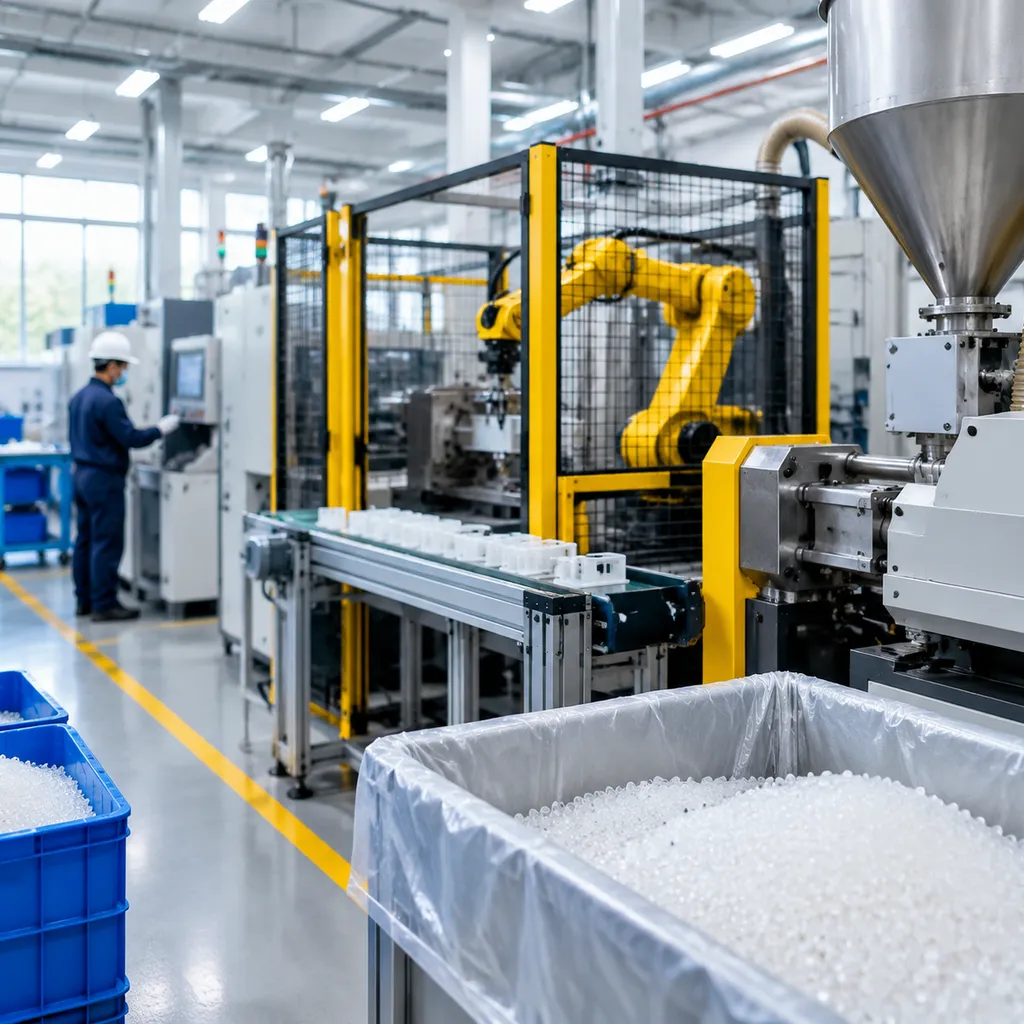
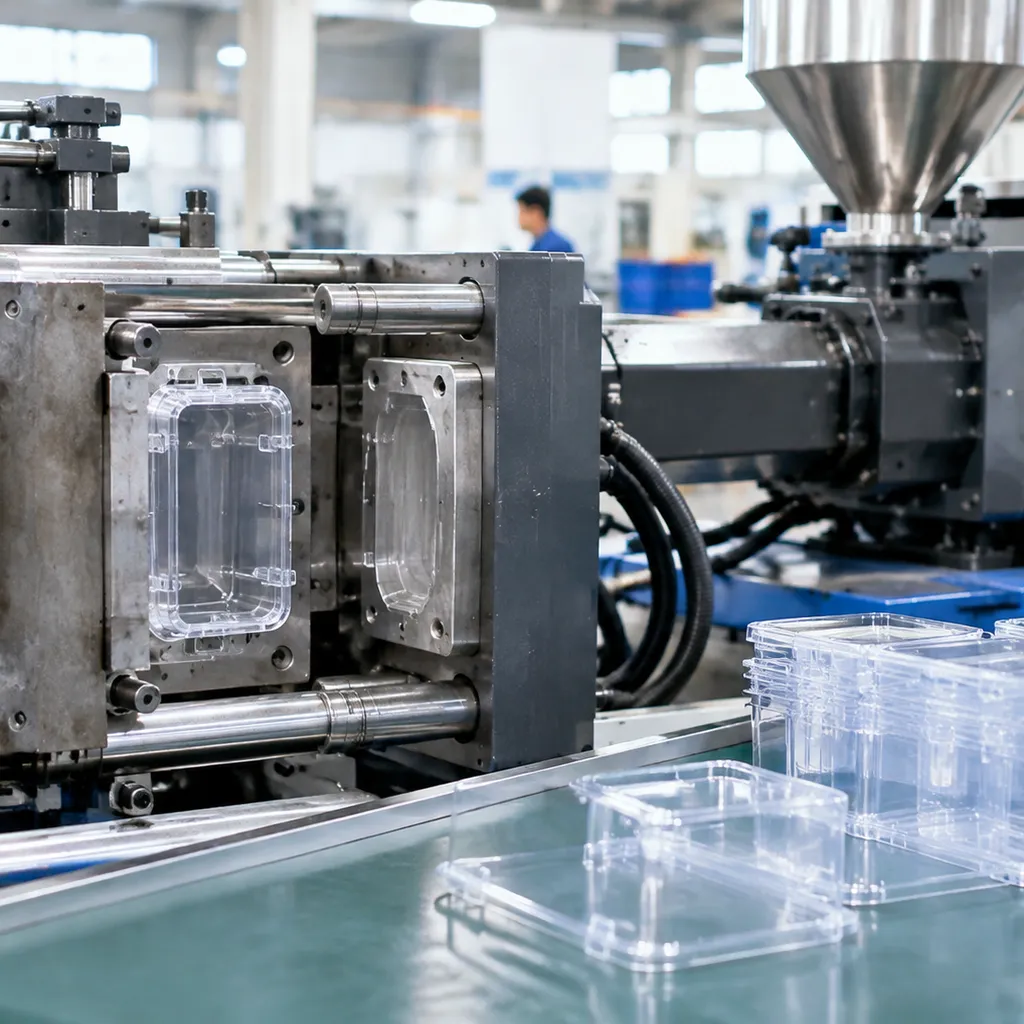
 English
 French
 German
 Spanish
 Italian
 Polish
 Russian
 Japanese
 Korean
 Arabic
 Dutch
 Portuguese
 Swedish
 Norwegian
 Belarusian
 Armenian