

What Is Injection Moulding?
Injection moulding is a manufacturing process where melted plastic is injected into a metal mold cavity, cooled, and then ejected as a solid part—imagine a precise “fill and form” cycle that can be animated as plastic flowing into a shaped mold before hardening. This method is highly efficient for turning raw polymer pellets into detailed, consistent components.
The most common materials used include polypropylene (PP), acrylonitrile butadiene styrene (ABS), polycarbonate (PC), polyoxymethylene (POM), and thermoplastic polyurethane (TPU). These engineering-grade plastics offer a range of strength, flexibility, and durability options suited to various applications.
You’ll find injection moulded parts everywhere—from everyday items like smartphone cases, bottle caps, and toys to automotive dashboard components and medical device housings. These familiar objects highlight the versatility and widespread use of injection moulding in industries you interact with daily.
Key Advantages of Injection Moulding
Injection moulding stands out for its exceptional production speed and scalability, easily handling runs from thousands to millions of parts without sacrificing quality. It delivers the highest repeatability with tight tolerances as precise as ±0.02 mm, ensuring every piece meets exact specifications. The process also offers superior surface finishes and a wide range of aesthetic options right out of the tool—no extra polishing needed.
One major benefit is material versatility. From durable engineering-grade plastics like PP, ABS, and TPU to specialty compounds, injection moulding supports high-performance applications. This versatility, combined with large-scale production, drives the lowest per-part cost among manufacturing methods.
Complex designs are no problem either. Injection moulding can produce intricate geometries, including undercuts, thanks to advanced mold features like slides and lifters. Compared to CNC machining, injection moulding produces minimal material waste, making it more efficient and cost-effective.
Finally, it’s highly automation-friendly. Automated systems maintain consistent quality while reducing labor costs, making injection moulding ideal for high-volume, precision parts manufacturing. For more on its benefits and applications, check out our detailed guide on the advantages to injection moulding.
Real Disadvantages & Limitations of Injection Moulding
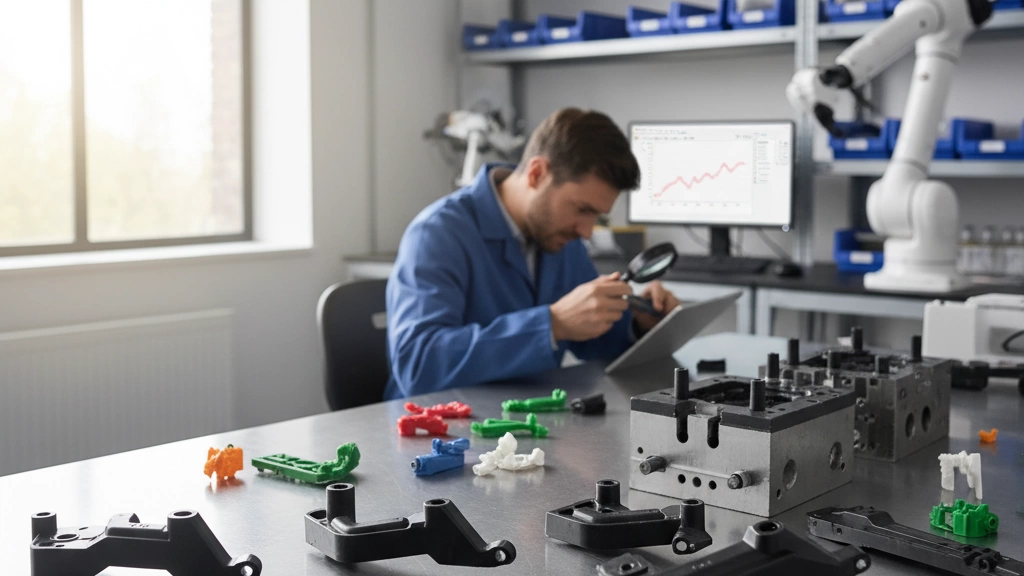
Injection moulding comes with several real limitations that you need to consider before choosing it for your project. First off, the initial tooling cost is very high—molds can range anywhere from $5,000 to over $150,000 depending on complexity and size. This cost is a major barrier for small runs or startups. On top of that, new molds usually take 4 to 12 weeks to produce, meaning long lead times before you even start making parts.
Because of these upfront costs and delays, injection moulding isn’t cost-effective for low-volume production, generally anything under 500 to 1,000 units. There are also significant design restrictions, like needing draft angles, maintaining uniform wall thickness, and accounting for ejector pin marks, which can limit how your parts look and function.
If you need to make changes after the mold is cut, be ready for expensive engineering revisions. Plus, injection moulding machines have size limitations, with most maxing out around 1,500 to 2,000 tons of clamping force, restricting how large or complex your parts can be.
Process issues like flash, sink marks, or warping can occur if molding parameters aren’t dialed in correctly, affecting part quality. Finally, environmental concerns remain due to the use of fossil-based polymers and the energy-intensive nature of the process, although recycled and bio-based resin options are increasingly available to help reduce the footprint.
For tips on how to navigate some of these challenges, including managing tooling costs and design rules, check out our detailed guide on plastic injection mould tooling.
When Injection Moulding Is the BEST Choice
Injection moulding shines in industries where high-volume production, precision, and durability are essential. It’s ideal for medical devices, automotive parts, consumer electronics, and many household goods. These sectors benefit from injection moulding’s repeatability and its ability to produce complex, high-quality parts efficiently.
Here’s a quick overview of ideal applications:
| Industry | Typical Applications | Why Injection Moulding Works Best |
|---|---|---|
| Medical Devices | Syringes, surgical tools | Tight tolerances, sterile production, material versatility |
| Automotive | Dashboard components, clips | High durability, complex shapes, large volume |
| Consumer Electronics | Smartphone housings, connectors | Fine detail, smooth finish, fast production |
| Packaging | Caps, containers | Cost-effective for mass production |
| Toys & Household | Durable parts, colorful designs | Versatility in materials and colors |
Break-even Volume: Injection Moulding vs Other Processes
Injection moulding has a high upfront tooling cost, so it’s usually not cost-effective for small runs. Here’s a simple break-even comparison to help decide when injection moulding beats alternatives like CNC machining, 3D printing, or vacuum forming:
| Production Volume | Best Manufacturing Method |
|---|---|
| 1 – 100 units | 3D Printing or CNC Machining |
| 100 – 1,000 units | CNC Machining or Vacuum Forming |
| 1,000+ units | Injection Moulding |
For many projects, the break-even volume for injection moulding starts around 500 to 1,000 parts, depending on complexity and part size. Beyond this point, the per-part cost drops significantly, making injection moulding the clear winner for large-scale production. To better understand if injection moulding suits your project, consider factors like volume, material needs, and part complexity.
For a detailed look at how injection moulding fits in medical manufacturing, check out our page on how injection moulding is used in the medical industry. This resource shows exactly why it’s the go-to method for precise, reliable plastic parts.
How Top Manufacturers Minimize the Disadvantages
Leading injection moulding manufacturers like Jino Injection Moulding tackle common challenges with smart, cost-saving strategies:
- Free DFM analysis & mould-flow simulation: Before cutting any tool steel, Jino offers design-for-manufacturing reviews and detailed mould-flow simulations. This helps spot potential issues early, reducing costly revisions and improving part quality.
- Rapid prototyping & bridge tooling options: To shorten lead times, Jino provides rapid prototyping and bridge tooling that let you test parts and processes before committing to full production. This lowers risk and helps fine-tune designs on the fly.
- Multi-cavity family moulds & automation: Using multi-cavity molds that produce several parts at once alongside automation boosts production rates and drives down per-part costs — critical for high volume plastic manufacturing.
- In-house tool room for fast modifications: Having a tool room onsite means Jino can quickly adjust molds or fix defects without long delays, saving you time and money.
- Overmoulding & insert moulding expertise: These advanced techniques allow Jino to build complex parts with integrated components or multiple materials, reducing assembly steps and enhancing product performance.
- Use of recycled and bio-based resins: Addressing sustainability, Jino incorporates recycled plastics and bio-based polymers, helping lower environmental impact while meeting material performance needs.
By combining these approaches, Jino Injection Moulding helps clients avoid typical injection moulding limitations like high tooling costs, long lead times, and design restrictions. To get a clearer picture of their full capabilities, check out their dedicated plastic injection mould manufacturer page for more details.
Cost Breakdown: Tooling vs Per-Part Price in 2025
When considering injection moulding in 2025, the biggest cost factor upfront is still tooling. Mold prices vary widely depending on complexity, size, and region:
- China: $3,000 to $50,000
- Europe: $20,000 to $100,000
- USA: $30,000 to $150,000+
These costs reflect differences in labor, materials, and overhead. While the initial investment might seem high, the per-part price drops significantly as production volume increases. For high-volume orders (thousands or more), the cost per piece can be as low as a few cents to a couple of dollars.
Why ROI Matters
A simple ROI calculator helps you understand at what quantity injection moulding becomes cost-effective compared to alternatives like CNC machining or 3D printing. Typically, break-even volumes start around 500 to 1,000 units, depending on factors like part complexity and material.
- Lower volumes? The expensive tooling cost spreads over fewer parts, making these options less economical.
- Higher volumes? Injection moulding shines with its unbeatable scale and cost-efficiency.
For more insights into materials and tooling options tailored to the U.S. market, you can explore how plastic injection moulding services optimize costs and production efficiency to fit different project scales.
Alternatives to Injection Moulding (Quick Comparison Table)
Here’s a quick look at common alternatives to injection moulding, with key points on cost, volume, complexity, and surface finish to help you pick the best fit for your project.
| Method | Best For | Volume Range | Cost per Part | Complexity & Detail | Surface Finish | Lead Time |
|---|---|---|---|---|---|---|
| 3D Printing | Prototypes, low volume parts | 1–1,000 units | Moderate to high | High complexity | Varies; usually rough | Fast (days to weeks) |
| CNC Machining | Low-mid volume, strong parts | 1–10,000 units | Moderate | High precision | Excellent; can be polished | Moderate (weeks) |
| Thermoforming | Large, simple parts | 1,000+ units | Low | Simplistic shapes | Good; less detailed | Moderate |
| Die Casting | Metal parts, high volume | 10,000+ units | Low at volume | Good complexity | Smooth metal finish | Long (weeks to months) |
| Blow Moulding | Hollow plastic parts | 5,000+ units | Low | Limited to hollow shapes | Smooth, uniform | Moderate |
- 3D printing is great for quick prototypes or low-volume custom parts but can get pricey for large runs.
- CNC machining offers excellent finish and strength but wastes more material and costs more per part compared to injection moulding at scale.
- Thermoforming fits simple shapes and large parts but doesn’t match injection moulding’s detail and precision.
- Die casting is ideal for metal parts when injection moulding plastic isn’t an option.
- Blow moulding handles bottles and hollow parts but can’t make solid or complex geometries.
If you’re unsure, exploring options like 3D printing or CNC machining alongside injection moulding can help you find the most cost-effective method based on your volume and design needs.
For tailored advice and to understand how injection moulding stacks against these alternatives, check out our custom plastic injection moulding services.
Environmental Impact & Sustainable Injection Moulding Trends 2025
Injection moulding has traditionally relied on fossil-based polymers and energy-intensive processes, raising environmental concerns. But the industry is making strides toward sustainability with several promising trends in 2025.
- Recycled & ocean-plastic compounds are becoming common as manufacturers seek environmentally friendly materials without sacrificing performance. Using recycled plastics lowers reliance on virgin resin and helps reduce plastic waste in oceans and landfills.
- Energy-efficient all-electric machines replace older hydraulic moulding presses, cutting power consumption by up to 50% and improving process accuracy. This shift not only lowers the carbon footprint but also reduces operational costs for high-volume production.
- Many factories now adopt closed-loop recycling systems to reuse scrap plastics and runner materials directly on-site. This approach minimizes waste sent to landfill and further decreases raw material demand.
 English
  French
  German
  Spanish
  Italian
  Polish
  Russian
  Japanese
  Korean
  Arabic
  Dutch
Dutch  Portuguese
  Swedish
  Norwegian
  Belarusian
  Armenian