

What Is PMP Raw Material?
Key Physical Properties of PMP
We categorize PMP as a high transparency polyolefin that offers a distinct set of physical characteristics ideal for precision parts:
- Ultra-Low Density: At approximately 0.83 g/cm³, it is one of the lightest commercial plastics available, significantly lighter than water.
- High Melting Point: It exhibits excellent thermal resistance with a melting range of 220–240°C, allowing it to withstand high-temperature environments.
- Superior Transparency: The material offers exceptional clarity with a haze value of <5%, making it comparable to glass and acrylic.
Comparing PMP to Material Alternatives
Selecting the right resin often comes down to trade-offs. Here is how PMP compares to common alternatives like PP, PC, Acrylic, and PTFE:
- Vs. Polycarbonate (PC) & Acrylic: While PC and Acrylic are clear, PMP offers superior chemical resistance and higher heat deflection temperatures.
- Vs. Polypropylene (PP): PMP shares the chemical resistance of PP but provides significantly better transparency and heat tolerance.
- Vs. PTFE: PMP rivals PTFE in dielectric properties but is far easier to process as a low density engineering plastic in standard injection molding workflows.
This unique combination makes PMP a top contender for lightweight, heat-resistant, and clear components.
Unique Advantages of PMP for Injection Molded Parts
When we tackle raw material PMP injection molding, we are working with a high-performance thermoplastic that offers a distinct edge over standard resins. Polymethylpentene (PMP), often recognized by grades like Mitsui TPX, provides a unique combination of properties that solves complex engineering challenges. Unlike typical commodity plastics, PMP allows us to manufacture parts that require both exceptional transparency and high thermal stability.
Key Performance Benefits of PMP Resin
We recommend PMP plastic properties for applications where compromise isn't an option. Here is why this material stands out in our manufacturing lineup:
- Superior Optical Clarity: PMP delivers light transmission rates greater than 90%, making it comparable to glass and acrylic. This is crucial for optical lenses and fluid monitoring components where visual inspection is required.
- High Heat Resistance: With a melting point ranging between 220–240°C, PMP parts are fully autoclavable. This makes the material ideal for medical and laboratory environments that demand repeated sterilization without hazing or degradation.
- Low Dielectric Constant: For the electronics sector, specifically 5G and RF applications, PMP serves as an excellent low-loss insulator. Its electrical properties remain stable over a wide range of frequencies and temperatures.
- Chemical Inertness & Release: The material exhibits high chemical resistance and excellent release characteristics, which simplifies the molding of complex geometries and ensures durability in harsh chemical environments.
- Lightweight Efficiency: With a density of approximately 0.83 g/cm³, PMP is one of the lightest engineering plastics available, offering significant weight reduction for automotive and aerospace components.
Optimizing PMP Production
To fully leverage these advantages, precise process control is essential. As a capable plastic injection molding company in China, we utilize automated Design for Manufacturability (DFM) analysis to optimize gate locations and wall thickness specifically for PMP shrinkage rates. This digital approach ensures that we can scale from rapid prototyping to low-volume production of 100,000+ parts with speed and consistency, eliminating the barriers of high Minimum Order Quantities (MOQs).
Challenges in Processing PMP Raw Material via Injection Molding
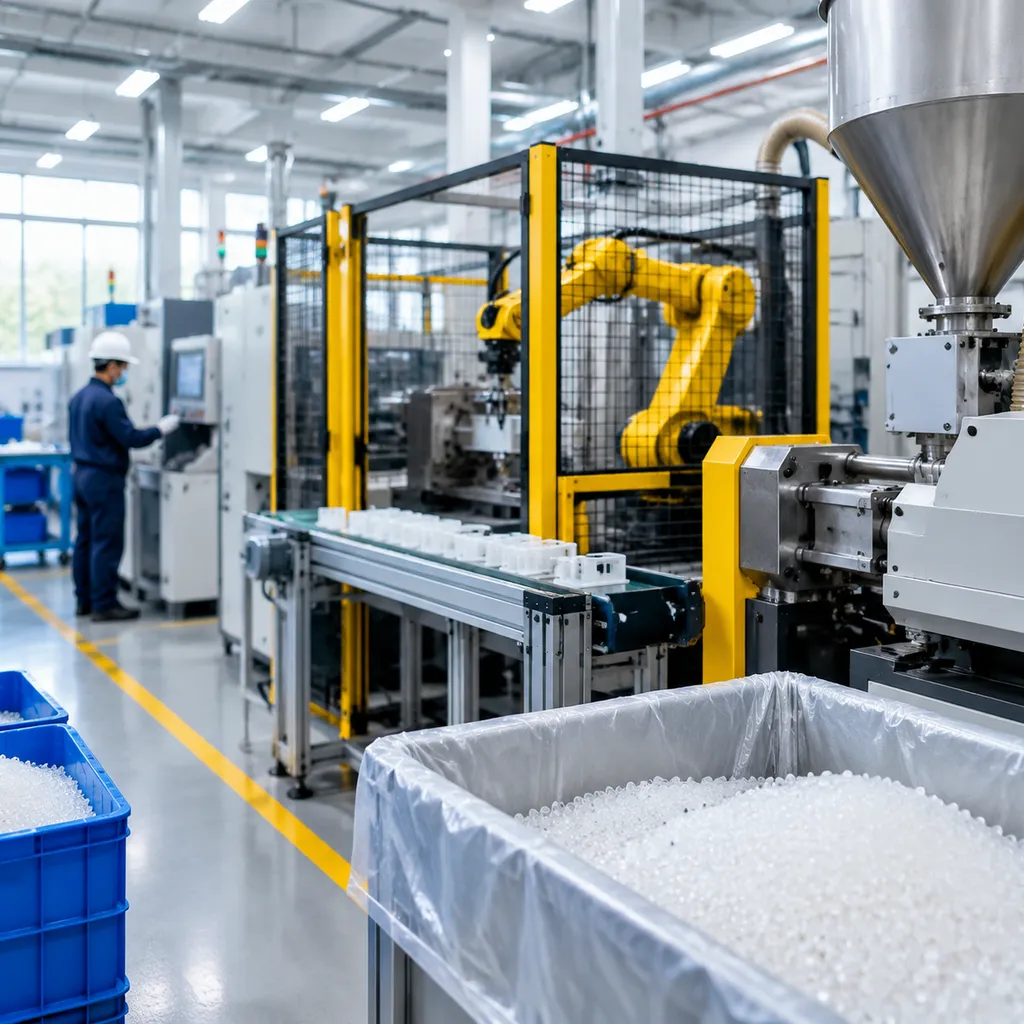
Executing successful raw material PMP injection molding requires navigating a distinct set of processing variables that differ significantly from standard commodity plastics. The material's unique semi-crystalline structure demands precise control over thermal and flow dynamics to maintain optical clarity and dimensional accuracy.
- Managing High Melt Temperatures: We must strictly control the PMP molding temperature, typically operating within a high range of 290–310°C. This often pushes the cylinder limits of standard molding presses, requiring robust equipment that can sustain these temperatures without causing resin degradation or burning.
- Handling Low Melt Viscosity: PMP exhibits very low melt viscosity, meaning it flows rapidly into the cavity. To prevent issues like flashing or jetting, we adjust injection speeds and employ specific pin gating strategies. This behavior necessitates high-precision injection mold tooling with tight shut-offs to contain the fluid material effectively.
- Mitigating Shrinkage: The PMP shrinkage rate is substantial, generally falling between 2–2.2%. This high shrinkage poses a challenge for dimensional stability, requiring us to factor these percentages into the initial mold design to avoid warped parts or out-of-spec tolerances.
- Process Efficiency: A distinct advantage is PMP's non-hygroscopic nature, which means it requires no pre-drying before processing. However, we must carefully regulate mold temperatures between 20–60°C to ensure optimal crystallization and cycle time efficiency.
Recommended Injection Molding Parameters for PMP
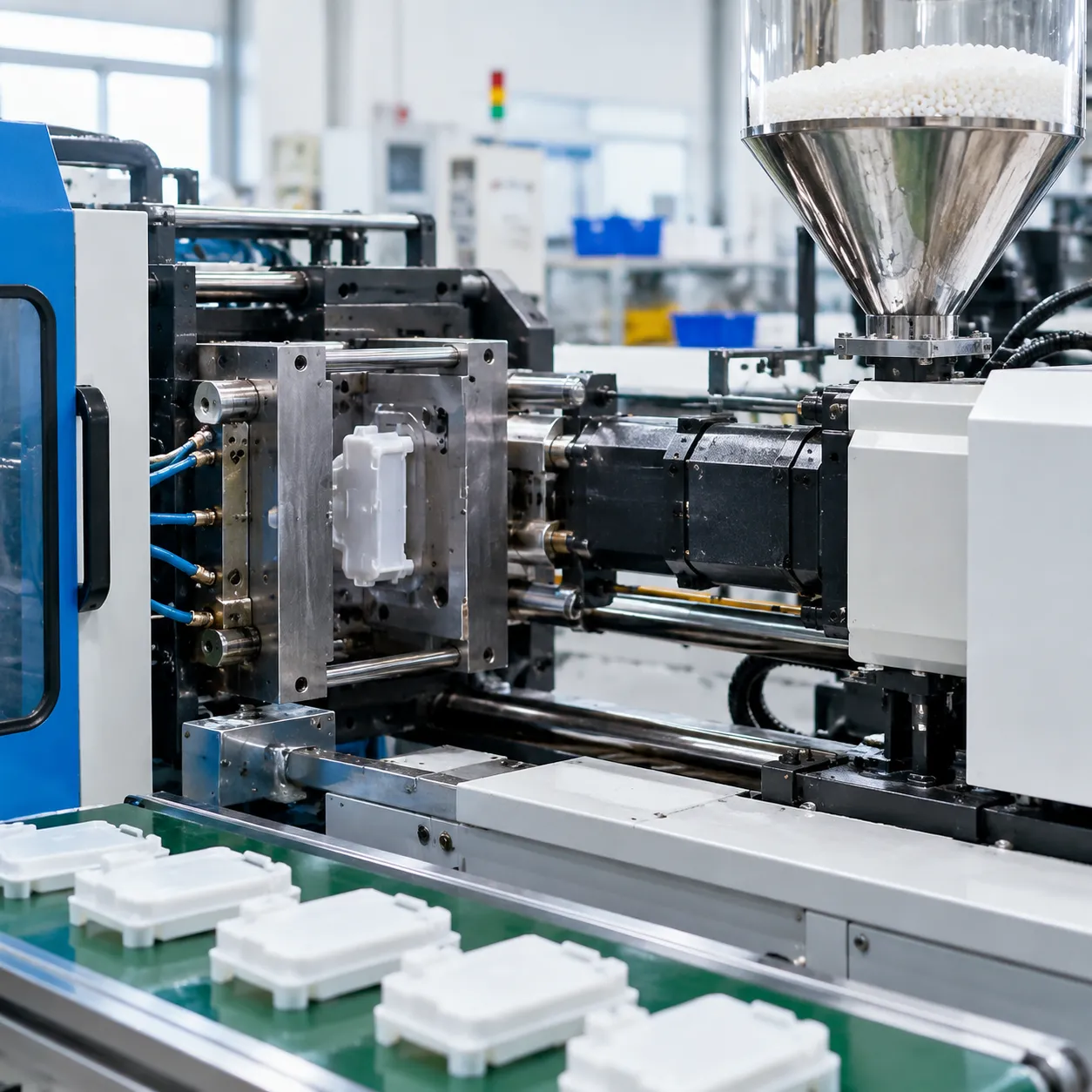
Processing raw material PMP injection molding requires precise control over machine settings due to the material's unique semi-crystalline nature and low viscosity. Unlike standard resins, PMP (often sourced as TPX injection molding grades) demands a specific thermal profile to maintain transparency and dimensional stability. We focus on stabilizing the process window to prevent common defects like flash or voids.
Machine Setup and Screw Design
To handle PMP molding temperature requirements effectively, we use standard screw designs with a compression ratio of roughly 3:1. Because PMP has a high melting point but flows very easily once molten, the barrel zones must be carefully calibrated. We typically set cylinder temperatures between 260°C and 300°C, ensuring the resin is fully melted without degrading.
Understanding how does an injection moulding machine work is critical when adjusting back pressure. For PMP, we keep back pressure low to moderate to ensure consistent melt uniformity without overheating the material through shear friction.
Key Setup Parameters:
| Parameter | Recommended Setting | Notes |
|---|---|---|
| Cylinder Temp | 260°C – 300°C | Do not exceed 310°C to avoid degradation. |
| Mold Temp | 20°C – 60°C | Higher temps improve crystallinity and surface finish. |
| Injection Pressure | 40 – 100 MPa | Lower pressure is often sufficient due to high flow. |
| Injection Speed | Fast | Essential to fill thin walls before solidification. |
Gate Selection and Tooling Strategy
Selecting the right gate is vital for PMP plastic properties. For shallow or thin-walled parts, we prefer a pin gate or a multi-point gate system. Since PMP solidifies rapidly, a center gate helps distribute pressure evenly, reducing the risk of warpage.
- Gate Type: Pin gates work best to minimize stress.
- Venting: Generous venting (0.02–0.03 mm deep) is required to prevent gas burns, as fast injection speeds can trap air.
- Tooling Material: Standard tool steels work well, but for high-volume runs, we recommend hardened steel to resist wear over time.
Cycle Time and Defect Prevention
Optimizing the cycle time is a balancing act. If the cycle is too short, you risk short shots; too long, and you increase costs while risking sink marks in thicker sections. Because PMP shrinkage rate is relatively high (around 1.5% to 2.2%), holding pressure must be maintained until the gate freezes to pack the part correctly.
We also monitor the cooling phase closely. PMP releases heat quickly, allowing for faster ejection compared to other engineering plastics, which helps us speed up production for high-volume orders.
Applications Where PMP Raw Material Excels
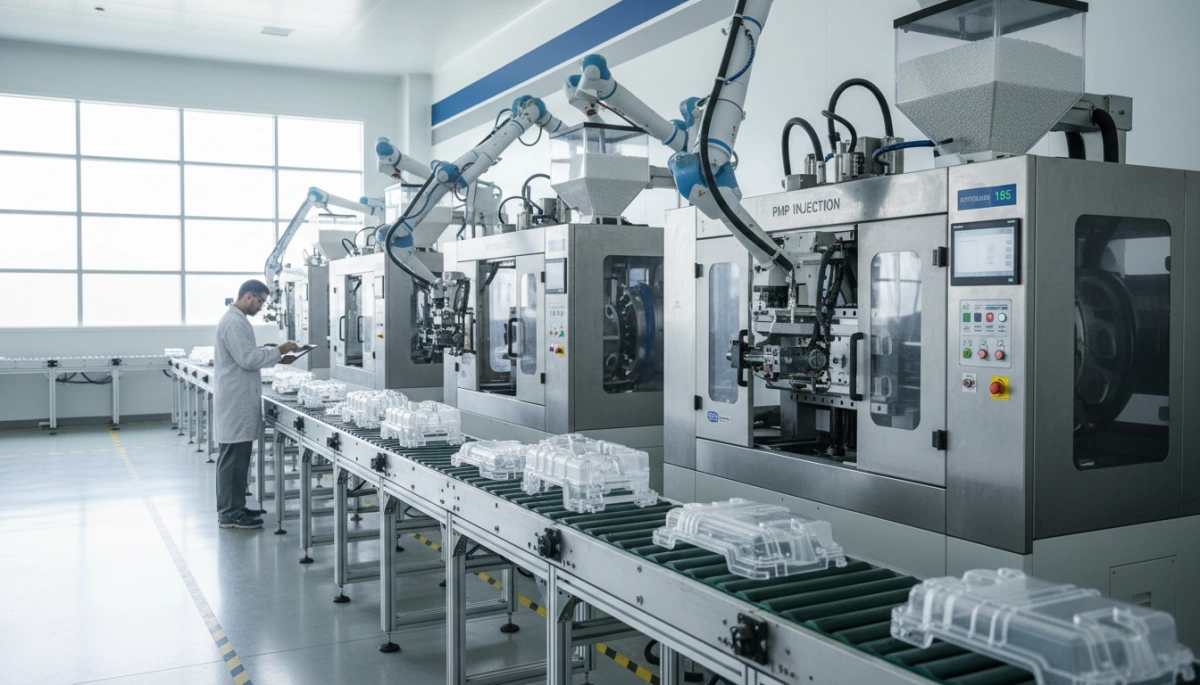
When we look at raw material PMP injection molding, we aren't just talking about a generic plastic; we are dealing with a high-performance resin designed for demanding environments. Because of its unique balance of transparency, heat resistance, and chemical inertness, PMP (Polymethylpentene) is the material of choice for specialized applications where standard polyolefins fail.
For manufacturers determining what plastics are used for injection moulding in critical industries, PMP often stands out for its reliability under stress. We see this material excelling across several key sectors:
- Medical and Laboratory Ware: This is perhaps the most common use case. PMP medical labware, such as beakers, flasks, and test tubes, benefits from the material's exceptional transparency and ability to withstand repeated steam sterilization. PMP autoclavable parts maintain their clarity and dimensional stability even after aggressive cleaning cycles.
- Electronics and Microwave Components: As a low dielectric constant polymer, PMP is ideal for high-frequency electronics. We utilize it for low-loss insulators, connector blocks, and speaker cones where electrical interference must be minimized.
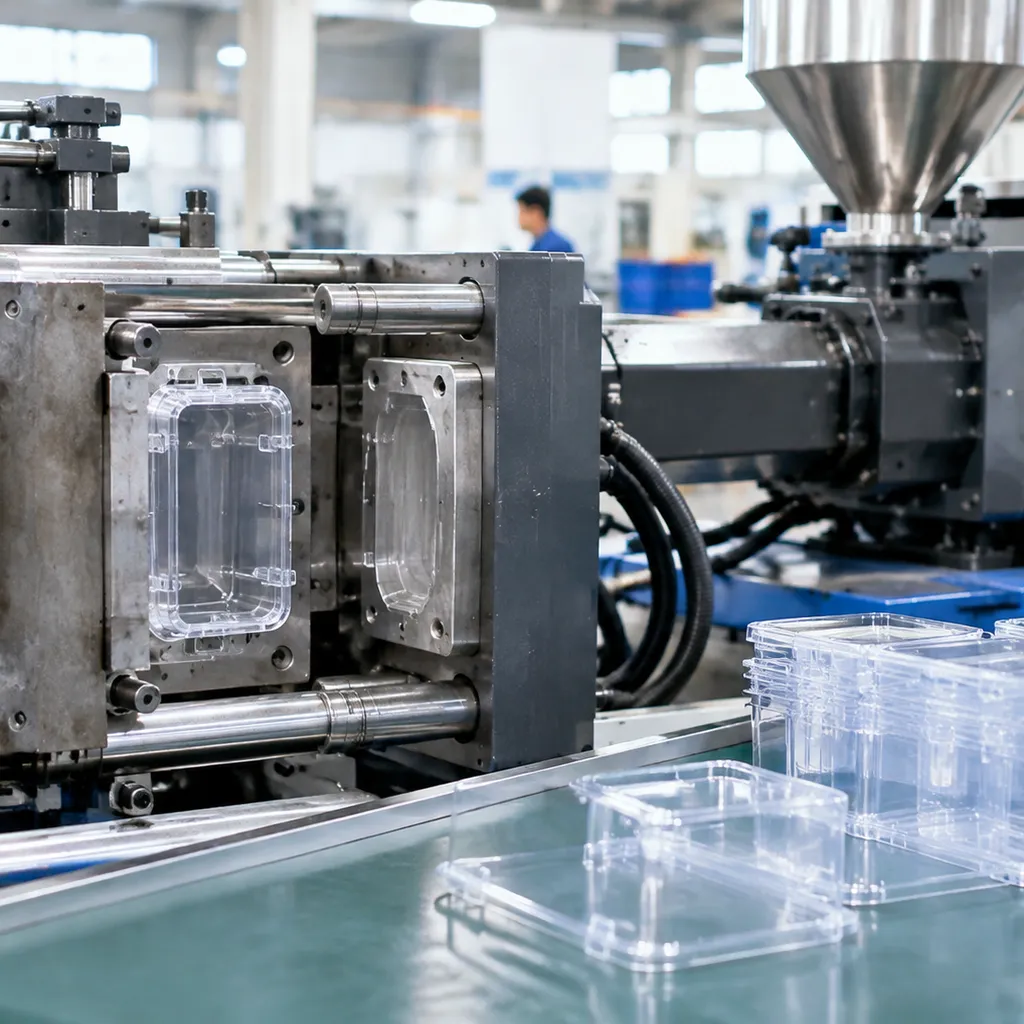
- Optical Elements: Due to its high transparency polyolefin structure, PMP is excellent for LED molds and optical lenses. It provides light transmission rates comparable to acrylic but with superior thermal resistance.
- Food Contact and Industrial Use: FDA-compliant grades allow for the production of microwave-safe food containers. Additionally, its low surface tension makes it perfect for industrial release films and lightweight structural parts.
By leveraging custom plastic injection moulding services, we can optimize these applications to take full advantage of PMP's lightweight and thermal properties, ensuring the final components meet rigorous industry standards.
Why Partner with an Experienced PMP Manufacturer?
Working with raw material PMP injection molding requires more than just standard equipment; it demands a partner who understands the nuances of high-performance thermoplastics. Polymethylpentene (PMP) presents unique challenges due to its high melting point and low viscosity, meaning standard processing parameters often fail. We bridge the gap between complex material science and rapid manufacturing, ensuring your designs transition smoothly from prototype to production.
Expertise in High-Temperature, Low-Viscosity Resins
PMP resin flows differently than standard commodity plastics. Its low viscosity requires precise control over injection speeds and pressures to prevent flashing, while its high melting temperature demands robust mold temperature management. We leverage advanced manufacturing technologies to dial in these parameters, ensuring that even complex geometries are filled correctly without compromising the material's optical clarity or heat resistance.
DFM Analysis Tailored to PMP Behavior
One of the biggest risks with semi-crystalline polymers like PMP is shrinkage. Our automated Design for Manufacturability (DFM) analysis is critical here. Within hours of uploading your CAD file, our system highlights potential issues such as:
- Wall Thickness: Identifying areas that may cause sink marks due to uneven cooling.
- Draft Angles: Ensuring parts release cleanly from the mold despite PMP’s specific shrinkage rates.
- Gate Placement: Optimizing flow to minimize knit lines in transparent parts.
Ensuring Quality Controls and Certifications
For industries requiring strict adherence to hygiene and safety, such as those utilizing medical injection moulding standards, validation is non-negotiable. We operate under rigorous quality management systems, including ISO 9001:2015 and ISO 13485:2016 for medical devices. This ensures that every PMP component—whether for labware or electronics—is manufactured with full traceability and consistent quality documentation.
Flexible Sourcing and Production Scale
Whether you need a dozen prototypes or 100,000+ production parts, we offer unmatched flexibility.
- Material Access: We stock a vast library of 100+ engineering-grade materials and can source specific PMP grades upon request.
- Customer-Supplied Resin: If you have a proprietary PMP blend, we can run it in our machines.
- No MOQ: We remove barriers to entry, allowing you to test raw material PMP injection molding designs without committing to massive initial orders.
FAQs About PMP Injection Molding
Does PMP raw material require pre-drying before molding?
Generally, no. Polymethylpentene resin is non-hygroscopic, meaning it has an extremely low water absorption rate (approximately 0.01%). Unlike hygroscopic materials like Nylon or PC, raw material PMP injection molding typically does not require extensive pre-drying. However, if the resin has been stored in environments with fluctuating temperatures, we recommend a brief drying cycle to eliminate any potential surface condensation that could affect the cosmetic finish.
What is the typical shrinkage rate for PMP (TPX) parts?
The PMP shrinkage rate is notably high, typically falling between 1.5% and 3.0% (often averaging around 2.0%–2.2%). This is significantly higher than amorphous resins. Because of this, mold design must account for substantial contraction to hold tight tolerances. Understanding how is injection moulding done allows us to adjust packing pressure and cooling times to mitigate warping and ensure dimensional accuracy in TPX injection molding.
How does PMP compare to Polycarbonate in terms of heat resistance?
While Polycarbonate (PC) offers excellent impact strength, PMP plastic properties shine in thermal and chemical stability. PMP features a high melting point of roughly 235°C, allowing it to maintain integrity in high-temperature applications where PC might degrade or stress-crack, especially in the presence of chemicals. PMP is the superior choice when the part requires both high heat tolerance and chemical inertness.
Is PMP resin suitable for medical sterilization processes?
Yes, it is a top choice for the medical industry. PMP autoclavable parts can withstand repeated steam sterilization cycles (autoclaving) at temperatures up to 180°C without losing transparency or mechanical strength. This makes PMP medical labware—such as connectors, cuvettes, and trays—highly reliable for reusable medical devices that demand rigorous hygiene standards.
 English
 French
 German
 Spanish
 Italian
 Polish
 Russian
 Japanese
 Korean
 Arabic
 Dutch
 Portuguese
 Swedish
 Norwegian
 Belarusian
 Armenian