

You might already know that High-Density Polyethylene (HDPE) is a powerhouse in the manufacturing world…
But how do you ensure it’s the perfect fit for your specific application?
Choosing the right raw material HDPE injection molding parameters can mean the difference between high-volume success and a warped, costly failure.
As an industry expert, I know that navigating material properties, shrinkage rates, and melt temperatures is critical for your production line.
In this guide, you’re going to learn exactly how to select the best HDPE resin pellets, optimize your processing settings, and troubleshoot common defects like a pro.
Let’s dive right in.
Understanding HDPE as a Raw Material
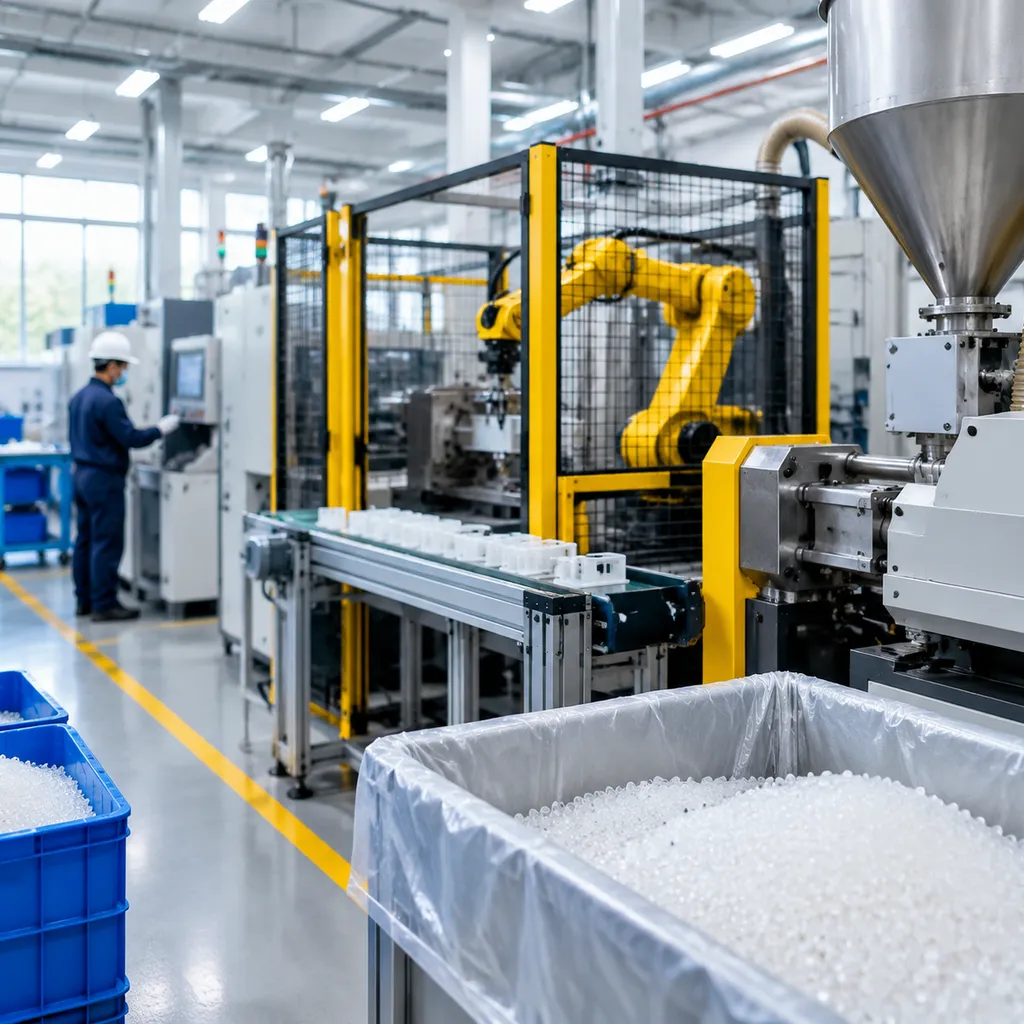
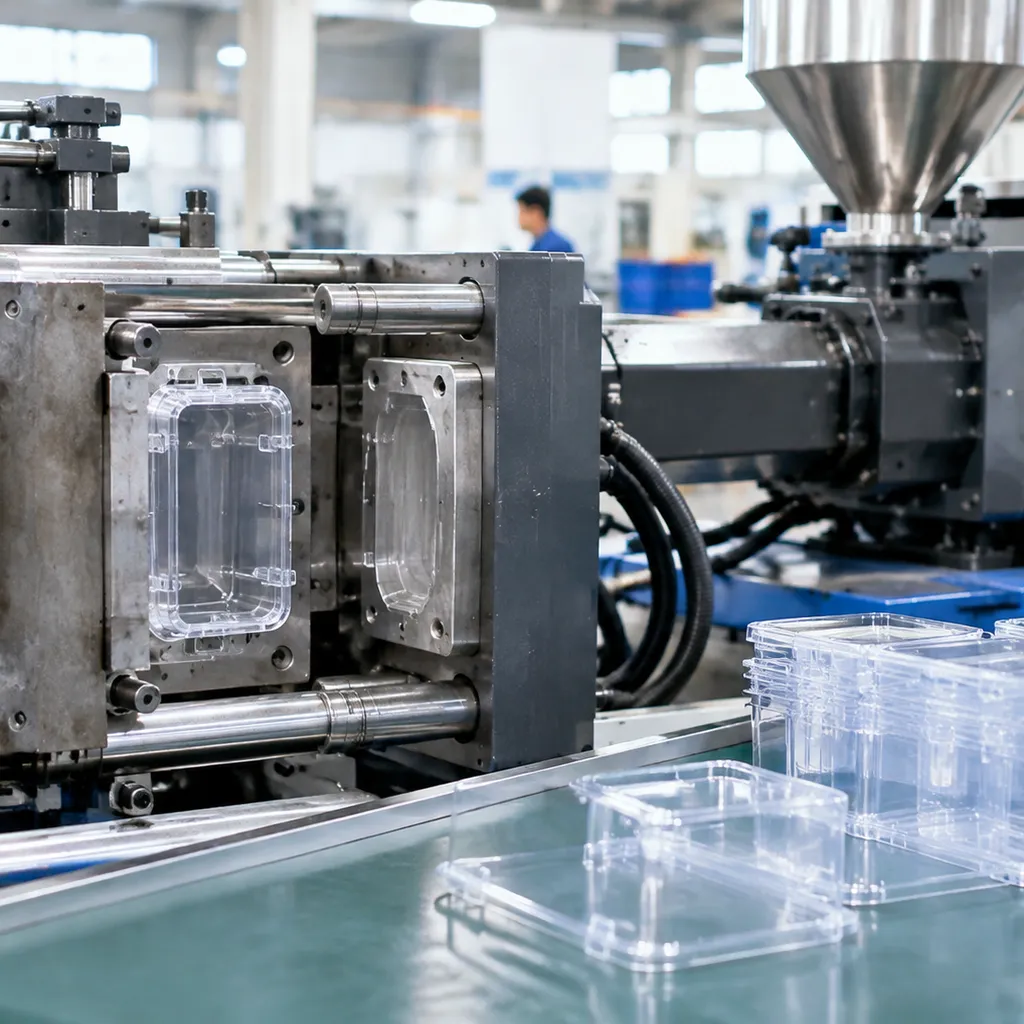
High-Density Polyethylene (HDPE) is a semi-crystalline thermoplastic and one of the most versatile options we utilize for raw material HDPE injection molding. At its core, this material begins as HDPE resin pellets, derived from the polymerization of ethylene. These pellets are fed into our presses, melted, and injected into cost-efficient aluminum molds to create durable, high-strength components.
Forms: Virgin vs. Recycled
In our rapid manufacturing environment, consistency is key. We primarily process virgin HDPE to ensure predictable mechanical properties and surface finishes.
- Virgin Pellets: Essential for parts requiring FDA compliance (natural finish) and consistent shrinkage rates.
- Material Integrity: Using high-grade raw material ensures the final part maintains excellent chemical resistance and low moisture absorption.
Density and Molding Suitability
The physical properties of HDPE directly influence its behavior during the injection molding process. Its high strength-to-weight ratio makes it durable, but its density and crystalline structure present specific challenges we address through our automated DFM analysis.
- Shrinkage Rate: HDPE has a high shrink rate, typically around 0.020 in./in. This requires precise tooling adjustments to maintain tolerances.
- Flow & Cooling: While the material flows well, its density can lead to warping or sink marks in thick sections. We recommend maintaining a uniform wall thickness between 0.030 in. and 0.200 in. to mitigate these issues.
- Durability: The material's density contributes to its exceptional resistance to solvents and corrosive materials, making it a go-to for industrial and medical applications.
Key Material Properties of HDPE for Injection Molding
When selecting raw material HDPE injection molding for your project, understanding the specific resin characteristics is critical for part success. We value High-Density Polyethylene (HDPE) for its exceptional balance of weight and durability, making it a staple in both rapid prototyping and on-demand production.
Mechanical and Thermal Performance
HDPE is a thermoplastic known for its high strength-to-weight ratio. It is tough, semi-flexible, and offers excellent impact resistance, which is why we often recommend it for parts that need to withstand physical stress without cracking.
- Shrinkage: HDPE has a high shrink rate, typically around 0.020 in./in. This requires careful injection mold design to prevent warping or sink marks in thick sections.
- Wall Thickness: We recommend maintaining a wall thickness between 0.030 in. and 0.200 in. (0.762mm – 5.08mm) to ensure uniform cooling.
- Temperature: While durable, it has specific melt flow characteristics that require precise process control.
Chemical Resistance and FDA Compliance
One of the strongest selling points of HDPE material properties is its resistance to chemicals. It performs exceptionally well against solvents and corrosive materials. Additionally, it features very low moisture absorption and provides excellent electrical insulation.
For industries requiring strict safety standards, natural HDPE is FDA-compliant. This makes it an ideal choice for medical applications and food-contact products where hygiene and safety are non-negotiable.
Comparison: HDPE vs. PP
We often compare HDPE vs polypropylene (PP) as they share similar applications. However, HDPE generally offers superior chemical resistance and durability in cold environments.
| Feature | HDPE (High-Density Polyethylene) | PP (Polypropylene) |
|---|---|---|
| Shrinkage Rate | High (~0.020 in./in.) | Moderate to High |
| Chemical Resistance | Excellent (Solvents/Corrosives) | Good |
| Rigidity | Semi-rigid, high impact strength | Stiffer, harder surface |
| FDA Compliance | Yes (Natural grades) | Yes (Select grades) |
| Moisture Absorption | Very Low | Low |
Choosing the right HDPE resin pellets ensures your final parts meet the necessary mechanical and environmental standards for your specific application.
Advantages and Limitations of HDPE in Injection Molding
When we utilize raw material HDPE injection molding, we are selecting a thermoplastic resin known for its exceptional balance of toughness and versatility. For manufacturers looking to scale from prototyping to production, High-Density Polyethylene (HDPE) offers a reliable solution, though it requires specific design considerations to ensure part quality.
Why We Choose HDPE (Pros)
HDPE is a powerhouse in our material lineup, primarily due to its high strength-to-weight ratio and cost-effectiveness. It is a go-to choice for sustainable HDPE molding projects because it is lightweight yet incredibly durable.
- Chemical & Moisture Resistance: HDPE offers excellent resistance to solvents and corrosive materials, making it ideal for harsh environments. Its low moisture absorption also ensures excellent electrical insulation properties.
- Regulatory Compliance: Natural HDPE resin pellets are FDA-compliant, making them suitable for medical and food-contact applications.
- Rapid Production: We can achieve lead times as fast as 1 day for HDPE parts, supporting both low-volume prototyping and high-volume production runs.
- Cost Efficiency: Utilizing aluminum tooling helps us reduce upfront costs compared to traditional steel molds, which is vital when estimating project costs for on-demand manufacturing.
Challenges to Watch Out For (Cons)
While versatile, HDPE does present specific processing challenges that our automated DFM (Design for Manufacturability) analysis helps identify early.
- High Shrinkage Rate: The HDPE shrinkage rate is relatively high, typically around 0.020 in./in. This can lead to dimensional instability if not accounted for in the mold design.
- Warpage and Sink: Due to the high shrink rate, warpage in HDPE parts is a risk, particularly in sections with uneven wall thickness. We recommend maintaining a uniform wall thickness between 0.030 in. and 0.200 in. to mitigate this.
- Surface Finish Limitations: While we offer finishes ranging from non-cosmetic (as-machined) to SPI-C1 (600 grit stone), HDPE’s waxy nature can make achieving high-gloss finishes more difficult compared to other resins.
Real-World Applications
Despite the challenges, the material's resilience makes it perfect for industrial and consumer goods. We frequently see raw material HDPE injection molding used for:
- Industrial Containers: Crates and pails that require high impact strength.
- Medical Components: Fluid-handling parts that demand chemical resistance.
- Consumer Housings: Durable enclosures that benefit from our custom injection molding solutions.
By understanding these properties and adhering to design guidelines—such as using a minimum draft of 1°—we can effectively leverage HDPE for robust, production-grade parts.
Recommended HDPE Grades and Selection Tips
Selecting the correct resin is the foundation of successful manufacturing. In raw material HDPE injection molding, the specific grade you choose dictates the mechanical strength, chemical resistance, and final finish of the part. We help you navigate these choices to ensure your components meet strict industry standards while optimizing for our rapid manufacturing process.
Popular Grades for Strength and Durability
We utilize thermoplastic HDPE resin pellets that offer a high strength-to-weight ratio and versatility across applications.
- High-Molecular-Weight (HMW) HDPE: Ideal for parts requiring exceptional impact resistance and durability under stress, such as industrial crates or automotive components.
- FDA-Compliant Natural HDPE: The standard choice for food containers and medical components due to its non-reactive properties and safety.
- General Purpose Grades: Excellent for industrial housings where chemical resistance and moisture barriers are prioritized over optical clarity.
Critical Selection Factors
When evaluating HDPE grades for molding, we analyze specific technical parameters to prevent defects like warpage or sink marks:
- Melt Flow Index (MFI): A higher MFI allows the plastic to fill complex, thin-walled molds more easily, whereas a lower MFI provides superior impact strength for rugged parts.
- Density: Higher density correlates with increased stiffness and better moisture barriers, which is critical for fluid-handling applications.
- ESCR (Environmental Stress Crack Resistance): Essential for containers exposed to surfactants or aggressive chemicals to prevent long-term failure.
- Shrinkage Management: Since HDPE has a high shrink rate (approx. 0.020 in./in.), selecting the right grade is vital to maintaining tolerances of +/- 0.003 in.
Virgin vs. Recycled HDPE
Sustainability is a growing priority, but performance requirements often dictate the material source.
- Virgin HDPE: Required for medical and food-grade applications to ensure FDA compliance and consistent mechanical properties. It offers predictable shrinkage and uniform coloring capabilities.
- Recycled (rHDPE): A viable option for non-critical industrial parts where sustainability is key. Implementing the right material strategy is a major factor in achieving low-cost injection molding without sacrificing essential part functionality or durability.
Injection Molding Process Guide for HDPE
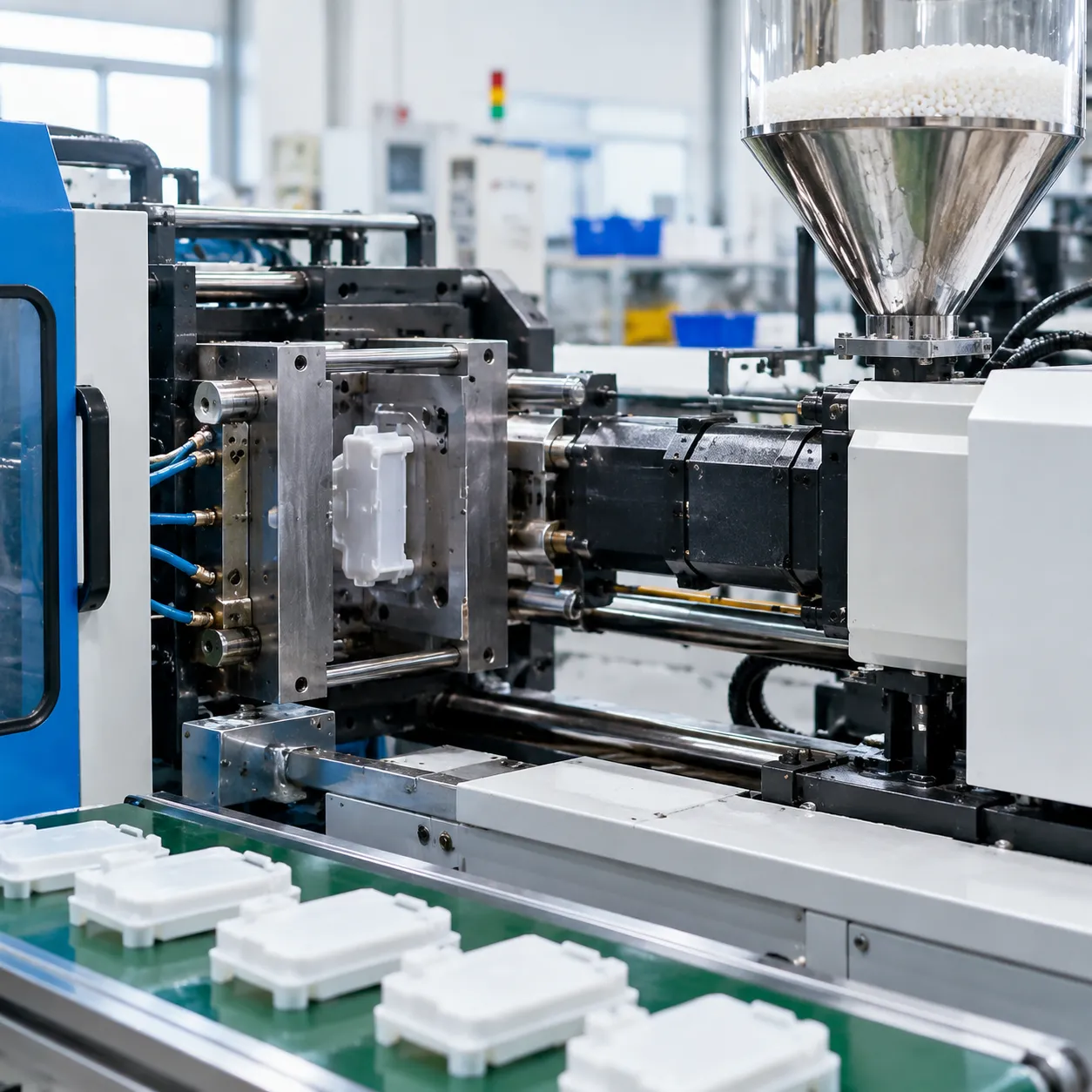
Processing raw material HDPE requires a precise balance of design optimization and process control to ensure high-quality results. The cycle begins with feeding HDPE resin pellets into the barrel, where the thermoplastic is melted and injected into the mold. Because we utilize cost-efficient aluminum tooling, we can accelerate manufacturing cycles, delivering parts in as fast as one day. However, the success of the HDPE processing guide relies heavily on adhering to specific material constraints identified during our automated Design for Manufacturability (DFM) analysis.
Critical Design and Process Parameters
Since HDPE is a semi-crystalline material with specific flow characteristics, controlling the setup is vital to prevent defects. While machine settings like melt temperature are adjusted based on the specific resin grade, the physical design of the part dictates the success of the molding cycle.
- Shrinkage Management: HDPE has a naturally high shrink rate of approximately 0.020 in./in. This significant shrinkage can cause warping or sink marks, particularly in thick areas.
- Wall Thickness: To ensure uniform cooling and structural integrity, we recommend a wall thickness range of 0.030 in. to 0.200 in. (0.762mm – 5.08mm). Consistent walls help maintain tight tolerances of +/- 0.003 in.
- Draft Angles: To facilitate smooth ejection from the mold without drag marks, a minimum draft of 1° per side is recommended.
Optimizing Production Efficiency
Our process supports both low-volume prototyping and high-volume production, allowing for a seamless transition via bridge tooling. When planning your project, understanding the factors that influence injection molding cost, such as part complexity and material choice, is essential for budget management. By addressing geometry challenges like undercuts or insufficient draft early in the quote stage, we ensure that the raw material HDPE injection molding process runs smoothly from the first shot to the final part.
Troubleshooting Common HDPE Molding Challenges
When working with raw material HDPE injection molding, the primary challenge we face is the material's high shrinkage rate. HDPE is semi-crystalline, meaning it moves significantly as it cools. If not managed correctly during the design and processing stages, this characteristic leads to dimensional instability. We rely on automated Design for Manufacturability (DFM) analysis to catch these issues before a single mold is cut.
Mitigating Shrinkage and Warpage in HDPE Parts
The typical HDPE shrinkage rate is approximately 0.020 in./in., which is substantial compared to other resins. Warpage usually occurs when different areas of the part cool at different rates. To prevent this, we must maintain uniform wall thickness throughout the design.
- Wall Thickness: Stick to a recommended range of 0.030 in. to 0.200 in. (0.762mm – 5.08mm).
- Coring: Remove material from thick sections to maintain uniformity and reduce internal stress.
- Ribbing: Use ribs to add strength to thinner walls without increasing overall bulk, which helps maintain the structural integrity of HDPE resin pellets after molding.
Fixing Sink Marks, Voids, and Flashing
Sink marks often appear in thick areas that cool slower than the surrounding material. Since HDPE shrinks inward, a thick solid block will pull the surface down, creating a depression. We solve this by ensuring walls do not exceed the recommended maximums.
For ejection issues and flashing, draft angles are non-negotiable. We recommend a minimum of 1 degree of draft per side to ensure the part releases cleanly from the aluminum mold. Insufficient draft can cause drag marks or make the part stick, slowing down the HDPE processing guide cycle. Additionally, optimizing the injection moulding gate location helps ensure resin flows evenly, reducing the risk of cosmetic defects and voids.
Tips for Precision and High-Quality Parts
Achieving tight tolerances with high-density polyethylene injection molding requires balancing part geometry with process controls. While standard machining tolerances are around +/- 0.003 in., we must add the resin-specific tolerance of +/- 0.002 in./in. for HDPE.
Best Practices for Quality:
- Uniformity: Keep geometry consistent to ensure even cooling.
- Radii: Add fillets or radii to sharp corners to improve flow and reduce stress concentrations.
- Surface Finish: Select the right finish, from non-cosmetic (PM-F0) to textured, to hide minor flow lines or sink marks.
Applications and Industry Use Cases for HDPE

The versatility of raw material HDPE injection molding makes it a staple across industries requiring durability and chemical resistance. Because HDPE resin pellets melt into a material with a high strength-to-weight ratio, we can produce parts that withstand rigorous daily use while keeping production costs efficient.
Packaging and Fluid Handling
HDPE is the gold standard for rigid packaging. Its exceptional resistance to solvents and corrosives makes it ideal for industrial pails, chemical containers, and heavy-duty crates. Projects involving injection molding HDPE crates benefit significantly from the material's ability to withstand heavy loads and rough handling without cracking. Additionally, natural HDPE grades are FDA-compliant, making them suitable for:
- Food storage containers
- Medical fluid handling components
- Beverage caps and closures
Industrial and Consumer Components
In the industrial sector, the material's low moisture absorption and excellent electrical insulation properties are critical. We frequently manufacture automotive components, fuel tanks, and protective housings using high-density polyethylene injection molding. For consumer goods, its impact resistance is perfect for durable items like toys and household appliances. If you are evaluating what plastics are used for injection moulding for rugged environments, HDPE is often the top contender due to its balance of toughness and flexibility.
Sustainable Manufacturing
Sustainability is driving a shift toward sustainable HDPE molding. Using recycled HDPE (rHDPE) allows us to support eco-friendly production goals without sacrificing too much structural integrity. While virgin material is necessary for strict FDA applications, recycled grades provide a cost-effective solution for non-cosmetic industrial parts, reducing the overall carbon footprint of the manufacturing process.
Why Partner with an Experienced HDPE Injection Molding Supplier?
Navigating the complexities of raw material HDPE injection molding requires more than just machinery; it demands engineering precision and material expertise. We position ourselves as a strategic partner, helping you move from concept to final part with unmatched speed and reliability. By utilizing cost-efficient aluminum molds, we accelerate manufacturing cycles, delivering parts in as fast as 1 day.
Optimized Tooling and DFM Analysis
Processing HDPE resin pellets presents specific challenges, particularly regarding shrinkage (approx. 0.020 in./in.) and warpage. An experienced supplier mitigates these risks early in the design phase.
- Automated DFM Feedback: Every quote includes an automated Design for Manufacturability (DFM) analysis. We identify geometry issues—such as undercuts, thick sections prone to sink, or insufficient draft (minimum 1° recommended)—before tooling begins.
- Rapid Tooling: Unlike traditional steel molds, our aluminum tooling reduces upfront costs and lead times, making it ideal for both prototyping and bridge tooling.
- Precision Tolerances: We maintain strict machining tolerances of +/- 0.003 in. plus the resin-specific tolerance, ensuring your HDPE parts meet exact specifications.
Scalability: From Prototype to Production
We support your project lifecycle without the burden of Minimum Order Quantities (MOQs). This flexibility allows you to procure parts on-demand to manage market volatility or address line-down emergencies.
| Production Stage | Benefit |
|---|---|
| Prototyping | Validate designs quickly with lead times of 1-15 days using real thermoplastic resins. |
| Bridge Tooling | Rapidly transition to on-demand manufacturing. We offer free prototyping tools when shifting to production-level tooling. |
| High-Volume | Scale up to millions of parts per month with our customized injection moulding solutions tailored for efficiency. |
Partnering with experts ensures that your High-Density Polyethylene components—whether for medical fluid handling or industrial containers—retain their critical properties like chemical resistance and high strength-to-weight ratios throughout the molding process.
Frequently Asked Questions About HDPE Injection Molding
What is the typical shrinkage rate for HDPE?
When working with raw material HDPE injection molding, accounting for shrinkage is critical for dimensional accuracy. High-Density Polyethylene has a relatively high shrink rate, typically around 0.020 in./in. This characteristic can lead to warping or sink marks, particularly in thick sections. To mitigate this, we recommend maintaining a uniform wall thickness between 0.030 in. and 0.200 in. (0.762mm – 5.08mm) and applying a draft angle of at least 1° per side to ensure the part releases cleanly from the mold.
Is HDPE better than PP for injection molding?
The choice between HDPE and Polypropylene (PP) depends on your specific application requirements. HDPE is often favored for its exceptional strength-to-weight ratio and superior chemical resistance against solvents and corrosives. If your project requires a material that withstands harsh environments or requires FDA compliance for food or medical applications, HDPE is a robust choice. For a deeper understanding of material suitability, you can explore if can HDPE be injection moulded effectively for your specific geometry.
What is the melting point of HDPE for molding?
While specific melting points can vary slightly by grade, HDPE resin pellets are thermoplastic materials processed at elevated temperatures to ensure proper flow. In our process, we manage the thermal properties to optimize the cycle time, utilizing aluminum tooling to dissipate heat faster than steel. This efficiency allows us to offer lead times as fast as 1 day. It is essential to utilize automated Design for Manufacturability (DFM) feedback to identify if your geometry might trap heat or cause issues during the cooling phase.
Can recycled HDPE be used for food-grade products?
For applications requiring strict hygiene standards, such as food containers or medical devices, we primarily recommend Natural HDPE. This specific raw material is FDA-compliant, ensuring it meets the necessary safety regulations for direct contact with food and medical fluids. While recycled HDPE (rHDPE) supports sustainability goals, "Natural" virgin grades are the standard for ensuring consistent purity and regulatory compliance in sensitive injection molding projects.
 English
 French
 German
 Spanish
 Italian
 Polish
 Russian
 Japanese
 Korean
 Arabic
 Dutch
 Portuguese
 Swedish
 Norwegian
 Belarusian
 Armenian