
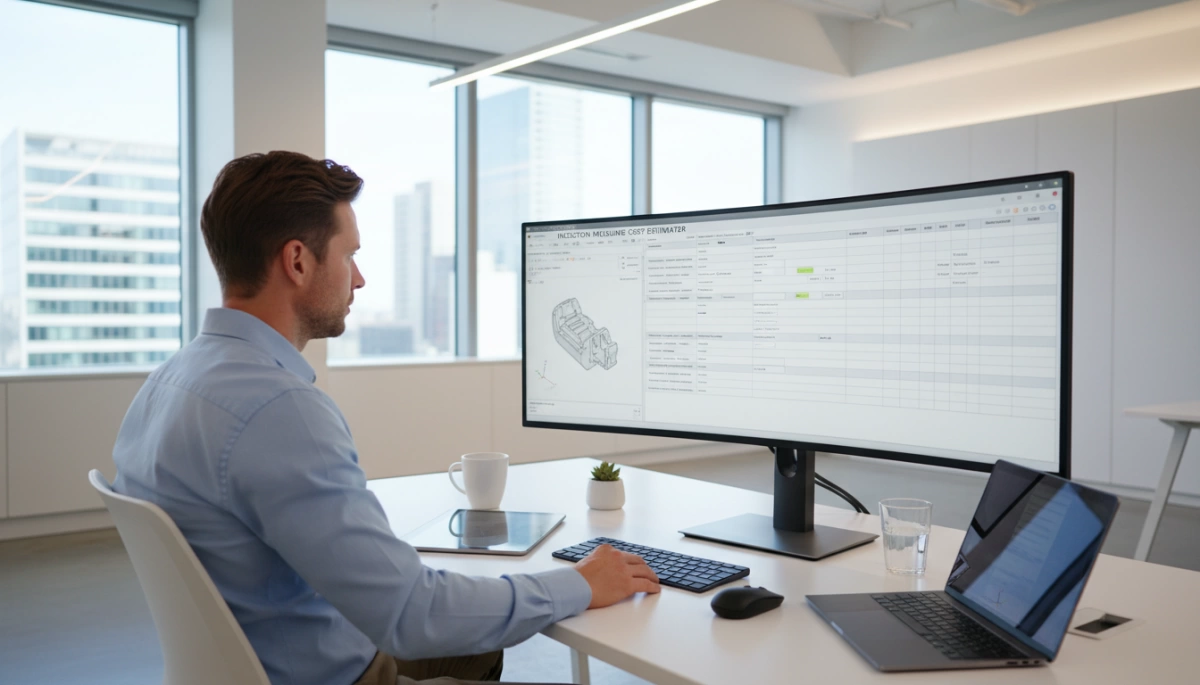
Injection Molding Cost Breakdown
I’ve seen countless projects stall because of budgeting guesswork. To get an accurate injection mold price breakdown, you have to look at the two distinct pillars of production: fixed and variable costs. While an injection molding cost estimator can provide a starting point, understanding how these layers interact is the only way to protect your margins.
Fixed vs. Variable Costs
- Fixed Costs (The Tooling): This is your upfront investment. The plastic mold tooling cost covers the design, CNC machining, and finishing of the mold itself. This price is paid once, regardless of how many parts you eventually run.
- Variable Costs (The Production): These are the recurring expenses for every unit produced. This includes resin material pricing, machine cycle time, labor, and packaging.
2026 Tooling Pricing Ranges
In the current 2026 market, tooling costs have stabilized but remain highly dependent on complexity:
- Low-Volume/Prototyping: $2,000 – $6,000 (Often aluminum or soft steel).
- Mid-Range Production: $7,000 – $25,000 (Hardened steel, single or double cavity).
- High-Volume/Complex: $30,000 – $100,000+ (Multi-cavity, high-speed production).
Determining Your Per Part Molding Cost
The per part molding cost is where the magic of scale happens. Because the fixed tooling cost is amortized over the total number of units, your price per piece drops significantly as volume increases. For example, a part that costs $15.00 at a 500-unit run might drop to $0.85 once you hit 50,000 units.
Why Generic Calculators Often Fail
Most basic injection molding cost calculator tools provide a "perfect world" number. They frequently fail because they ignore:
- Part Complexity: Underestimating the cost of undercuts or thin walls.
- Material Specifics: Not accounting for the volatility in high-performance resin prices.
- Gate and Runner Waste: Forgetting that "scrap" material is still material you paid for.
Getting a real-world number requires moving beyond a simple slider and looking at the specific geometry of your CAD file.
Key Factors Influencing Your Injection Mold Price Breakdown
Every professional injection molding cost estimator relies on a few core variables that dictate whether a project stays within budget. Understanding the injection mold price breakdown starts with part geometry. Complex designs requiring side-actions, lifters, or tight tolerances drive up the plastic mold tooling cost significantly because of the extra machining and assembly time involved.
Part Design and Resin Selection
The more complex the part, the more "steel time" is required. We always suggest a thorough DFM for injection molding review to simplify features and eliminate unnecessary expenses. Furthermore, the plastic used for injection molding dictates your resin material pricing. This isn't just about the cost per pound; specialized resins can affect cooling rates and wear on the tool, directly influencing the long-term per part molding cost.
Production Volume and Multi-Cavity Mold Pricing
Volume is the ultimate lever for efficiency. While a single-cavity tool is cheaper upfront, it yields a higher unit price.
- Low Volume: Better suited for single-cavity tools to minimize the initial investment.
- High Volume: Investing in multi-cavity mold pricing pays off by producing multiple parts per cycle, drastically lowering the labor and machine time allocated to each piece.
Aluminum vs Steel Mold Cost
Choosing the right mold material is a balance of durability and speed. When selecting a high-quality injection mold, the material choice should align with your production goals.
| Mold Material | Tooling Cost | Tool Life (Cycles) | Ideal Use Case |
|---|---|---|---|
| Aluminum | Lower | 5,000 – 10,000 | Prototyping & bridge tooling |
| P20 Steel | Moderate | 50,000 – 100,000 | General production runs |
| Hardened Steel | Highest | 1,000,000+ | High-volume or abrasive resins |
The aluminum vs steel mold cost decision impacts more than just the invoice; steel offers superior thermal management. This reduces the cycle time cost impact by allowing for faster cooling, which is essential for maintaining a competitive edge in high-output manufacturing. Tightening these variables early in the design phase is the most effective way to ensure your final quote remains accurate and affordable.
Tooling Costs: Breaking Down Your Plastic Mold Tooling Cost
The biggest hurdle for most projects is the upfront plastic mold tooling cost. Since I manage production runs daily, I can tell you that this isn't just a random number; it's a reflection of engineering hours and machining precision. Before the first part drops, understanding how injection moulding works helps you see why the mold itself is the biggest upfront investment.
Tooling Cost Tiers by Complexity
The price of your mold depends largely on how much work the CNC machines and EDM (Electrical Discharge Machining) units have to do.
- Simple Molds ($1,000 - $5,000): Small parts, no undercuts, simple "open-shut" operation.
- Intermediate Molds ($5,000 - $15,000): Larger sizes or those requiring basic side-actions (slides) for holes or clips.
- Complex Molds ($20,000+): High-precision tools with complex internal geometries, multiple slides, or lifters.
Aluminum vs Steel Mold Cost in 2026
Choosing the right metal is a balancing act between your budget and your production goals.
| Feature | Aluminum Molds | Steel Molds (P20/H13) |
|---|---|---|
| Initial Cost | 30-50% Cheaper | Higher Upfront |
| Lead Time | 2-4 Weeks | 5-8 Weeks |
| Durability | Up to 10k units | 100k to 1M+ units |
| Best For | Prototyping & Low Volume | High-Volume Production |
Saving with Family and Multi-Cavity Molds
If you are looking to scale, multi-cavity mold pricing offers the best long-term value. While a 4-cavity mold costs more than a single-cavity tool, it cuts your labor and machine time by 75% per cycle. For projects with multiple different parts of similar size and material, I often recommend a family mold. This allows us to run different parts in the same shot, significantly lowering the total injection molding cost estimator result for your entire assembly.
Design and Machining Fee Breakdown
- DFM & Engineering: Usually 10-15% of the total. This is where we ensure the injection moulding gate is placed correctly to avoid cosmetic flaws.
- Base & Components: The cost of the mold base and standardized parts like ejector pins.
- CNC Machining & EDM: The bulk of the cost, covering the actual "cutting" of the cavity into the metal.
- Polishing & Texturing: manual labor to achieve the desired surface finish (glossy, matte, or textured).
Optimizing Your Per-Part Molding Cost and Production Efficiency
Once the tooling is ready, our focus shifts to minimizing the per part molding cost. In 2026, the global market sees significant resin material pricing fluctuations, making material selection and waste management more critical than ever. We leverage advanced monitoring to ensure every gram of plastic counts.
Breaking Down the Production Expense
Calculating the true cost of a plastic part involves more than just the material. As an experienced partner, I look at the total efficiency of the run.
| Cost Component | 2026 Trend | Efficiency Strategy |
|---|---|---|
| Resin Material | Volatile | Bulk sourcing and high-quality regrind integration. |
| Machine Time | Rising Energy Costs | Using high-efficiency electric presses. |
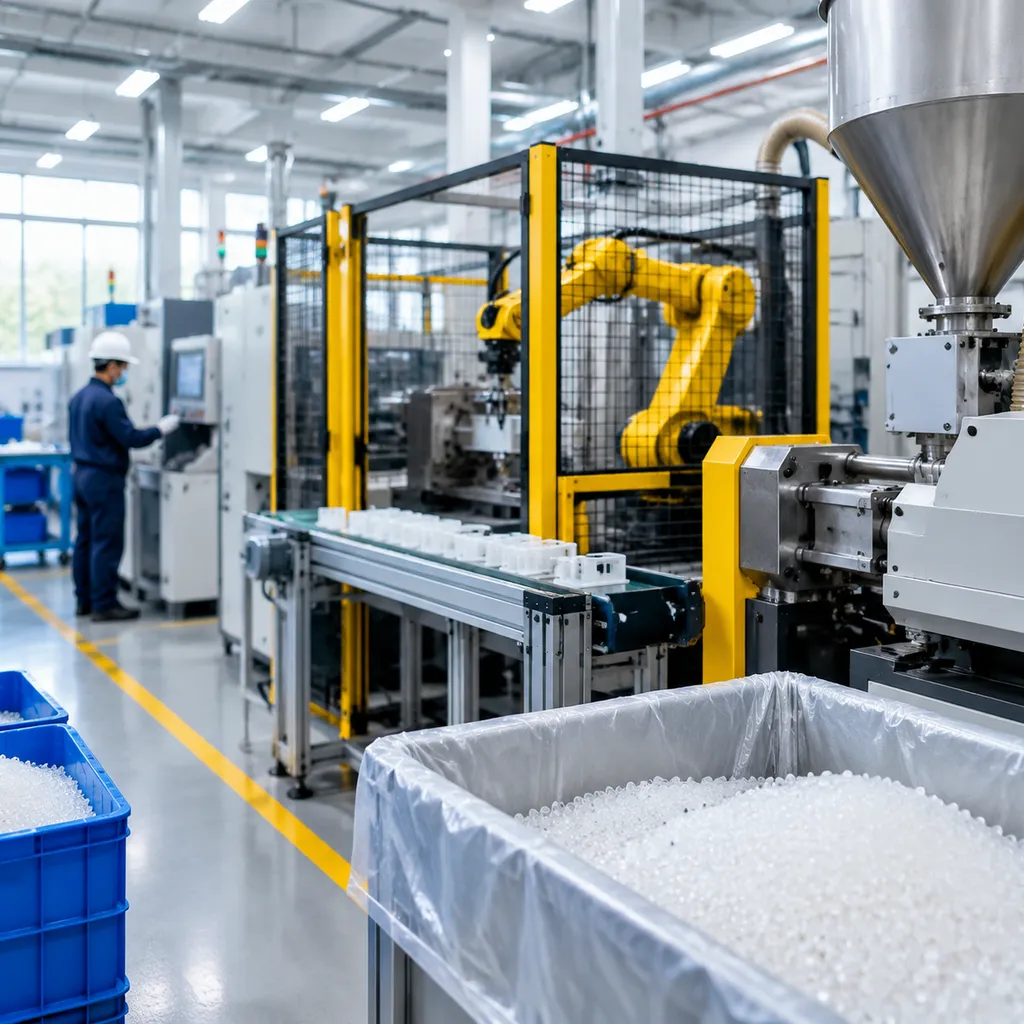
| Labor & QC | Skilled Shortages | Implementing robotic part removal and automated inspection. |
| Scrap Rate | Sustainability Driven | Tightening tolerances to keep scrap below 2%. |
Machine Time and Cycle Optimization
The cycle time cost impact is often the biggest variable in your production budget. Every second shaved off a cycle through improved cooling or better gate placement reduces the hourly machine rate applied to your parts. When using a professional injection molding cost estimator, we account for these micro-efficiencies to give you the most competitive pricing.
Labor, QC, and Post-Processing Fees
- Manual Labor: We reduce costs by designing parts that require minimal degating or manual trimming.
- Quality Control: High-precision industries require documented inspections, which are factored into the unit price.
- Secondary Operations: Painting, assembly, or ultrasonic welding add to the final price but are often more affordable when done in-house during the molding stage.
Understanding how much injection moulding cost at the production level requires a deep dive into these variables. By optimizing for higher cavitation and faster cycles, we ensure your high-volume runs achieve the best possible economies of scale.
Break-Even Analysis: Injection Molding vs. 3D Printing and CNC
Choosing the right manufacturing process depends entirely on your production volume. While 3D printing and CNC machining require almost zero upfront tooling costs, their per part molding cost remains high regardless of quantity. Injection molding requires a significant initial investment, but it is the only method that offers true high volume molding economies.
Comparing 3D Printing and CNC Machining
- 3D Printing: Ideal for rapid prototyping and runs under 50 units. The cost is linear; printing 1,000 parts costs 1,000 times more than printing one.
- CNC Machining: Great for high-precision metal or plastic parts between 10 and 200 units. It avoids mold costs but involves high labor and machine time fees.
- Injection Molding: The go-to for anything over 500–1,000 units. Understanding how plastic injection moulding works explains why the setup is expensive: we are building a precision steel or aluminum "negative" of your part.
2026 Volume Thresholds for Maximum Savings
In the current 2026 market, the "break-even point" has shifted lower due to more efficient tooling.
| Process | Typical Setup Cost | Unit Cost Trend | Best For |
|---|---|---|---|
| 3D Printing | $0 - $100 | High & Constant | 1 - 50 parts |
| CNC Machining | $200 - $500 | Medium | 50 - 200 parts |
| Injection Molding | $2,000+ | Very Low (Drops with volume) | 500+ parts |
Simple Calculation Formulas for Your Budget
To perform a manual break even analysis molding check, use this basic formula:
$$Total Cost = Tooling Cost + (Per Part Cost times Quantity)$$
When comparing to 3D printing ($Cost_{3D}$), the break-even quantity ($Q$) is:
$$Q = frac{Tooling Cost}{Cost{3D} - Cost{IM_Unit}}$$
Choosing the Right Process for Your Run
If you are still in the testing phase, prototype injection moulding serves as a middle ground, offering real-material parts without the $50,000 price tag of high-production steel molds. For long-term 2026 projects, our injection molding cost estimator typically shows that once you surpass 1,000 units, the savings from injection molding pay for the tool within the first few weeks of production. Keep your focus on the "Total Cost of Ownership" rather than just the initial invoice.
Smart Strategies to Reduce Injection Molding Costs
Reducing expenses isn't just about finding the cheapest supplier; it’s about engineering the cost out of the product from day one. I focus on three main pillars to keep my budget tight and production efficient.
DFM for Injection Molding: Smart Design
The most effective injection molding cost estimator isn't a piece of software—it’s a solid Design for Manufacturing (DFM) review. By simplifying your part, you avoid expensive tooling features that drive up the final price.
- Maintain Uniform Walls: Uneven walls lead to sink marks and longer cooling times.
- Add Draft Angles: A 1° to 2° draft ensures parts eject smoothly, significantly reducing scrap rates.
- Minimize Undercuts: These require "slides" or "lifters," which drive up your injection molding tooling cost and maintenance fees.
Material Substitution and Weight Reduction
Every gram of resin adds up over a long production run. I look for ways to core out thick sections to achieve weight reduction without sacrificing the structural integrity of the part.
- Resin Choice: I often utilize material substitution—swapping a high-end specialty plastic for a more common commodity resin if the application allows.
- Regrind Usage: For non-critical parts, incorporating a percentage of recycled "regrind" material can lower your raw material bill by 10% to 15%.
Optimizing for Higher Cavitation and Faster Cycles
Machine time is usually the most expensive variable. I optimize for faster cycles by improving cooling channel layouts within the mold to get parts out of the machine quicker.
- Higher Cavitation: For high-volume projects, moving from a single-cavity to a multi-cavity mold is essential. While the upfront investment is higher, the per part molding cost drops drastically. You can find more details on balancing these initial spends in our guide on low-cost injection molding strategies.
- Early Manufacturer Partnerships: I bring my molding partner in during the prototype stage. Their boots-on-the-ground experience identifies production bottlenecks that a generic injection molding cost calculator simply can't see, saving me thousands in potential redesigns.
Getting an Accurate Injection Molding Cost Estimator Result
A basic injection molding cost calculator is helpful for a "napkin sketch" budget, but it usually fails to account for complex geometries. For a truly accurate mold cost estimation, I recommend moving beyond manual math and using an automated CAD upload quote tool. This technology analyzes your 3D files in real-time, identifying undercuts and thin walls that directly impact your final price.
CAD Tool vs. Basic Calculator
| Feature | Basic Calculator | CAD Upload Tool |
|---|---|---|
| Accuracy | Rough Estimate | Production-Ready |
| DFM Feedback | None | Real-time Analysis |
| Material Costs | Static/Outdated | 2026 Live Market Rates |
| Geometry Check | Ignored | Depth & Wall Thickness |
To get the most out of your budget, it is vital to understand the real-time cost of injection molding before committing to a design. Using a professional injection molding cost estimator ensures you aren't blindsided by hidden machining fees later.
Step-by-Step Guide to Professional Quotes
- Prepare the 3D File: Export your part in STEP or IGES format for the best compatibility.
- Define Material & Finish: Select your resin (e.g., ABS, PP, or Glass-filled Nylon) and desired SPI surface finish.
- Specify Volume: Enter both your initial sample run and your projected annual production.
- Review DFM Feedback: Look for automated suggestions to simplify the mold and reduce the plastic mold tooling cost.
Essential Data Checklist for Accuracy
To ensure your quote is firm and reliable, have the following data points ready:
- Resin Grade: Don't just list "Plastic"; specify the exact manufacturer or technical grade.
- Critical Tolerances: Highlight areas where +/- 0.05mm is mandatory versus standard tolerances.
- Inserts or Overmolding: Note if the part requires metal inserts or a secondary soft-touch layer.
- Packaging Needs: Define if parts should be bulk-packed or require individual protection to avoid scratching.
2026 Injection Molding Pricing Trends and Industry Insights
In the current landscape of 2026, the injection mold price breakdown is being heavily influenced by a few key trends. One of the biggest shifts is the introduction of advanced technology. AI-assisted estimation tools are fundamentally changing how we generate a mold cost estimation. These tools can analyze complex CAD models instantly, cross-reference them with real-time material and machining costs, and provide an initial injection molding cost calculator quote in minutes. This speed and granular data analysis reduce the traditional engineering time required, leading to faster, and often more competitive, quotes.
- AI's Impact: Offers instant preliminary quotes and flags Design for Manufacturing (DFM) issues automatically.
- Quote Time Reduction: The time from file upload to initial quote can drop from days to minutes.
Another crucial factor is the difference between global and local plastic mold tooling cost. While overseas manufacturing, particularly in Asia, still offers a lower upfront aluminum vs steel mold cost for the tool itself, the gap is closing. When you factor in shipping, import duties, longer lead times, and the reduced ease of making quick design changes or repairs, local (domestic) tooling has become increasingly competitive, especially for complex, high-precision, or lower-volume projects. The overall future forecast for the market points toward stability in core component pricing (resins, steel) but continued volatility in labor and energy costs, keeping a sharp focus on production efficiency and cycle time optimization.
FAQ: Injection Molding Cost Estimator & Pricing Questions
Navigating the financial side of production is often the biggest hurdle for my clients. Here are the direct answers to the most common questions I get regarding the injection molding cost estimator process in 2026.
What is the average mold cost in 2026?
There isn't a single "average," but we categorize plastic mold tooling cost into three main tiers based on complexity and material:
| Mold Type | 2026 Estimated Price Range | Best Application |
|---|---|---|
| Simple Aluminum | $3,000 – $8,000 | Prototypes & Low Volume |
| Bridge/Intermediate Steel | $10,000 – $25,000 | Mid-range Production (Up to 50k) |
| High-Volume Multi-Cavity | $30,000 – $100,000+ | Mass Production (1M+ parts) |
Is there a minimum order for low volume injection molding cost?
I don’t enforce a strict minimum order quantity (MOQ), but the low volume injection molding cost is heavily influenced by the initial setup. Because it takes several hours to calibrate the machine and reach thermal stability, running only 50 parts will result in a very high per part molding cost. Most of my customers find the "sweet spot" starts at 500 to 1,000 units.
How do lead times impact the final price?
Speed costs money. A standard lead time for a steel mold is roughly 6 to 10 weeks. If you need "expedited" tooling (2-4 weeks), expect a 20% to 50% premium on the tool price. If you are in a rush and need parts within days, aluminum injection molding is usually the most cost-effective way to bypass long steel-machining wait times.
Can I get sample custom plastic part pricing?
Yes, but generic estimates are rarely accurate. To get a precise custom plastic part pricing breakdown, you should use a CAD upload quote tool. This analyzes your specific geometry, wall thickness, and draft angles to give you a real-world number.
Key data needed for an accurate estimation:
- 3D CAD File (STEP or IGES format)
- Material Choice (Impacts resin material pricing)
- Total Volume (Total parts needed over the project life)
- Surface Finish (Standard vs. High-gloss/Textured)
 English
 French
 German
 Spanish
 Italian
 Polish
 Russian
 Japanese
 Korean
 Arabic
 Dutch
 Portuguese
 Swedish
 Norwegian
 Belarusian
 Armenian