

Understanding Injection Moulding and Its Process
Plastic injection moulding is the foundation of modern high-volume manufacturing. This highly efficient production method turns raw plastic resins into precise, complex components with exceptional consistency and speed.
The Plastic Injection Moulding Process Explained
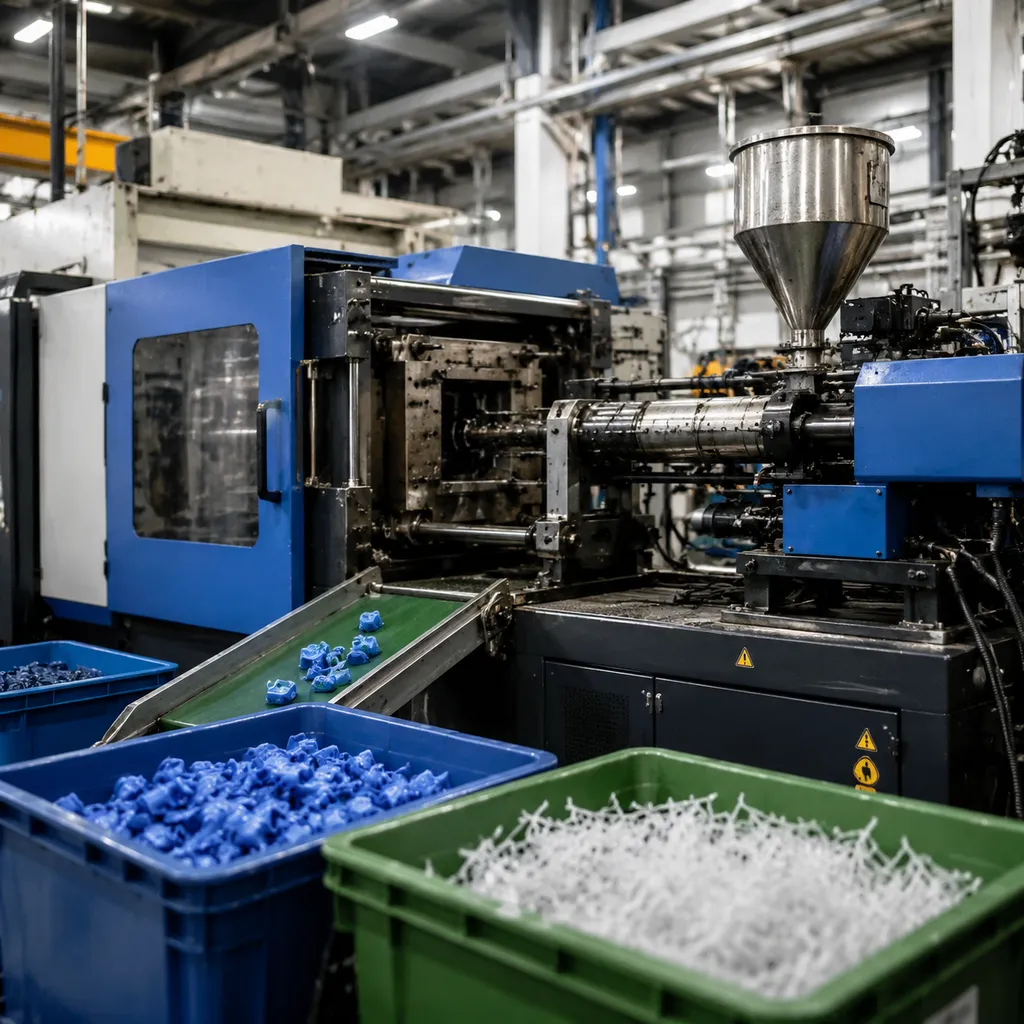
The injection moulding process relies on automated precision to convert raw polymers into final parts through four key stages:
-
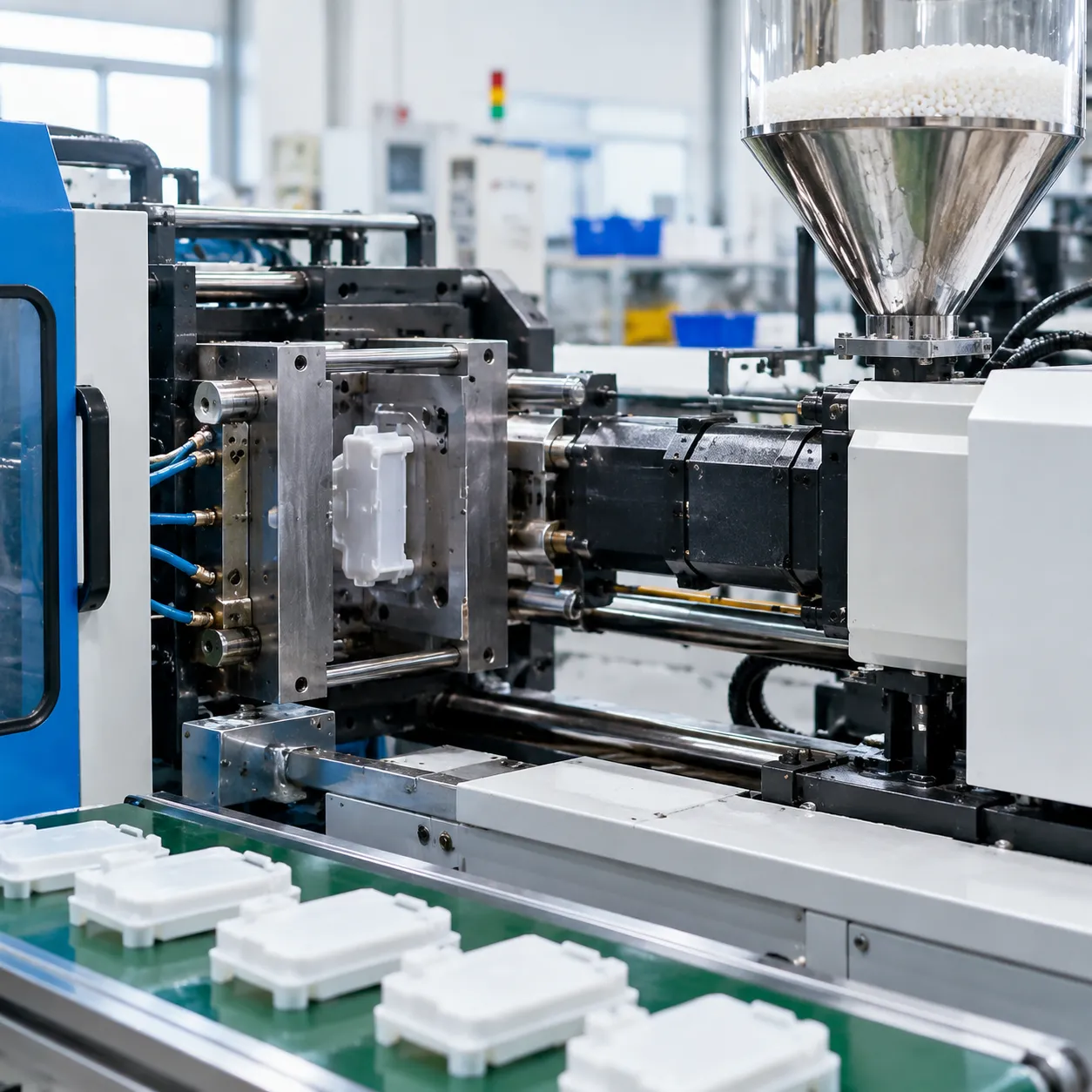
- Clamping & Feeding: Raw plastic resin pellets enter a heated barrel via a hopper while the custom mold halves are securely clamped together under high pressure.
- Melting & Injection: A rotating screw melts the resin using external heating bands and mechanical shear, forcing the molten plastic into the mold cavity at regulated pressure.
- 冷却与固化: The liquid plastic cools rapidly within the temperature-controlled mold, solidifying into the exact shape of the cavity.
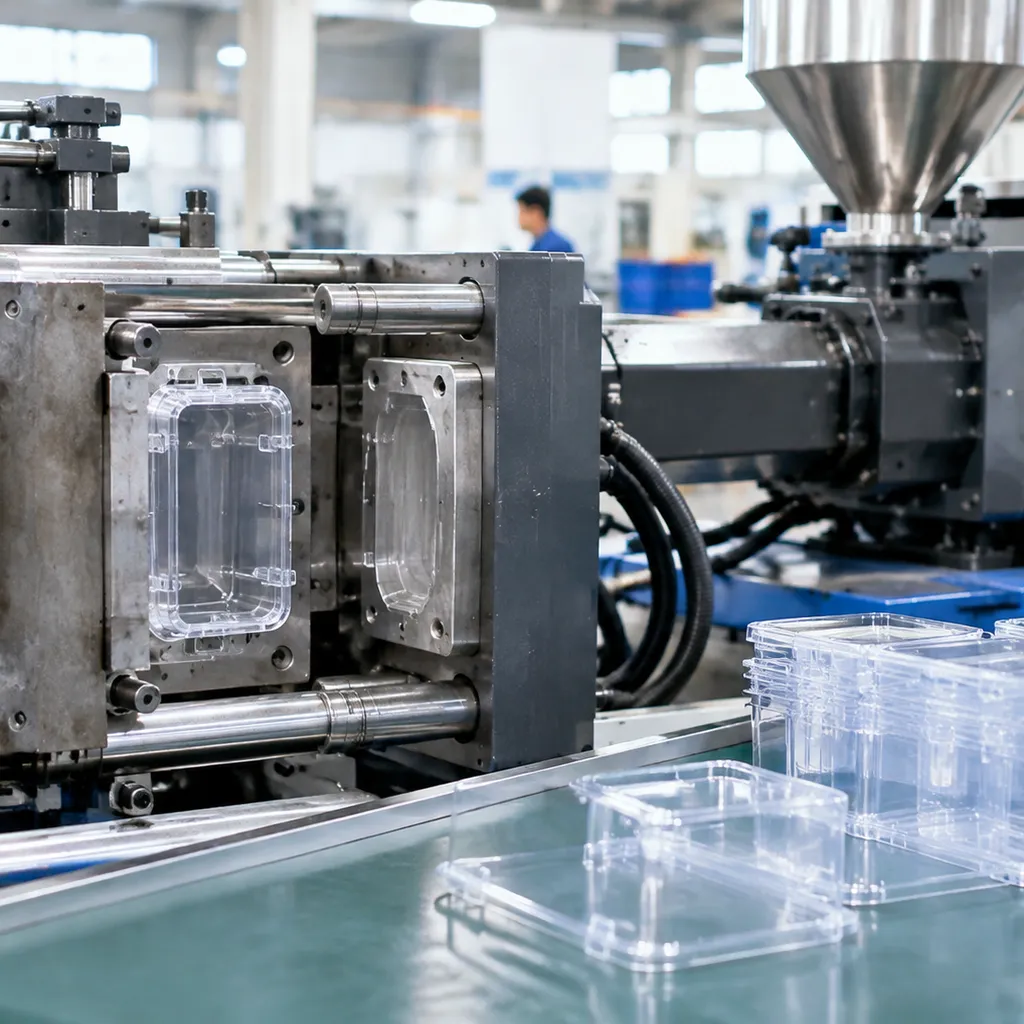
- 抛出式 The mold opens, and ejector pins release the finished component, resetting the cycle instantly for continuous mass production.
Common Materials Used in Traditional Moulding
Traditional injection moulding utilizes a broad spectrum of synthetic thermoplastic polymers chosen for their mechanical durability, thermal stability, and cost-effectiveness:
| 材料 | 关键特征 | 典型应用 |
|---|---|---|
| 聚丙烯(PP) | High flexural fatigue strength, moisture resistance | Automotive trim, food containers, packaging |
| PBT | Exceptional impact resistance, structural rigidity | Electronic housings, power tool casings |
| 聚乙烯(HDPE/LDPE) | High ductility, excellent chemical resistance | Industrial containers, flexible tubing |
| 聚碳酸酯(PC) | Superior optical clarity, extreme toughness | Medical equipment, protective gear |
Is Injection Moulding Bad for the Environment?
When assessing whether injection moulding is bad for the environment, the reality is that traditional plastic processing carries a noticeable ecological footprint. As a manufacturer, we recognize that processing raw polymers at scale presents genuine environmental challenges. However, the true impact depends heavily on the energy sources used, machine efficiency, and waste management protocols.
High Energy Consumption in Manufacturing
The primary environmental concern in high-volume plastic moulding is heavy 能耗. Converting solid resin pellets into molten liquid and clamping heavy steel moulds requires substantial power, directly raising the carbon footprint of production facilities.
-
- High Thermal Demands: Heating barrel zones to melting temperatures demands sustained electrical energy.
- Hydraulic Pressure Systems: Older machinery uses power-intensive hydraulic pumps to maintain continuous clamping forces.
- Chilling Cycles: Rapidly cooling moulds to solidify finished parts demands high-load refrigeration systems.
Raw Material Waste and Plastic Scrap
Although moulding is vastly more efficient than subtractive machining methods, raw material waste remains a critical challenge. Accumulating plastic scrap during startup runs, color transitions, and part testing risks adding to landfill waste if materials are not immediately recovered.
-
- Sprues and Cold Runners: Conventional runner channels produce non-functional solid plastic with every cycle.
- Defective Parts: Machine instability or uncorrected defects in injection molding generate scrap parts during initial setup.
- Purging Material: Swapping resins requires purging leftover melt out of the barrel, generating solid plastic chunks.
Chemical Emissions and Environmental Pollution
Without tight process control, plastic processing facilities can contribute to environmental pollution through atmospheric emissions and raw resin spills.
-
- Volatile Emissions (VOCs): Overheating polymers or processing heat-sensitive resins releases trace VOCs and fumes without proper air filtration.
- Chemical Additives: Processing flame retardants, plasticizers, and synthetic dyes under high heat requires localized exhaust capture.
- Pellet Spills: Poor handling of raw resin pellets during pneumatic loading leads to microplastic loss into floor drains and local waterways.
The Environmental Advantages of Injection Moulding
Mass Production Efficiency and Low Unit Impact
When evaluating if injection moulding is bad for the environment, scale plays a critical role. While machine startup requires initial energy, continuous mass manufacturing dramatically dilutes the overall energy consumption per part. As we continuously upgrade equipment and 安全地扩大模具成型产能, high-volume production runs lower the net carbon footprint per unit compared to short-run or traditional fabrication.
-
- Lower Energy Per Unit: Continuous production cycles maximize thermal efficiency and minimize idle energy losses.
- Optimized Logistics: High-density production reduces material handling and shipping frequency, cutting transport emissions.
- 稳定的质量: Automated processing minimizes defects and prevents energy waste from unnecessary reruns.
Precision Moulding with Minimal Scrap Rates
Modern injection molding relies on computer-controlled tooling to maximize material efficiency. Unlike subtractive techniques that carve away raw material and generate excessive plastic scrap, injection moulding feeds exact resin volumes into closed mold cavities.
-
- Net-Shape Manufacturing: Products emerge fully formed with minimal trimming or secondary processing needed.
- Direct Regrind: Clean sprues and runners can be immediately ground up and reintroduced into the production cycle to support sustainable manufacturing.
- High-Precision Tolerances: Precise process control keeps scrap rates near zero, protecting valuable raw materials.
Product Longevity and Material Durability
High-pressure injection moulding produces robust, long-lasting components. Creating durable goods directly addresses long-term environmental concerns by delaying product disposal and minimizing landfill waste.
-
- High Structural Integrity: Injection-molded components resist wear, chemical exposure, and mechanical stress.
- Lightweighting Benefits: Replacing heavy metal components with durable, lightweight polymers lowers fuel usage in automotive and aerospace applications.
- Extended Service Life: Longer product life cycles reduce the overall demand for constant raw material extraction and remanufacturing.
Key Strategies to Make Injection Moulding Greener
Many people ask, "is injection moulding bad for the environment?" The truth is, the process itself is constantly evolving. As a professional injection molding manufacturer and supplier, we focus on actionable eco-friendly practices that dramatically slash energy consumption and reduce our carbon footprint.
Switching to All-Electric Moulding Machines
Traditional hydraulic presses require constant power to keep oil pressurized, driving up energy costs. Upgrading to an all-electric injection moulding machine changes the game by cutting energy use by up to 70%.
-
- Power on demand: Servo motors only draw electricity when the machine is actively moving.
- Oil-free operation: Eliminates hydraulic fluid leaks, creating a cleaner production environment.
- Higher repeatability: Exceptional precision drastically reduces part defects and scrap rates.
Optimising Product Design to Reduce Material Usage
Greener manufacturing starts long before resin hits the barrel. Smart design choices maximize material efficiency without sacrificing part integrity.
-
- Thin-wall engineering: Reduces total resin volume while speeding up cooling times.
- Ribbed structures: Keeps parts rigid while using significantly less raw plastic.
- Hot runner systems: Directs molten plastic straight into the mold cavity, eliminating heavy runners and minimizing plastic scrap.
Implementing Closed-Loop Recycling Systems
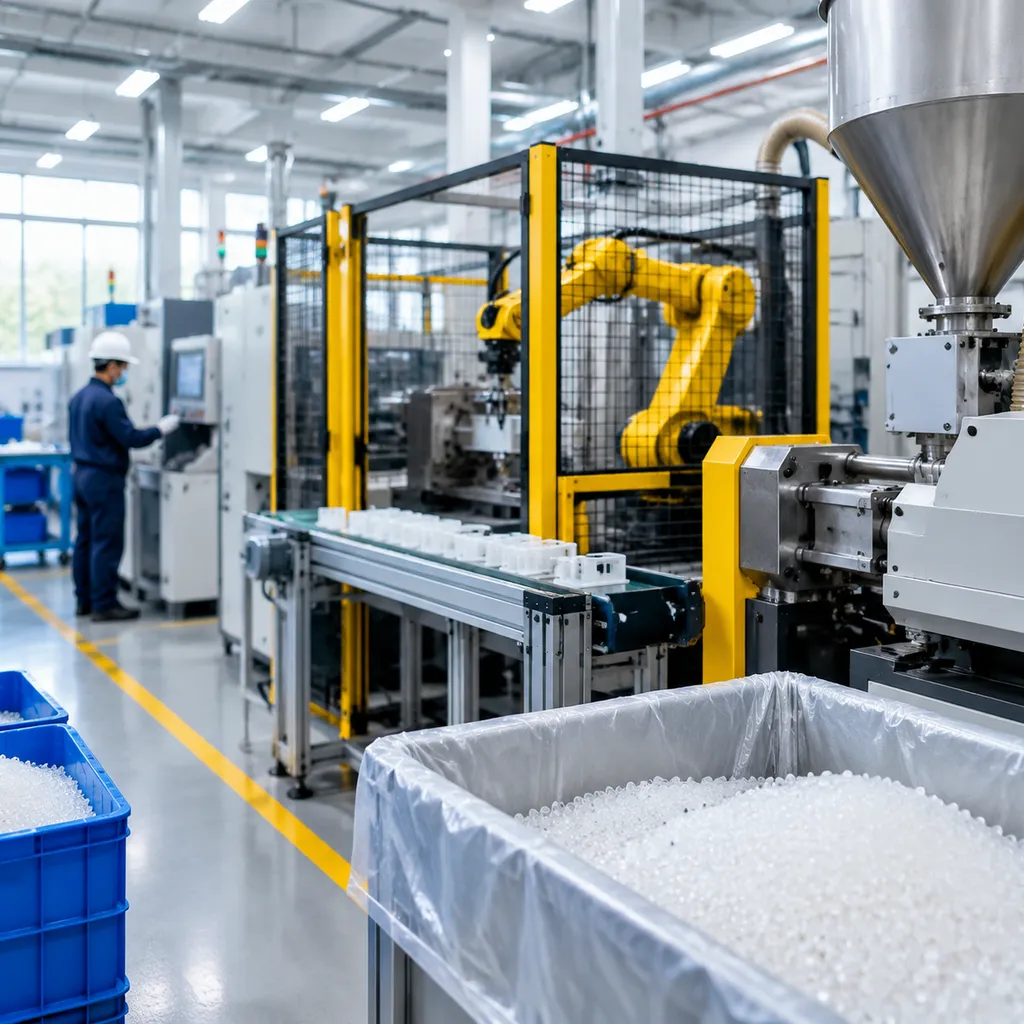
Scrap plastic doesn't belong in a landfill. Closed-loop recycling captures clean scrap directly at the press and reintroduces it right back into the manufacturing cycle.
-
- Immediate regrinding: On-site granulators turn sprues and runners into usable granules instantly.
- Automated dosing: Blenders mix regrind with virgin material at precise ratios to maintain product strength.
- Lean operations: Pairing closed-loop automation with high-efficiency injection moulding machine equipment keeps material waste near zero and optimizes total resource usage.
Sustainable Materials for Injection Moulding
The question of whether is injection moulding bad for the environment often comes down to raw material selection. As a professional injection moulding manufacturer, we actively replace traditional fossil-based resins with sustainable alternatives to lower our overall carbon footprint. Evaluating these material choices helps balance high-performance manufacturing with eco-friendly practices, especially when weighing the broader 注塑成型的优缺点 for high-volume supply chains.
Bio-Based and Biodegradable Polymers
Bio-based polymers offer a direct replacement for conventional petroleum plastics without sacrificing structural performance.
-
- Renewable Feedstocks: Made from agricultural resources like cornstarch, sugarcane, or cellulose rather than crude oil.
- Emissions Reduction: Producing plant-derived resins absorbs carbon dioxide during the plant growth phase, reducing overall emissions.
- Landfill Diversion: Certified biodegradable polymers break down safely under industrial composting conditions, helping prevent long-term landfill waste.
Post-Consumer Recycled (PCR) Plastics
Using PCR resins allows us to divert post-industrial and consumer waste straight back into high-grade commercial products.
-
- Resource Conservation: Processing existing plastic scrap into PCR resin requires significantly less energy than refining virgin plastic.
- Circular Economy: Keeps valuable polymers in circulation, reducing the demand for new fossil fuel extraction.
- Consistent Durability: Modern processing yields PCR resins strong enough for structural, automotive, and consumer goods applications.
Regrind Resins and Eco-Friendly Additives
In-house scrap management and advanced bio-additives ensure maximum material efficiency across every production run.
-
- Regrind Utilization: We collect sprues, runners, and off-cuts, grind them into uniform granules, and reintroduce them directly into the moulding cycle to achieve near-zero material waste.
- Bio-Based Colorants: Natural color pigments remove heavy metals and toxic chemicals from the manufacturing process.
- Foaming Technologies: Specialized foaming agents expand the resin core, reducing overall plastic consumption per part without compromising stiffness.
Innovations Driving Eco-Friendly Injection Moulding
We actively adopt modern manufacturing technologies that lower energy use and minimize environmental impact. Innovation is reshaping how we handle plastics, transforming traditional production into a cleaner, highly efficient operation.
Smart Manufacturing and Industry 4.0 Energy Tracking
Smart factory technology gives us precise control over electricity consumption across every production line. By integrating IoT sensors and automated monitoring systems, we optimize machine usage and cut unnecessary power draw.
-
- Real-Time Energy Tracking: Detects power spikes immediately, maintaining an optimized carbon footprint.
- Automated Cycle Tuning: Adjusts pressure and heating elements dynamically to maximize material efficiency.
- 预测性维护: Prevents unexpected downtime and reduces energy wasted during machine idle states.
Upgrading to smart equipment keeps production costs competitive while driving sustainable manufacturing. When analyzing operational budgets, evaluating injection and non-injection competition costs demonstrates how smart energy management significantly reduces long-term manufacturing overhead.
Advanced Mechanical and Chemical Recycling Techniques
Modern recycling methods allow us to process plastic scrap far more effectively than in past years, preventing valuable polymers from ending up as landfill waste.
-
- Advanced Mechanical Regrinding: Recycles sprues and runners directly on the shop floor without degrading essential plastic properties.
- Chemical Recycling: Breaks down complex or contaminated polymers to their molecular base, creating virgin-quality resin for high-spec applications.
- Purity Sorting Technology: Automated optical sorters isolate clean regrind materials to prevent cross-contamination during production runs.
How to Select a Sustainable Injection Moulding Partner
Choosing the right manufacturing partner determines whether your product line contributes to landfill waste or advances your carbon reduction goals. As a professional injection molding manufacturer and supplier, we help brands balance cost efficiency with sustainable manufacturing standards. When evaluating whether injection moulding is bad for the environment, the answer often depends on the operational practices of your supplier.
Environmental Certifications and Industry Standards
A supplier's commitment to eco-friendly practices should be backed by recognized third-party credentials. Partner with facilities that maintain verified management frameworks:
-
- ISO 14001 Certification: Guarantees an active, audited Environmental Management System (EMS) to limit operational footprint.
- ISO 50001 Certification: Demonstrates systematic tracking and reduction of facility-wide energy consumption.
- 法规合规性: Essential for cleanroom manufacturing, such as specialized medical injection moulding applications, where material purity and waste prevention must meet strict global mandates.
Waste Management and Energy Audit Practices
Leading suppliers control environmental impact through rigorous energy assessments and continuous material recovery.
| Operational Focus | Best Practice Standard | Environmental Benefit |
|---|---|---|
| Energy Tracking | All-electric machinery & smart power monitoring | Reduces overall carbon footprint and energy draw |
| 废品减量 | Closed-loop regrind & automated spruing | Prevents raw plastic scrap from reaching landfills |
| Process Control | Full life cycle assessment of raw resins | Optimizes material usage efficiency per run |
 Belarusian
 English
 French
 German
 Spanish
 Italian
 Polish
 Russian
 Japanese
 Korean
 Arabic
 Dutch
 Portuguese
 Swedish
 Norwegian
 Armenian