

What Is Soft PVC Raw Material?
We define soft PVC raw material as standard polyvinyl chloride that has been chemically modified to achieve a flexible, rubber-like state. Unlike rigid uPVC used in construction, plasticized polyvinyl chloride incorporates specific additives that lower the glass transition temperature, making it pliable and suitable for diverse molding applications.
Forms Available for Molding
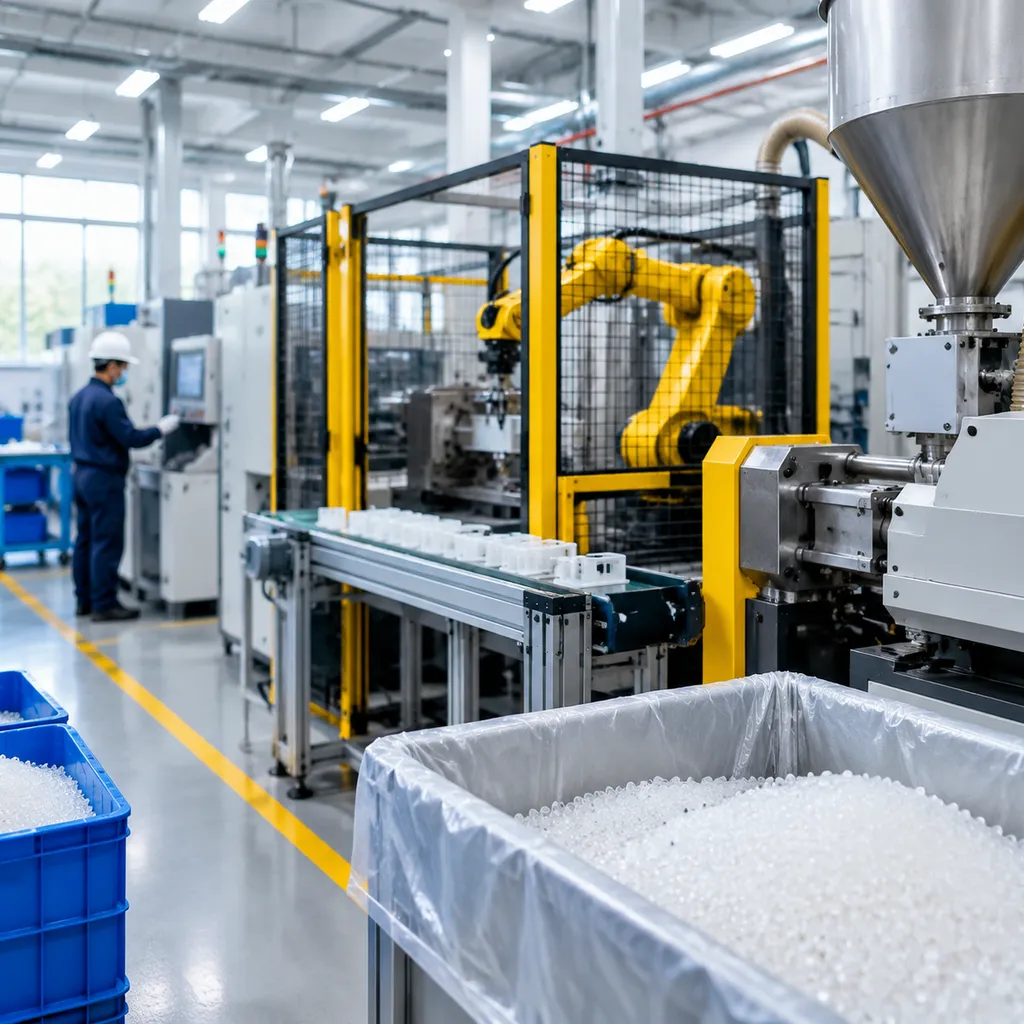
For our injection molding processes, this material is typically supplied in free-flowing forms to ensure consistent feeding into the barrel.
- Soft PVC pellets: Uniformly cut cylinders designed for steady melting.
- Flexible PVC granules: Irregularly shaped particles often used in custom compounding.
Base Composition and Additives
To transform rigid vinyl into a moldable flexible material, the base resin undergoes compounding with several critical ingredients:
- Plasticizers: Additives like phthalates or bio-based alternatives that determine the flexibility and Shore A hardness.
- Stabilizers: Essential for preventing thermal degradation during the high-heat injection phase.
- Modifiers: Impact modifiers and lubricants that improve flow rates and durability.
Soft vs. Rigid PVC Properties
The distinction between flexible PVC granules and rigid PVC lies in their mechanical behavior. While rigid PVC provides structural integrity and stiffness, soft PVC offers elongation, impact resistance, and a tactile feel similar to elastomers. While we often recommend TPU (Thermoplastic Polyurethane) or TPE (Thermoplastic Elastomer) from our stock library for superior processing stability in rapid manufacturing, we understand that specific chemical resistance requirements may demand PVC compound injection molding. Through our Customer-Supplied Material service, we can accommodate specific soft PVC resins to meet your exact project specifications.
Key Properties and Technical Specifications
When working with raw material PVC-soft injection molding, success lies in understanding the specific material behaviors that differentiate flexible vinyl from rigid thermoplastics. We focus on precise material science to ensure every component performs exactly as intended in its final environment.
Understanding Shore A Hardness Range
The defining characteristic of plasticized PVC material is its flexibility, measured on the Shore A scale. For injection molding applications, we typically work within a Shore A hardness PVC range of 50 to 95.
- Lower Range (50-70A): Feels like a rubber band or soft eraser; used for seals and cushioning.
- Higher Range (80-95A): Resembles a shoe heel or leather belt; provides structure while maintaining flexibility.
Controlling this hardness is critical. We adjust the ratio of plasticizers to resin to meet the exact tactile and functional needs of your injection mold part.
Physical and Thermal Characteristics
Processing flexible PVC granules requires strict control over thermal history because the material is heat-sensitive. Unlike standard engineering resins, soft PVC has a narrow processing window. If the soft PVC processing temperature exceeds limits, degradation occurs rapidly, releasing corrosive gases.
Below are the typical technical specifications we monitor during production:
| Property | Typical Range / Value | Notes |
|---|---|---|
| Density | 1.15 – 1.35 g/cm³ | Varies based on filler content |
| Tensile Strength | 10 – 25 MPa | Depends on plasticizer load |
| Elongation at Break | 200% – 450% | High elasticity for flexible parts |
| Melt Temperature | 170°C – 190°C | Critical to avoid burning |
| Mold Temperature | 20°C – 60°C | Affects cycle time and finish |
Chemical Resistance and Compliance
One reason we utilize custom soft PVC formulation options is the material's inherent resistance to chemicals, oils, and weathering. For industries requiring strict safety standards, we ensure the raw material is compliant.
- Regulatory Standards: We support materials that meet RoHS compliant flexible PVC and REACH standards.
- Safety Grades: For medical or food-contact projects, we utilize FDA and NSF-compliant grades that are free from harmful phthalates.
By selecting the correct heat stable PVC compound, we ensure that the final components maintain their electrical insulation properties and flame retardancy (often rated UL94 V-0) throughout their lifecycle.
Applications of Soft PVC in Injection Molding
We see raw material PVC-soft injection molding utilized across a wide spectrum of industries where flexibility, durability, and cost-efficiency are paramount. While high-performance elastomers like TPE and TPU are often used for rapid prototyping, flexible PVC remains a dominant choice for specific end-use production runs due to its unique chemical resistance and versatility. When considering what is injection moulding for flexible components, understanding the specific application requirements is critical for material selection.
Key Industry Use Cases
- Consumer Goods: The tactile feel of Shore A hardness PVC makes it ideal for soft-touch grips on tools, durable toys, and footwear components like soles and straps.
- Electrical and Electronics: Due to its inherent insulating properties and flame retardancy, flexible vinyl injection molding is the standard for manufacturing cable boots, strain reliefs, and wire connectors.
- Automotive Components: We frequently encounter soft PVC applications automotive designs, including weather strips, door seals, bushings, and interior trim parts that require resistance to grease and oil.
- Medical Devices: For healthcare applications, specialized phthalate-free PVC pellets are processed into flexible tubing, oxygen masks, and fluid bags, adhering to strict biocompatibility standards.
- Industrial Equipment: The material's resilience makes it suitable for heavy-duty gaskets, vibration dampers, and protective covers that must withstand harsh industrial environments.
The Injection Molding Process with Soft PVC
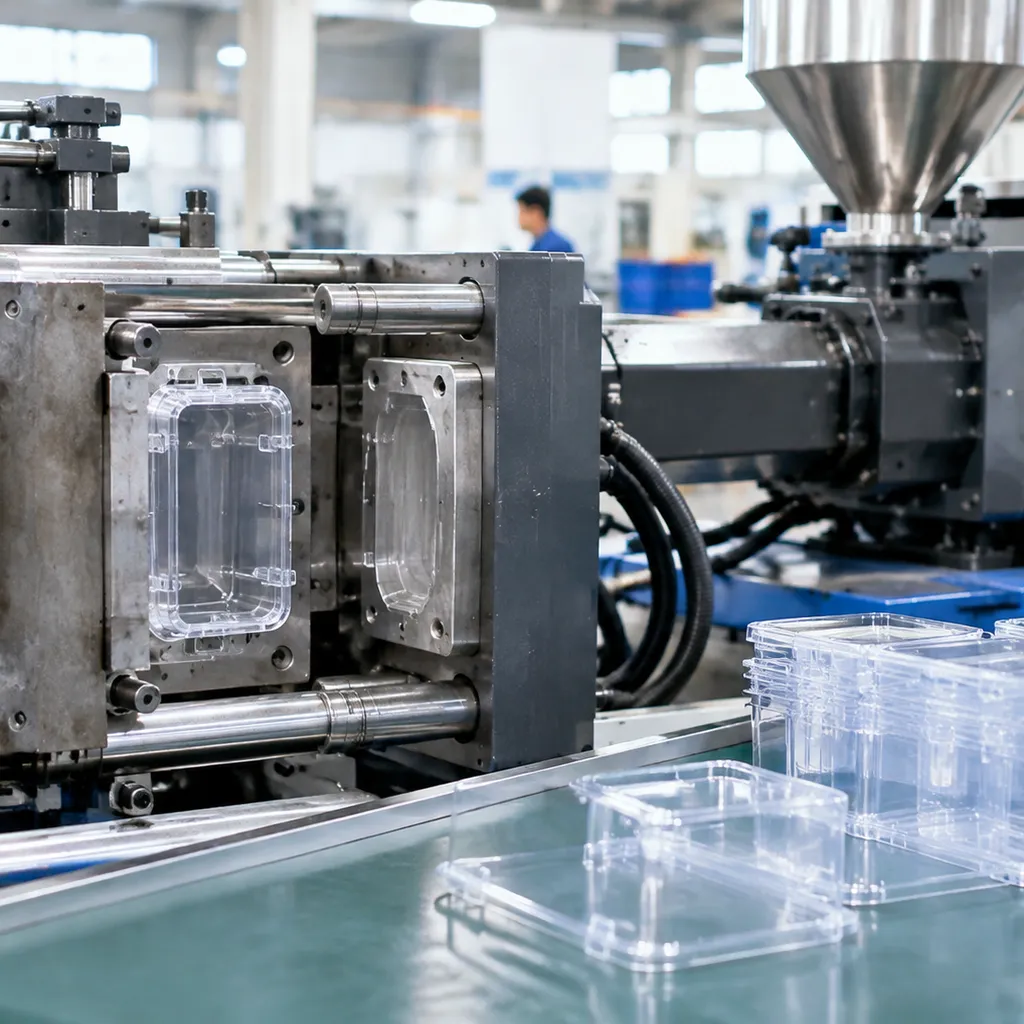
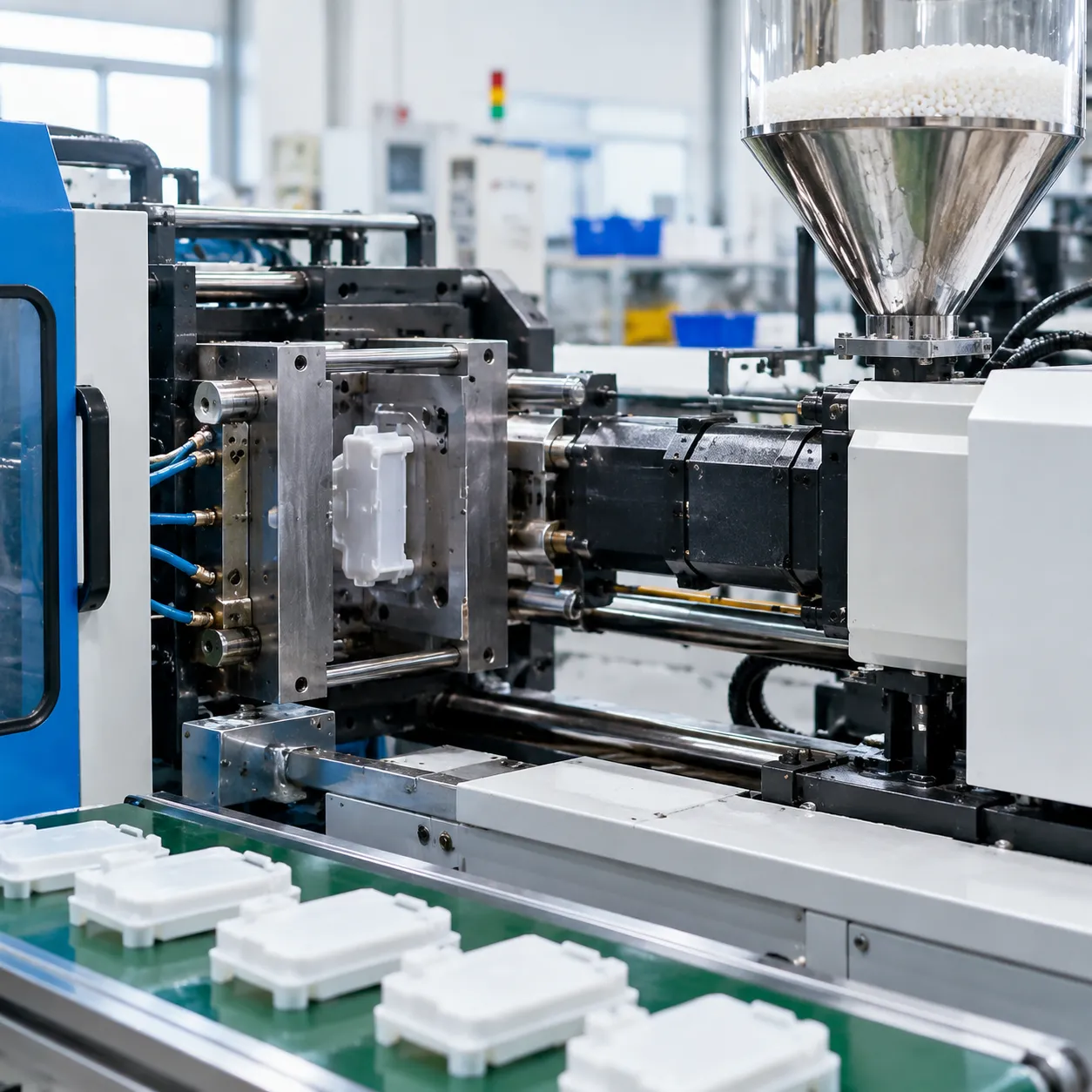
Processing raw material PVC-soft injection molding requires a precise balance of temperature and pressure to maintain material integrity. Unlike standard engineering thermoplastics, soft PVC is highly heat-sensitive, creating a narrow processing window. We approach this by ensuring strict control over material preparation and machine settings to deliver consistent, high-quality flexible parts.
Machine and Material Considerations
- Corrosion Resistance: When melted, PVC can release hydrochloric acid (HCl) gas, which is corrosive to standard tool steel. We utilize corrosion-resistant screws, barrels, and molds—often chrome-plated or stainless steel—to prevent equipment damage and part contamination.
- Material Preparation: While flexible PVC granules are not generally hygroscopic, surface moisture can still cause splay marks or silver streaking. We ensure pellets are properly conditioned and surface-dried before entering the hopper to guarantee a flawless finish.
Key Processing Parameters
Success with PVC injection molding parameters relies heavily on managing shear heat to avoid material breakdown.
- Temperature Control: We maintain the Soft PVC processing temperature strictly within the specific resin's recommended range. Overheating leads to rapid degradation, so we use precise barrel temperature profiles to keep the melt stable.
- Injection Speed: A moderate injection speed is essential. If the speed is too high, shear friction burns the material; if too low, the mold may not fill completely (short shot).
Troubleshooting Common Defects
We actively monitor for signs of thermal degradation, such as discoloration, burns, or black specks. Proper injection mold design is critical here; optimizing gate locations and venting allows corrosive gases to escape efficiently rather than getting trapped in the mold. By utilizing a heat stable PVC compound and validating the process with scientific molding principles, we prevent common issues like flow lines and ensuring the durability of the final component.
Advantages and Challenges of Using Soft PVC
When evaluating raw material PVC-soft injection molding for your project, it is essential to weigh the economic benefits against the processing complexities. At Protolabs, we help you navigate these material choices, whether you are using traditional flexible PVC granules or modern engineering elastomers.
Benefits: Cost and Durability
Plasticized PVC material remains a popular choice in the industry because it is cost-effective and highly versatile. It offers excellent resistance to chemicals, weathering, and abrasion, making it ideal for long-term outdoor applications or medical devices. The ability to adjust the Shore A hardness PVC levels allows for a wide range of flexibility, from semi-rigid seals to soft-touch grips.
Challenges: Processing and Tooling Risks
Molding soft PVC pellets requires precise control. The material has a narrow processing window; if the soft PVC processing temperature exceeds limits, the resin degrades and releases hydrochloric acid gas. This can be corrosive to molds and machinery. Our automated Design for Manufacturability (DFM) analysis is critical here, helping to identify geometry issues that might trap heat or gas, ensuring a smoother production run.
Comparing Soft PVC vs. TPE and TPU
While PVC compound injection molding is standard for many legacy products, we often recommend Thermoplastic Elastomers (TPE) or Thermoplastic Polyurethane (TPU) for rapid prototyping and on-demand manufacturing. These materials provide similar flexibility and "soft-touch" properties without the corrosive risks associated with PVC.
If your application strictly requires a specific custom soft PVC formulation not found in our standard stock of 100+ resins, our Customer-Supplied Material service allows us to mold parts using the specific resin you provide.
| Feature | Soft PVC | TPE / TPU (Protolabs Stock) |
|---|---|---|
| Cost Efficiency | High (Low Material Cost) | Moderate |
| Processing Ease | Low (Risk of Corrosion) | High (Clean Processing) |
| Chemical Resistance | Excellent | Good to Excellent |
| Sourcing | Customer-Supplied | Readily Available |
Understanding the fundamentals of what is plastic injection moulding helps in selecting the right material class. Whether you opt for a heat stable PVC compound or switch to a TPE, we ensure your transition from prototype to final part is seamless.
Choosing the Right Soft PVC Compound Supplier

Finding a reliable source for raw material PVC-soft injection molding is about more than just price per pound; it is about securing a partner who understands the intricacies of digital manufacturing. We operate differently than traditional bulk sellers. Instead of forcing you into massive inventory purchases, we focus on on-demand manufacturing with no Minimum Order Quantities (MOQs). This flexibility allows you to source or specify the exact flexible PVC compound supplier needed for your project without the risk of overstocking.
When evaluating a partner for PVC compound injection molding, technical alignment is critical. Soft PVC can be corrosive and difficult to process compared to standard TPEs. We utilize advanced injection mold tooling designed to handle these specific material challenges. If our standard library of 100+ resins does not contain the specific soft PVC pellets you require, our Customer-Supplied Material service allows you to ship your proprietary resin directly to us for molding.
Key Evaluation Criteria for Material Sourcing
| Feature | Traditional Material Supplier | Our Integrated Manufacturing Approach |
|---|---|---|
| MOQs | High volume (often tons) | No minimums (1 to 100,000+ parts) |
| Consistency | Varies by batch | Strict process controls & DFM analysis |
| Lead Time | Weeks for delivery | As fast as 1 day for production |
| Support | Material sales only | Full design & manufacturing feedback |
What to look for in a supply partner:
- Lot-to-Lot Consistency: Ensure the flexible PVC granules maintain uniform Shore A hardness and density across batches to prevent shot-to-shot variation.
- Third-Party Certifications: Verify that the material meets necessary regulatory standards such as RoHS, REACH, or FDA compliance for medical applications.
- Integrated Services: We combine material verification with automated quoting and production, reducing the administrative burden of managing separate vendors for material and molding.
Frequently Asked Questions About Soft PVC Molding
What is the ideal processing temperature for soft PVC?
The processing window for raw material PVC-soft injection molding is notoriously narrow compared to other thermoplastics. We generally recommend maintaining melt temperatures between 170°C and 190°C. Exceeding this limit can cause rapid thermal degradation, releasing corrosive hydrochloric acid gas that damages tooling. Precise temperature control is essential for preventing burns and flow marks, which is a critical step when troubleshooting common defects in flexible parts.
How does plasticizer content affect Shore A hardness?
Plasticizers are the key additives that transform rigid vinyl into plasticized PVC material. Increasing the ratio of plasticizer to resin directly lowers the Shore A hardness PVC value, resulting in a softer, more rubber-like product. Conversely, reducing the plasticizer content yields a semi-rigid part. This adjustability allows us to fine-tune the material's flexibility for specific performance needs, from soft gaskets to durable tool grips.
Is soft PVC suitable for food-contact applications?
Yes, but only if specific formulations are used. Standard flexible PVC granules often contain stabilizers or plasticizers that are not safe for food contact. For applications involving consumables, you must specify phthalate-free PVC pellets that meet FDA or NSF compliance standards. We always verify material certifications to ensure the compound is safe for its intended environment.
What are the main differences between soft PVC and silicone?
While both materials provide excellent flexibility, flexible vinyl injection molding is a thermoplastic process, meaning the scrap can be re-melted and recycled. Silicone (LSR) is a thermoset material that cures permanently and offers superior heat resistance and biocompatibility. Soft PVC is typically the more cost-effective choice for general-purpose applications where extreme thermal stability is not required, whereas silicone is preferred for high-heat or medical-grade environments.
 English
 French
 German
 Spanish
 Italian
 Polish
 Russian
 Japanese
 Korean
 Arabic
 Dutch
 Portuguese
 Swedish
 Norwegian
 Belarusian
 Armenian